
In This Article
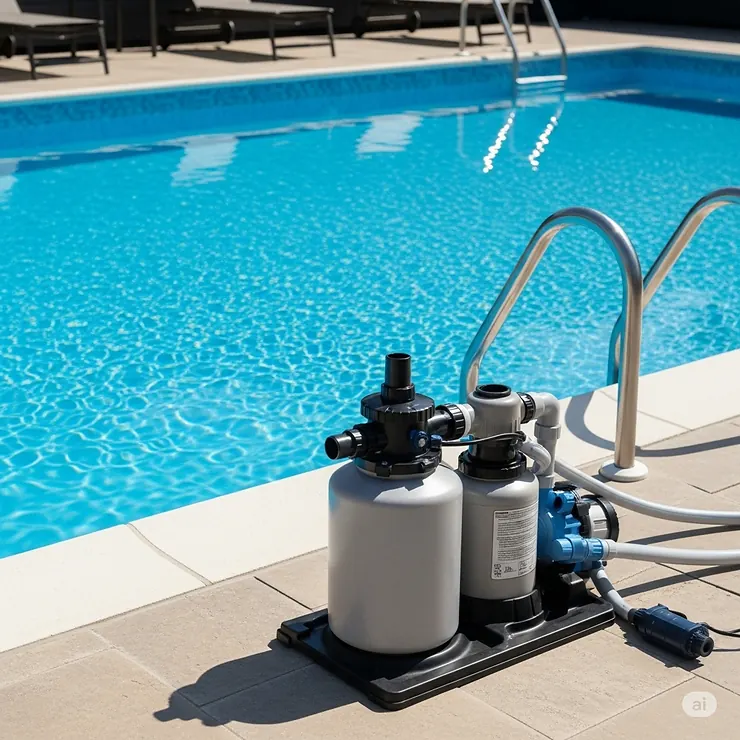
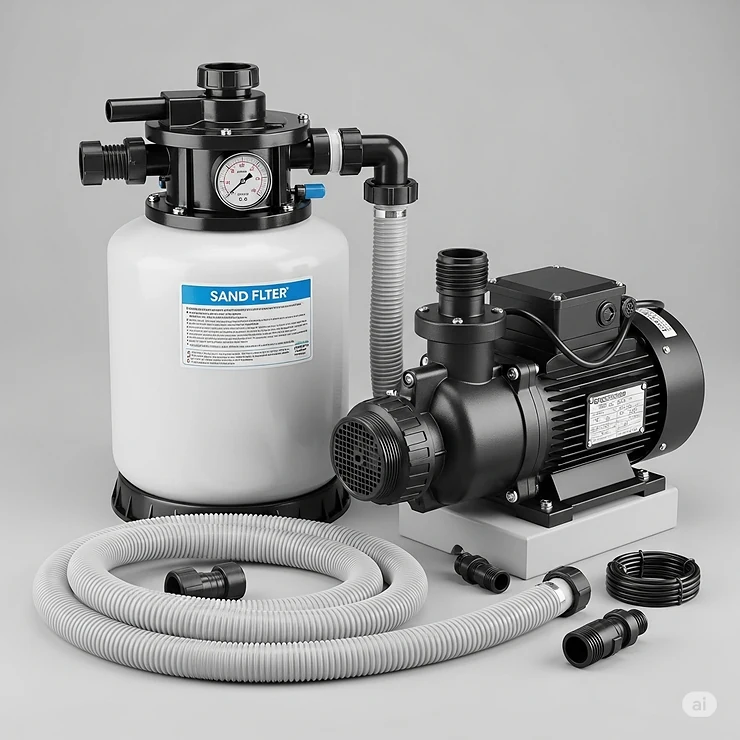
Pool sand filters for above ground pools are pump-driven tanks packed with graded silica sand. Your pump pushes water down through the sand bed, which traps dirt, pollen and debris down to roughly 20–40 microns, and clean water returns to the pool. Backwashing (reversing the flow) flushes the gunk out, so there’s no cartridge to replace.
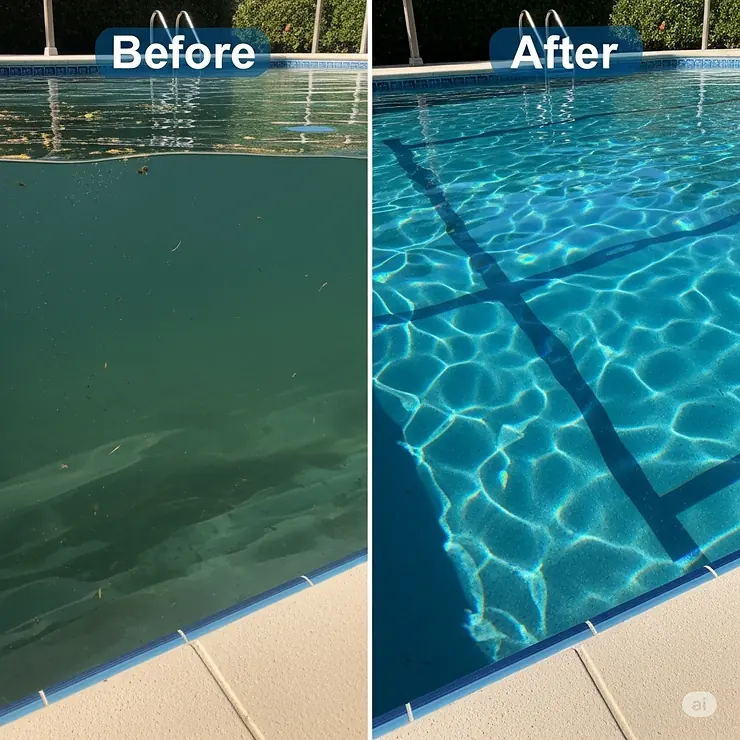
Above ground pools usually ship with a modest cartridge pump, and that little cartridge works like a paper coffee filter: lovely until it isn’t. A few leaves, a lot of sunscreen and one enthusiastic cannonball later, it’s gasping and the water has the clarity of weak lemonade. That’s when most owners start shopping for pool sand filters for above ground pools, and honestly, it’s the right instinct.
The logic comes from the commercial world. Public-health guidance such as the CDC’s Model Aquatic Health Code leans hard on recirculation and filtration standards, because water that merely looks clear isn’t automatically healthy. Your backyard isn’t a municipal facility, but the principle travels well. The real-world flow through your filter, not the big number printed on the box, decides how clean your pool stays.
Here’s what’s ahead. I’ve compared seven real systems, from budget combos to premium tanks, using manufacturer specs and aggregated owner feedback. Prices appear as ranges, review sentiment is summarized rather than quoted, and when I couldn’t verify something, I’ll say so. Let’s find a filter that fits your pool and your patience.
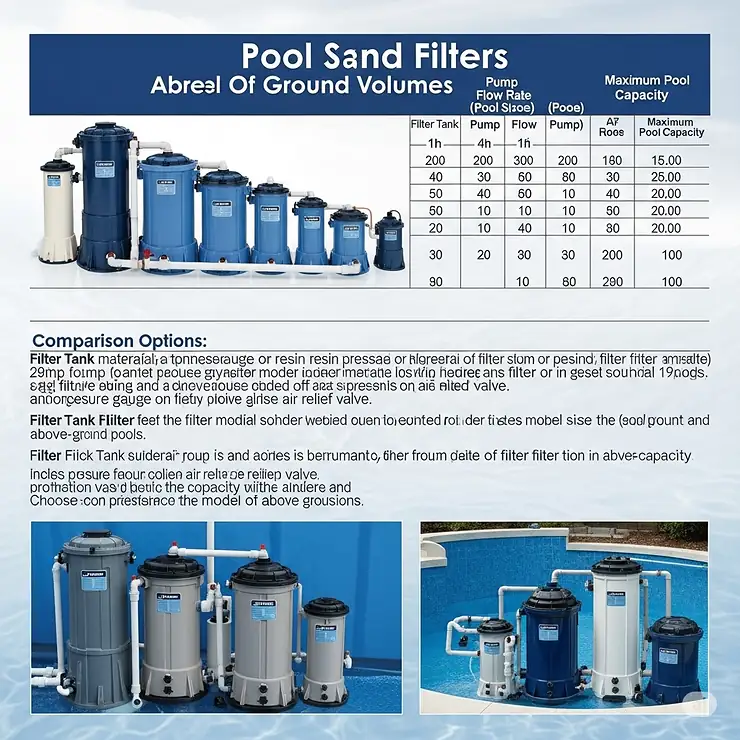
Quick Comparison: Pool Sand Filters for Above Ground Pools at a Glance
Short on time? Start here. Every row is expanded in the full reviews below, and every price is a range because retail numbers shift constantly. Check current price before you buy.
| Product | Tank & Sand | Best For | Price Range |
|---|---|---|---|
| Intex Krystal Clear SX2800 | 14-inch class, 77 lb | Intex-style pools, easy swap | ~$230–$300 |
| VEVOR 12-inch 3000 GPH | 12-inch, ~50 lb | Small-to-mid pools, tight budgets | ~$150–$180 |
| Bestway Flowclear 2000 Gal | Compact tank, #20 sand | Bestway soft-sided pools | Entry-level |
| XtremepowerUS 19-inch 1.5HP | 19-inch, 175 lb | Large pools on a mid-range budget | ~$320–$360 |
| Blue Wave Sandman 18-inch | 18-inch, 110 lb | Quiet running on 15–21 ft pools | Mid-range |
| Hayward ProSeries W3S180T | 18-inch, 150 lb | Long-term durability | A few hundred (tank only) |
| Pentair Sand Dollar SD60 | 22-inch, 250 lb | Big pools, premium build | ~$570–$620 (tank only) |
Looking at the comparison above, the VEVOR 12-inch 3000 GPH is the lowest-cost way in. The Intex Krystal Clear SX2800 offers the smoothest plug-and-play path for owners already living in Intex’s hose-and-fitting ecosystem. If you’re filtering something closer to a backyard lake, the XtremepowerUS 19-inch 1.5HP, Hayward ProSeries W3S180T and Pentair Sand Dollar SD60 earn their higher price through bigger sand beds. Budget buyers should note that the cheapest tanks also demand the most frequent backwashing.
💬 Just one click — help others make better buying decisions too!😊
Top 7 Pool Sand Filters for Above Ground Pools: Expert Analysis
Each pick below pairs the real spec sheet with what it means in practice, plus a summary of what owners report. Where owner reviews were too thin to judge, I’ve said so instead of papering over the gap.
1. Intex Krystal Clear SX2800 — easiest swap for Intex owners
The Intex Krystal Clear SX2800 (model 26647EG) is built to bolt straight onto Intex’s own 1.5-inch hoses and fittings, which spares you the adapter scavenger hunt.
Intex lists a 0.6 HP pump rated at 2,800 GPH, but the figure that matters is the 2,150 GPH system flow, the water that actually makes it through the sand. The tank takes 77 lb of #20 silica sand (one and a half 50-lb bags, so buy two). A 24-hour timer and a six-function valve cover filter, backwash, rinse, recirculate, drain and closed. In plain English, an 18-foot round pool holding about 7,600 gallons (assuming roughly four feet of water) turns over in around three and a half hours.
Based on the spec comparison, this model shines on 15- to 24-foot pools. Intex lists compatibility with its 24-foot Ultra XTR frame pool, though at that size you’re looking at six-plus hours per turnover, so schedule longer run times. What the box won’t tell you: the pump’s strainer basket quietly protects the sand bed, so empty it often.
Aggregated owner feedback on big retail listings (well over 1,500 ratings on one of them) leans positive. Reviewers keep mentioning easy assembly, quiet running and water that clears in days rather than a week. A recurring caveat is that sand is sold separately, and owners with non-Intex pools mention buying different hose connectors.
Pros:
- ✅ Direct fit with Intex hoses and fittings
- ✅ Built-in 24-hour timer
- ✅ Quiet operation, per owner reports
Cons:
- ❌ Sand sold separately (budget two bags)
- ❌ Smaller tank means more backwashing on big pools
Expect roughly the $230–$300 range depending on bundle (check current price). For most Intex owners, that’s a fair price for the upgrade.
2. VEVOR 12-inch 3000 GPH — cheapest way into sand filtration
The VEVOR 12-inch 3000 GPH (model HCP370A-D) proves you don’t need a four-figure budget to retire a tired cartridge pump.
The 0.5 HP motor tops out at 3,000 GPH with a 26-foot maximum head. The package includes a six-way valve (filter, rinse, backwash, waste, closed, winter), a dual-mode 24-hour timer and a clear-lid strainer basket. Treat that GPH figure as a free-flow ceiling. Push water through packed sand and the working rate drops, so this is a small-to-mid pool tool rather than an answer for a 24-footer. It weighs only about 19 lb, which makes seasonal storage painless. It also accepts filter balls as a sand substitute, handy if hauling bags isn’t your idea of a fun weekend.
Here’s the honest trade-off. A 12-inch tank holds roughly 50 lb of media according to one roundup, so the bed saturates faster and you’ll backwash more often than with the bigger tanks below. Roundup sites like to crown it the budget pick, but independent owner reviews were thin in what I could verify (a handful on one big-box listing), so I wouldn’t lean on star averages here.
Pros:
- ✅ Lowest entry cost of the seven
- ✅ Timer, six-way valve and strainer basket included
- ✅ Works with filter balls as well as sand
Cons:
- ❌ Small tank means more frequent backwashing
- ❌ Limited verifiable owner review base
Look for roughly the $150–$180 range (check current price). It’s a strong value if your pool is on the smaller side.
3. Bestway Flowclear 2000 Gal — plug-and-play for Bestway pools
Bestway designs the Bestway Flowclear 2000 Gal sand filter pump around its own soft-sided pools, and some listings highlight a ChemConnect dispenser for sanitizer.
Bestway’s literature varies by region and model year, so confirm your exact model number before buying. Listings I found cite pump flow around 2,000–2,200 gal/h and system flow around 1,800–2,000 gal/h. They also mention a corrosion-proof tank, a six-position valve, a pressure gauge and a top-flange clamp that rotates 360° so awkward plumbing stops being awkward. It runs on #20 silica sand (0.45–0.85 mm). In practice, an 8,000-gallon pool turns over in just over four hours, plenty for relaxed family use and light for party-heavy summers.
Connection sizes matter here too. Listings mention adapters for 32 mm (1.25-inch) and 38 mm (1.5-inch) fittings, so check what your hoses use before ordering.
Now the honest note: I couldn’t verify a meaningful body of independent owner reviews for this exact model, so I won’t characterize sentiment. Retail descriptions emphasize easy assembly, which squares with the clamp design and included adapters.
Pros:
- ✅ Designed around Bestway hoses and fittings
- ✅ 360° rotating top-flange clamp
- ✅ Pressure gauge and strainer included
Cons:
- ❌ Specs vary by region and listing
- ❌ Little verifiable owner feedback
It typically sits toward the entry-level end of this group (check current price), a sensible pick if you already own a Bestway pool.
4. XtremepowerUS 19-inch 1.5HP — big-pool muscle at a mid-range price
For owners staring down a 21- or 24-foot pool, the XtremepowerUS 19-inch 1.5HP brings a serious sand bed without a premium-brand price tag.
The 19-inch tank holds 175 lb of sand, the pump is rated at 4,500 GPH, and a seven-way valve plus strainer basket complete the system. Here’s the nuance worth catching: listings also quote a 2,520 GPH flow rate for the 19-inch filter itself. The lower figure is the realistic through-sand ceiling. That means an 18,000-gallon pool (the “up to” size some listings claim) would need roughly seven hours per turnover. Treat that as the upper limit, and plan on eight to ten hours of daily run time at that size.
Reviewers on a major listing (over 1,500 ratings, averaging above four stars) praise how fast backwashing is compared with scrubbing cartridges, and one owner reported good results with filter balls instead of sand. The recurring gripes are sparse documentation (including no explanation of an internal relief line) and one owner’s caution about relying on the supplied pressure gauge.
Pros:
- ✅ Large 175 lb sand bed
- ✅ Strong 1.5 HP pump
- ✅ Seven-way valve and strainer basket
Cons:
- ❌ Thin documentation, per owners
- ❌ Pump and filter ratings need careful reading
Budget for the mid-$300s (roughly $320–$360, check current price). It’s arguably the best gallons-per-dollar deal of the group.
5. Blue Wave Sandman 18-inch — quiet mid-range workhorse
The Blue Wave Sandman 18-inch (model NE6150) sits between budget combos and premium tanks, with a one-piece polyethylene tank and an oversized hair-and-lint pot that makes debris checks easy.
Blue Wave lists a 1.77 sq ft filter, a 1 HP pump and a six-position multiport valve. The tank needs 110 lb of sand (not included). The company claims a 16,000-gallon turnover in eight hours, which works out to about 2,000 GPH, a figure that squares neatly with the filter area. The package includes base, valve, pressure hose, gauge and fittings, so you’re not hunting for pieces.
Analytically, this fits 15- to 21-foot pools well, and 24-footers if you accept a longer run. Retailer Q&A shows owners asking whether it connects to Intex, Coleman and Bestway pools. The answer is often “with adapters,” so check hose sizes first.
Owner feedback I could verify centers on the 22-inch sibling (NE6170) on a retail listing. Reviewers describe quiet running, clear water within a day and a modest effect on the electric bill, while one buyer warned others to spend more on a better filter. The 18-inch model’s own review pool was thinner.
Pros:
- ✅ Quiet pump, per owner reports
- ✅ Roomy hair-and-lint pot with clear lid
- ✅ Base, valve, gauge and hoses included
Cons:
- ❌ Hose adapters may be needed for some pools
- ❌ One-year limited warranty is short
Check current price. It typically lands between the budget combos and the Hayward and Pentair options, which is where this one earns its keep.
6. Hayward ProSeries W3S180T — the durability benchmark
Pool pros bring up the Hayward ProSeries W3S180T the way mechanics bring up certain wrenches: because it’s been around, and it keeps working.
This is an 18-inch top-mount tank (filter only, pump sold separately) with 1.75 sq ft of filter area, a 35 GPM design flow (about 2,100 GPH) and 150 lb of sand capacity. A seven-position VariFlo valve with a sight glass lets you see when backwash runs clear. Umbrella-fold laterals spread flow evenly, and a large sand/water drain simplifies winterizing. Maximum working pressure is 50 psi. One roundup rates it for pools up to 25,000 gallons, but run the math: 35 GPM would need roughly twelve hours per turnover at that size. I’d call 15,000 to 18,000 gallons the comfortable zone.
Owner-review depth was limited for this tank-only model, so the strongest evidence is editorial. A major home-improvement publication named it best overall after reporting that it handled their 24-foot above ground pool with ease. Hayward also sells matched systems with 1 HP or 1.5 HP pumps if you’d rather buy the pairing in one go.
Pros:
- ✅ Sight glass shows when backwash is finished
- ✅ Generous 150 lb sand bed
- ✅ Easy winterizing drain
Cons:
- ❌ Pump sold separately unless you buy a system
- ❌ 35 GPM design flow caps very large pools
Expect a few hundred dollars for the tank alone, with matched systems costing more (check current price). It’s worth the premium if you plan to keep your gear for many seasons.
7. Pentair Sand Dollar SD60 — premium capacity for big pools
The Pentair Sand Dollar SD60 is the one you buy when you’d rather think about your pool than your filter.
The 22-inch tank offers 2.3 sq ft of filter area, a 60 GPM rating (about 3,600 GPH) and a 250 lb sand requirement, roughly five 50-lb bags. A 1.5-inch six-position multiport valve, pressure gauge, air relief and a combination water-and-sand drain come with it. Pentair says the internal design keeps the sand bed level for consistent filtration, and retailers list 20–40 micron capability, in line with other sand tanks. On a 15,000-gallon pool, 3,600 GPH delivers a turnover in roughly four hours, leaving generous headroom for pollen season, pool parties and shorter pump runs.
Be realistic about weight and space. 250 lb of wet sand isn’t casual lifting, and you’ll want a level, firm pad. As for owner reviews, the footprint on listings I could access was only a handful, so rely on specs and brand pedigree over star averages.
Pros:
- ✅ Largest sand bed and filter area of the seven
- ✅ 60 GPM headroom for big pools
- ✅ Level-bed design and easy drain
Cons:
- ❌ Priciest of the group
- ❌ Heavy and space-hungry
Retailer listings at the time of research ran roughly $570–$620 for the tank alone and the high-$700s to high-$800s as a system with a 1 to 1.5 HP pump. That’s excellent value for large pools and overkill for small ones.
Spec Snapshot
| Product | Realistic Flow | Valve | Pump Included? | Best For |
|---|---|---|---|---|
| Intex Krystal Clear SX2800 | 2,150 GPH system | 6-function | Yes, 0.6 HP | Intex owners |
| VEVOR 12-inch 3000 GPH | Up to 3,000 GPH (free-flow max) | 6-way | Yes, 0.5 HP | Budget, small pools |
| Bestway Flowclear 2000 Gal | ~1,800–2,000 GPH system | 6-position | Yes | Bestway pools |
| XtremepowerUS 19-inch 1.5HP | 2,520 GPH filter / 4,500 GPH pump | 7-way | Yes, 1.5 HP | Big pools, value |
| Blue Wave Sandman 18-inch | ~2,000 GPH claimed | 6-position | Yes, 1 HP | Quiet mid-range |
| Hayward ProSeries W3S180T | 35 GPM (~2,100 GPH) | 7-position | No (tank only) | Durability |
| Pentair Sand Dollar SD60 | 60 GPM (~3,600 GPH) | 6-position | Tank only; systems available | Large pools |
Notice how many of the “big” numbers collapse into the same 2,000-ish GPH neighborhood once you look at filter-rated flow. Only the Pentair Sand Dollar SD60 stands clearly apart at about 3,600 GPH. That’s the quiet lesson of this table: pump horsepower is marketing, filter area is physics. If you’re comparing the Hayward ProSeries W3S180T with the Blue Wave Sandman 18-inch, the real differences are build quality, valve features and sand volume, not raw flow.
Setup, Startup and Backwash: A Practical Guide for Sand Filters
Product pages stop at “easy installation.” Here’s the part they skip, the routine that decides whether your filter lasts five seasons or fifteen.
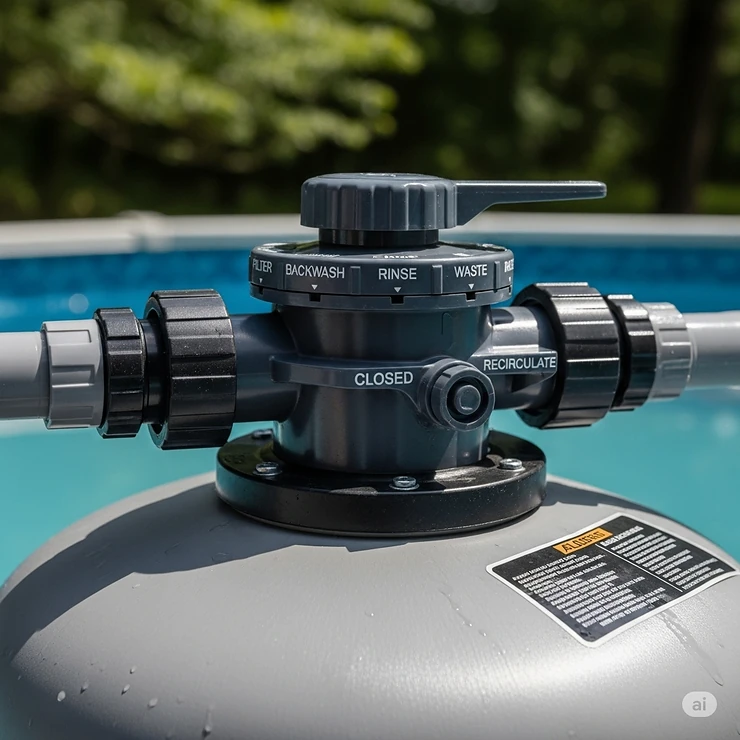
- Fill before you pour. Fill the tank about two-thirds with water, then add sand gently so you don’t damage the laterals inside.
- Flush the dust. After adding fresh sand, backwash and rinse before normal operation to clear fine particles that would otherwise cloud your water.
- Pump off, always. Switch the pump off every time you move the valve handle. Turning it under pressure is how valves and seals die young.
- Record your baseline. A fresh startup typically reads somewhere in the 10–20 psi range, according to Hayward’s own guidance. Write your number on the tank with a marker.
- Backwash by pressure, not the calendar. Backwash when the gauge climbs 8–10 psi above your baseline. Run it 3–5 minutes (or until the sight glass or waste line runs clear), then rinse briefly to re-settle the bed.
- Plan the replacement. Sand typically lasts five to seven years. The same guidance warns that premature backwashing wears the grains down and causes cloudy water and higher pressure.
The classic first-30-day mistakes are all avoidable: backwashing every Saturday out of habit, ignoring the strainer basket until the pump starves, and forgetting that a sand filter can’t fix chemistry. Keep the basket clean, trust the gauge, and the system mostly takes care of itself.
Real-World Scenarios: Matching a Filter to Your Actual Backyard
Specs are abstract; backyards aren’t. These three composite scenarios are illustrative, not real customers, but the math is real.
The weekend splasher. Picture a family with a 15-foot, 48-inch inflatable-ring pool, a $300 ceiling for the entire upgrade, and swim time that’s mostly weekends. At roughly 4,600 gallons and about 2,150 GPH, one turnover takes around two hours, so even a five-hour daily run is generous. The Intex Krystal Clear SX2800 fits the budget and the hoses, while the VEVOR 12-inch 3000 GPH is the cheaper alternative if adapters aren’t a problem.
The tree-lined problem yard. Now imagine an 18-foot frame pool (about 7,600 gallons) beneath maples that shed twice a year and daily swimming in July. Debris load is the enemy, so tank size and easy backwashing win. The Blue Wave Sandman 18-inch (roughly four hours per turnover at ~2,000 GPH) or the Hayward ProSeries W3S180T with a matched 1–1.5 HP pump gives you a 110–150 lb sand bed to absorb the mess.
The party pool. Finally, a 24-foot pool (about 13,600 gallons) with a deck, frequent guests and sunscreen-heavy afternoons. At around 2,100 GPH, a single turnover takes about 6.5 hours. With the Pentair Sand Dollar SD60 at roughly 3,600 GPH, it drops to under four. The XtremepowerUS 19-inch 1.5HP is the leaner-budget alternative (about 5.4 hours at its 2,520 GPH filter rating), as long as you’re willing to run it eight-plus hours a day.
Problem → Solution: Fixing Cloudy Water, Sand in the Pool and Pressure Woes
Even a good filter has bad days. Here are the four most common problems, with fixes that apply across all seven models above.
Sand is blowing back into the pool. On a filter you’ve owned a while, this usually points to worn or cracked laterals, which Hayward’s guidance identifies as the culprit. On a fresh install, confirm you used #20 silica sand, because finer grains can slip through, and check that the valve is set to filter, not recirculate.
Pressure climbs fast and backwash cycles keep shrinking. Suspect sand that’s past its five-to-seven-year life, or a heavy debris load. Backwash, rinse, and if cycles stay short, replace the sand.
The water is still cloudy. A filter can’t fix chemistry or a too-short run time. If there’s visible algae or dirt on the floor, vacuum it directly out with the valve on waste, then let the filter catch the rest.
Flow feels weak. Empty the strainer basket first, then check for kinked hoses and a worn pump-lid O-ring that lets air in. If the Intex Krystal Clear SX2800 or any other combo runs but barely moves water, that’s the first place to look.
Quick Decision Framework: Which Sand Filter Should You Choose?
Still undecided? Match your situation to the line that sounds most like you.
- If you own an Intex pool and want zero hose drama, choose the Intex Krystal Clear SX2800, because it’s designed around Intex’s fittings.
- If your budget is the boss, choose the VEVOR 12-inch 3000 GPH, because it’s the lowest-cost way in, and just accept more frequent backwashing.
- If you have a Bestway soft-sided pool, choose the Bestway Flowclear 2000 Gal, because its fittings and clamp are designed for that ecosystem.
- If your pool is 21 feet or larger and money matters, choose the XtremepowerUS 19-inch 1.5HP, because 175 lb of sand is hard to beat at its price.
- If quiet operation and a bundled kit matter most, choose the Blue Wave Sandman 18-inch, because owners keep praising how little noise it makes.
- If you want gear that outlasts your lawn furniture, choose the Hayward ProSeries W3S180T, because the sight glass, drain and build quality justify the premium.
- If your pool is big and your guest list is bigger, choose the Pentair Sand Dollar SD60, because 60 GPM of headroom keeps up with heavy use.
✨ Ready to Upgrade Your Filtration?
🔍 Take your pool water to the next level with these carefully selected filters. Click on any highlighted item to check current pricing and availability. The right sand filter will help you create crystal-clear water your family will love!
How to Choose Pool Sand Filters for Above Ground Pools
Choosing the right model comes down to seven checks. Work through them in order and the shortlist writes itself.
- Calculate your pool’s volume. For a round pool, multiply diameter squared by water depth in feet, then by 5.9. A 15-foot pool with 3.5 feet of water holds roughly 4,600 gallons.
- Set a turnover target. One turnover recirculates only about 63% of the starting water, according to a dilution analysis published in the journal Water. Aim for at least one full turnover daily, and more in peak season.
- Use realistic flow. Divide your gallons by the system or filter-rated GPH, not the pump’s headline number, to get hours per turnover.
- Match pump to filter. An oversized pump can overwhelm a small tank. Retailers warn against pairing a pump that exceeds the filter’s rating.
- Check tank size and sand weight. Bigger tanks hold more media and need less frequent backwashing, but they’re heavier to fill and move.
- Verify hose and fitting size. The difference between 1.25-inch and 1.5-inch connections can cost you an adapter, or a return.
- Review electrical and convenience features. Look for a GFCI-protected outlet, a timer, a sight glass, a strainer basket and a warranty you can live with.
Pool Sand Filters vs Cartridge and DE Filters: What You Gain and Give Up
Sand isn’t the only way to filter an above ground pool, and it isn’t automatically the best. As Pool Research’s comparison of filter types explains, sand filters generally catch particles in the 20–40 micron range, DE can reach 5–10 microns, and cartridges are the easiest to maintain.
| Feature | Sand | Cartridge | DE |
|---|---|---|---|
| Typical filtration | ~20–40 microns | ~10–20 microns | ~3–10 microns |
| Upkeep | Backwash in minutes | Remove and hose off | Backwash plus DE recharge |
| Media lifespan | ~5–7 years | ~1–2 years with cleaning | Powder replaced after cleaning |
| Upfront cost | Lowest | Middle | Highest |
| Best for | Leafy yards, low effort | Water-conscious owners | Maximum clarity |
Sand loses on fineness but wins on forgiveness. A missed backwash won’t ruin your weekend the way a clogged cartridge might. If oaks or cottonwoods shade your pool, that forgiveness is worth more than a few microns. Cartridge systems make sense when you want to avoid backwash discharge and don’t mind hosing off elements on a schedule. Because sand backwashing uses real water, owners in drought-prone areas should weigh that cost.
Price Range & Value Analysis
Sticker price is only the opening bid. Total cost of ownership also includes sand, electricity and how long the media lasts.
| Tier | Picks | Typical Upfront | Sand to Buy | Value Take |
|---|---|---|---|---|
| Budget | VEVOR 12-inch 3000 GPH, Bestway Flowclear 2000 Gal | Lowest of the group | ~1 bag (50 lb class) | Best for small or occasional pools |
| Mid | Intex Krystal Clear SX2800, XtremepowerUS 19-inch 1.5HP, Blue Wave Sandman 18-inch | ~$230–$360 range | 2–4 bags | Best balance of price and capacity |
| Premium | Hayward ProSeries W3S180T, Pentair Sand Dollar SD60 | A few hundred to ~$620 (tank only) | 3–5 bags | Best for long-term, high-use pools |
Because sand typically lasts five to seven years, the recurring cost after the first purchase is mostly electricity and the occasional media swap. The real swing in ownership cost comes from pump size and run hours. A 1.5 HP pump running ten hours daily costs more to operate than a 0.5 HP unit running eight, so don’t pay for horsepower your pool can’t use. Cheap tanks save money up front and cost more in backwash chores later, a trade-off that’s perfectly fine if you know you’re making it.
Features That Actually Matter (And Those That Don’t)
Marketing copy loves big numbers. Here’s how to filter hype from substance.
What matters: realistic system flow, sand volume and tank size, a multiport valve with a sight glass or at least a reliable gauge, a strainer basket you can open without tools, and a drain that makes winterizing painless. A built-in timer is genuinely useful because it keeps you from forgetting runs, and it supports the consistent daily circulation public-health guidance emphasizes.
What matters less: headline GPH (free-flow figures flatter every pump), glossy “6X faster filtration” claims, and app control. Connected pumps, like Bestway’s smart-touch variants, add convenience but not clarity. Extra valve positions are nice, but you’ll mostly use filter, backwash and rinse.
One more thing worth noticing is media flexibility. Some tanks, like the VEVOR 12-inch 3000 GPH, can run filter balls instead of sand, which cuts weight and shopping hassle. Check your manual before switching, because fill amounts differ by brand.
Common Mistakes When Buying (and Running) a Sand Filter
Most sand-filter regrets trace back to a handful of avoidable errors.
Buying on peak GPH. A pump’s maximum flow and your filter’s working flow are different things. Always compare filter-rated numbers, as the XtremepowerUS 19-inch 1.5HP listings demonstrate.
Ignoring fittings. Hose diameters differ between brands, and a missing adapter can stall a whole weekend.
Using the wrong sand. Pool-grade #20 silica sand is the standard. Finer or non-pool sand can slip through the laterals and into your pool, and one owner on a marketplace listing described a sand film settling on the floor after an upgrade, a pattern consistent with sand or lateral problems.
Backwashing on a schedule instead of pressure. Premature backwashing wears sand down and can raise pressure and cloud the water.
Oversizing the pump. More power isn’t more clarity when the tank can’t pass the flow.
Running too short. A filter that circulates for only a few hours can’t clean an 8,000-gallon pool, regardless of brand.
Safety, Wiring and Water-Quality Basics
A few safety habits keep your filter from becoming a hazard.
Electricity and water don’t mix. Plug the pump into a GFCI-protected outlet, and follow local electrical code and the manufacturer’s clearance requirements. Some Intex sand-pump listings highlight GFCI-equipped cords for exactly this reason.
Relieve pressure first. Always switch the pump off and release pressure before opening the filter or touching the valve. Pentair and Hayward guidance both stress this.
Mind the dust. Dry silica sand can irritate lungs if inhaled, so pour slowly, work outdoors and keep the bags damp or covered while handling.
Dispose of backwash water responsibly. Follow local rules about where backwash water can go, and don’t dump spent sand into drains or waterways.
Filtration isn’t sanitation. A sand filter removes particles, not pathogens. Public pool codes commonly keep pH between 7.2 and 7.8 (New York’s code for public pools is one example), and your backyard pool benefits from the same balance. Test regularly, and keep your sanitizer where the label says it should be.
FAQs About Pool Sand Filters for Above Ground Pools
❓ How much sand does a sand filter for an above ground pool need?
❓ Can I use filter balls instead of sand in my filter?
❓ How long does the sand in a pool filter last?
❓ Can I use a sand filter pump with a saltwater above ground pool?
❓ Can I replace my pool's cartridge pump with a sand filter pump?
Conclusion
Choosing among pool sand filters for above ground pools isn’t about finding the biggest number on the box. It’s about matching real filter flow to your pool’s volume, then picking a tank you’ll actually enjoy maintaining. For plug-and-play simplicity, the Intex Krystal Clear SX2800 and Bestway Flowclear 2000 Gal keep things in the family of their own pools. The VEVOR 12-inch 3000 GPH is the budget path in. The XtremepowerUS 19-inch 1.5HP and Blue Wave Sandman 18-inch deliver strong mid-range value. And if you’re building for the long haul, the Hayward ProSeries W3S180T and Pentair Sand Dollar SD60 are the picks whose spec sheets explain their price tags.
Whatever you choose, remember the routine matters as much as the machine. Backwash by pressure, keep the strainer basket clear, replace the sand every five to seven years and keep your chemistry in line. Do that, and the lemonade-water days belong to the past.
✨ Don’t wait for the next cloudy week!
🔍 Compare your pool size against the picks above, then click any highlighted product to check current pricing and availability. Your clearest, easiest swim season starts with the right filter! 🏊♂️💦
Recommended for You
- Best Above Ground Pool Covers: 7 Proven Picks for 2026
- Best Above Ground Pool Pump: 7 Smart Picks Ranked (2026)
- Deck Around Above Ground Pool: 7 Proven Picks for 2026
Disclaimer: This article contains affiliate links. As an Amazon Associate, I earn from qualifying purchases. If you purchase products through these links, we may earn a small commission at no additional cost to you.
✨ Found this helpful? Share it with your friends! 💬🤗
