
In This Article
Here’s the dirty little secret of pool ownership: the water isn’t the hard part. The hard part is everything that wants to fall into it. Oak leaves in October. Pollen in April. A confused squirrel in July. And somewhere between Thanksgiving and spring, a freeze-thaw cycle that can turn an unprotected liner into a green science experiment.
That’s why the best above ground pool covers aren’t accessories. They’re the cheapest insurance policy in your backyard. Choose well, and spring opening shrinks from a miserable weekend to a quick afternoon. Choose badly, and you’ll be fishing a shredded tarp out of the deep end next April.
Covers also pay you back in the summer. The U.S. Department of Energy notes that evaporation is by far the biggest source of heat loss in a swimming pool, and that covering a pool when it’s not in use can cut heating costs by 50% to 70%.
We compared seven real covers across three jobs: winter protection, debris control, and solar heating. For each one you’ll get what the specs mean in practice, what reviewers keep saying, and who should buy or skip it. One honest note: this guide is built from spec sheets, manufacturer details, published editorial tests, and aggregated reviews, not from personal ownership of every product. It’s late October 2026, so if you’re shopping for a winter cover, the timing is right.
Quick Comparison: Best Above Ground Pool Covers at a Glance
| Cover | Type | Key Spec | Price Range* | Best For |
|---|---|---|---|---|
| Blue Wave Gold 15-Year Solid Winter Cover | Solid winter | 15-yr warranty, 14×14 scrim | ~$100–$250 | Heavy-snow regions |
| Yankee Pool Pillow Sapphire Series Winter Cover | Solid winter | Extra-thick, cold/UV-resistant | ~$150+ | Premium durability |
| POOLACC 24 ft Winter Pool Cover | Solid winter | Zinc grommets, wide temp range | ~$60–$130 | Value-minded 24-footers |
| Blue Wave Rugged Mesh 8-Year Winter Cover | Mesh winter | Drains through, 4-ft overlap | ~$70–$180 | Pump-free winters |
| Sun2Solar 1200 Series Solar Cover | Solar | 12 mil bubble | ~$60–$180 | Serious heat gain |
| In The Swim 18′ Standard Solar Cover | Solar | 8 mil bubble | ~$40–$90 | Budget 18-footers |
| Intex Solar Cover (Easy Set/Frame) | Solar | Drain holes, carry bag | ~$20–$70 | Intex pool owners |
*Prices vary by size and retailer. These are approximate ranges at the time of research, so check current price before buying.
Notice how the table splits into two camps: three winter workhorses and a mesh option, then three solar blankets. They solve different problems, and most pool owners eventually need one from each camp. Among the winter options, the Blue Wave Gold 15-Year Solid Winter Cover buys long-term protection, while the POOLACC 24 ft Winter Pool Cover trades a shorter track record for a lower entry price. On the solar side, the Sun2Solar 1200 Series Solar Cover is the heat-gain pick, and the Intex Solar Cover is the no-fuss budget fix.
💬 Just one click — help others make better buying decisions too!😊
What Are the Best Above Ground Pool Covers?
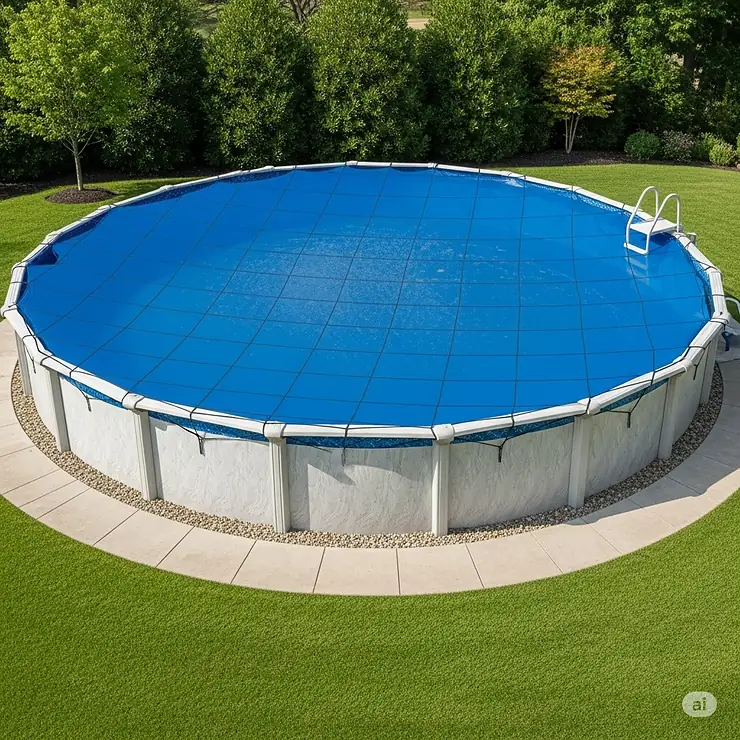
The best above ground pool covers are purpose-built tarps, mesh sheets, or floating solar blankets sized for round or oval above ground pools. Winter covers seal out debris and weather in the off-season, mesh covers let water drain through, and solar covers trap heat and slow evaporation during swim season.
Winter Covers: The Off-Season Shield
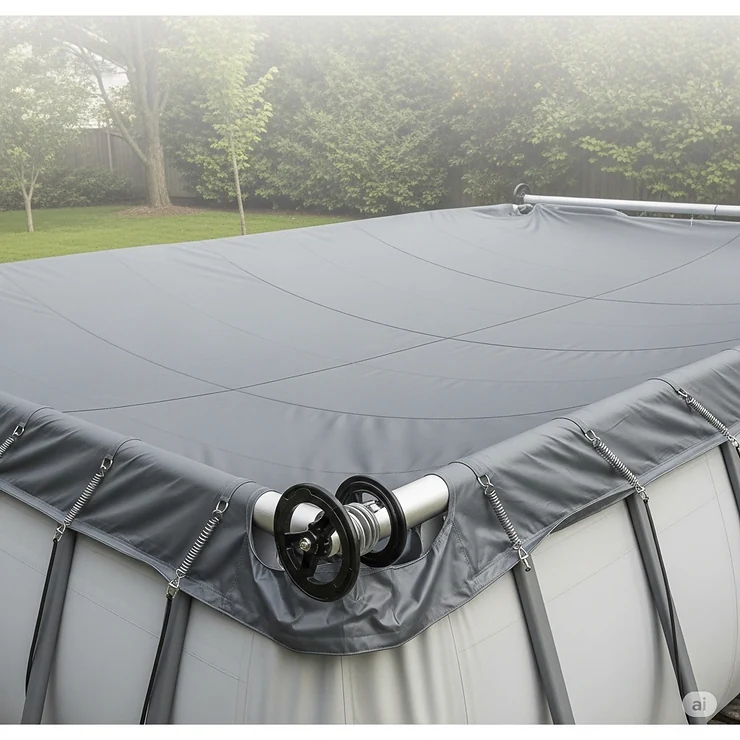
Solid winter covers are woven polyethylene sheets that stretch over the pool and cinch down with a cable and winch. Their job is simple: keep leaves, dirt, and sunlight out until spring. A good one has heat-sealed seams, a generous overlap past the top rail, and a dark underside that starves algae of light.
Mesh Covers: Pump-Free Peace of Mind
Mesh covers let rain and snowmelt drain straight through. You skip the cover pump, but you accept that fine particles and some light will pass through too.
Solar Covers: The Summer Workhorse
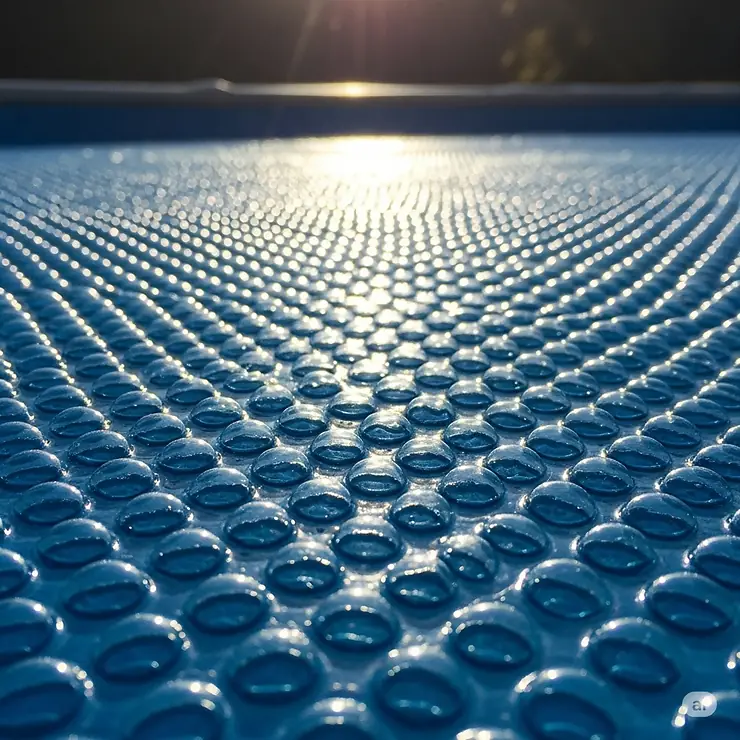
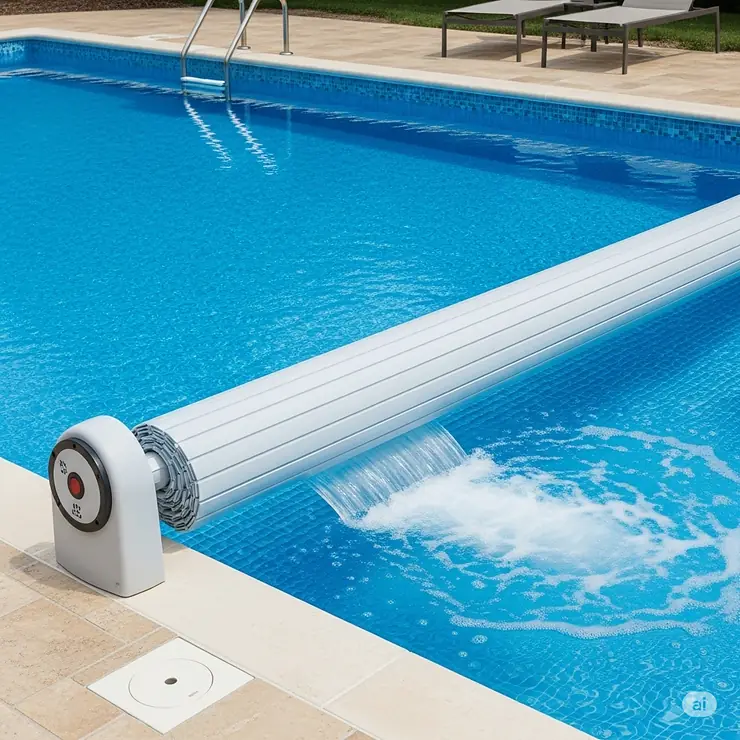
Solar covers float on the surface like a giant sheet of bubble wrap. They’re not for winter, and they’re definitely not safety devices, a distinction that matters enough to get its own section later.
Top 7 Best Above Ground Pool Covers: Expert Analysis
Each pick below gets the same treatment: what the headline spec means, who should buy it, what aggregated reviewer sentiment says, and an honest verdict. Where genuine reviews couldn’t be verified, we say so instead of guessing.
1. Blue Wave Gold 15-Year Solid Winter Cover — longest warranty in this lineup
The headline is the paperwork: 15 years, with the first three fully covered and the remaining years prorated. That structure matters, because “15-year” is a ceiling, not a promise.
On the spec sheet, the cover uses woven polyethylene with a 14×14 scrim count, heat-sealed seams, and a black underside. Scrim count is the grid of reinforcing threads, and a denser grid generally resists tearing better. The black underside blocks light, which is what algae needs to bloom under a cover. The 4-foot overlap, per retailer listings, helps it hang over wider top rails where 3-foot covers can run short. Hardware includes a metal winch, vinyl-coated cable, and metal grommets every two feet.
Because it’s solid, nothing passes through, so spring water tends to start cleaner. The trade-off is that rain and snowmelt pool on top, so plan on a cover pump or air pillow. This one suits anyone in a snowy region who’d rather buy once than annually.
Aggregated reviewer sentiment is mixed but instructive. Buyers often praise the easy installation and sturdy feel, while opinions split on winch strength, grommet durability, and lifespan, with some getting years of use and others seeing problems within a year. Warranty claim experiences vary too.
Pros:
- ✅ Longest warranty window in this roundup
- ✅ Black underside helps keep spring water clearer
- ✅ Generous 4-ft overlap for wider top rails
Cons:
- ❌ Solid design collects water and needs a pump
- ❌ Hardware and lifespan reviews are inconsistent
Price range: roughly $100–$250 depending on size, so check current price. For cold climates, it’s strong value if you read the fine print.
2. Yankee Pool Pillow Sapphire Series Winter Cover — thick, cold-rated premium durability
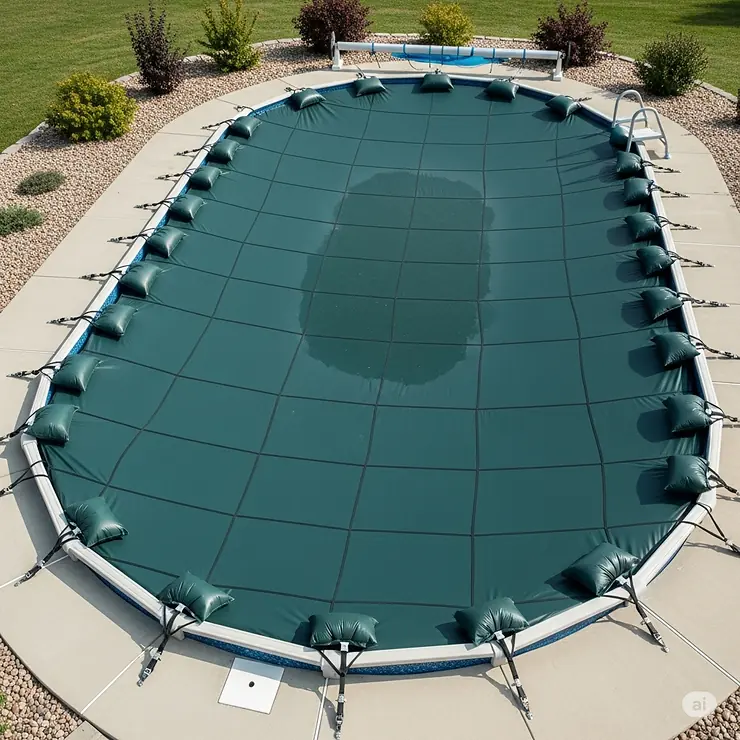
This one earns its spot through material heft. The Sapphire Series is marketed as extra thick, cold-resistant, and UV-resistant, and a published editorial roundup singled it out for premium durability on 24-foot pools.
What does “cold-resistant” actually buy you? Cheap polyethylene turns brittle in deep freezes, and brittle plastic is how covers split along stress lines in January. A thicker, UV-stabilized sheet resists both brittleness and sun-bleaching, which is where bargain covers quietly die. The Yankee Pool Pillow brand is also associated with air pillows, the inflatable cushions that lift the cover center and take ice pressure off your walls, so this cover pairs naturally with that winterizing approach.
On paper, this is the pick for buyers who’ve already lost a cheap cover and refuse to repeat the experience. Warranty length, overlap, and grommet details vary by size and listing, so confirm them on the current page before ordering. We couldn’t verify enough genuine customer reviews to summarize sentiment responsibly, so treat the durability claims as manufacturer positioning plus editorial opinion for now.
Pros:
- ✅ Extra-thick, UV- and cold-resistant material
- ✅ Natural pairing with air-pillow winterizing
- ✅ Positioned for multi-season use
Cons:
- ❌ Premium pricing versus basic tarps
- ❌ Solid cover still needs water management
Price range: typically the premium tier, often $150 and up for larger rounds, so check current price. The verdict is that it’s worth it if you’ve been burned before.
3. POOLACC 24 ft Winter Pool Cover — rust-resistant grommets on a value budget
The standout detail is the zinc grommets. Grommets are where cheap covers fail first, because chlorinated water and moisture corrode them until they pull right out of the fabric. Zinc resists that corrosion, which is a practical edge over bare steel.
The cover is rated for roughly -10°F to 180°F, per editorial roundups. That range covers just about any continental U.S. winter, and the heat tolerance means a baking sun won’t wreck it either. A 3-foot overlap fits most standard above ground pools, though pools with unusually wide top rails could leave you with a snug fit, so measure first.
An editorial roundup named it best value among winter covers, and it’s best suited to a 24-foot pool owner in a moderate-to-cold climate who wants dependable coverage without the premium bill. If you’re in a deep-snow zone, step up to the Blue Wave Gold 15-Year Solid Winter Cover. We couldn’t verify a large pool of genuine customer reviews, so judge it mainly on specs and editorial testing.
Pros:
- ✅ Corrosion-resistant zinc grommets
- ✅ Wide temperature tolerance
- ✅ Friendly price for its size class
Cons:
- ❌ 3-ft overlap is tighter on wide top rails
- ❌ Fewer verified long-term reviews
Price range: around $60–$130 depending on size, so check current price. This is solid value for moderate climates.
4. Blue Wave Rugged Mesh 8-Year Winter Cover — drains on its own, no pump required
The big idea is that water goes through the cover instead of sitting on it. No pump, no midwinter trips to the backyard to siphon a snow-slush pond.
The listing describes a fine-mesh debris barrier with a 4-foot overlap, reinforced grommets, vinyl-coated cable, and a metal winch, backed by an 8-year warranty with one year of full coverage. Fine mesh keeps leaves and twigs out while letting precipitation drain, so the cover never bears the weight of standing water. That’s why mesh suits wooded lots, where a solid cover can become a heavy, leaf-piled sponge.
The compromise is water quality. Mesh admits some light and fine particles, so expect more spring cleanup than under a solid cover. One roundup advises keeping the water level around six inches below the skimmer, and it’s wise to follow the manufacturer’s guidance on this.
We couldn’t verify enough genuine customer reviews for a confident sentiment summary, but the editorial consensus is that it balances quality, warranty length, and cost for busy owners.
Pros:
- ✅ Drains rain and melt without a cover pump
- ✅ Debris barrier suits tree-heavy yards
- ✅ Reinforced grommets and metal winch included
Cons:
- ❌ Lets in fine particles and some light
- ❌ Shorter 8-year warranty, one year full
Price range: roughly $70–$180 depending on size, so check current price. It’s a smart choice if you’d rather skip the pump.
5. Sun2Solar 1200 Series Solar Cover — 12 mil thickness for serious heat
Thickness is the star here. At 12 mil (thousandths of an inch), this bubble cover is heavier than budget blankets, which generally means better insulation and better survival under summer UV.
Bob Vila’s solar cover testing named a Sun2Solar 1200 Series cover best overall, with the 1600 Series as the upgrade pick. A separate editorial roundup called the 12-mil thickness a good balance for above ground pools. A transparent bubble cover can trim solar absorption by 5% to 15%, per the Department of Energy, but you gain far more by stopping evaporation and trapping overnight heat.
Practically, this fits medium-to-large pools in regions with strong summer sun, where nights drop and water temperatures yo-yo. Heavier material does mean a bit more wrestling on install, so a second set of hands helps.
We couldn’t verify enough individual customer reviews, so the case here rests on editorial testing and specs. Remember: this is a heating cover, not a safety device. Never let anyone walk on it, and remove it before swimming.
Pros:
- ✅ Thicker 12 mil build for insulation and longevity
- ✅ Strong editorial test results
- ✅ Great for cool-night regions
Cons:
- ❌ Heavier and clumsier to handle than budget covers
- ❌ Not a safety cover, and must be removed to swim
Price range: roughly $60–$180 depending on size and series, so check current price. If you want warm water all season, this is the one to beat.
6. In The Swim 18′ Standard Solar Cover — best bang for the buck on 18-footers
For an 18-foot round, this 8 mil blanket is a sensible middle path between flimsy bargain-bin options and premium thickness.
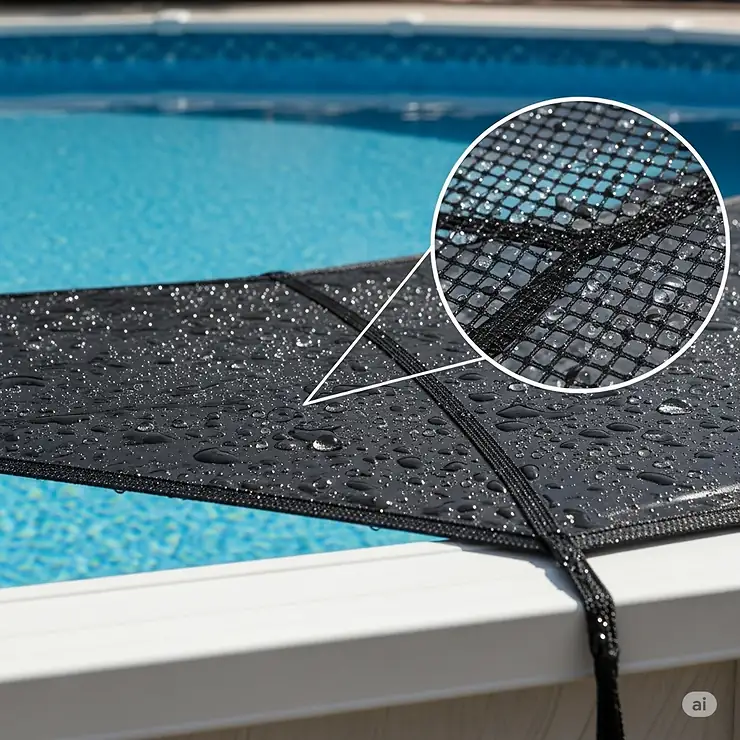
An editorial roundup named it best value, particularly for owners who want real solar performance without paying for 12-mil heft. The 8 mil rating is thinner than the Sun2Solar, so expect lighter handling and a more modest lifespan under relentless sun. A lighter blanket is also easier for one person to deploy, which matters if you cover and uncover daily.
One smart tip from that roundup: above ground pools often have slight size variations once liner stretch is accounted for. So measure your actual water surface, and remember that a solar cover can be trimmed to fit, but only if it starts out larger, not smaller.
Genuine customer review data wasn’t verifiable here, so lean on the specs and the editorial value pick. It’s a good fit for families who want warmer water without a serious spend.
Pros:
- ✅ Strong value for 18-ft round pools
- ✅ Lighter and easier for one person to handle
- ✅ Suitable for above ground and inground pools
Cons:
- ❌ Thinner 8 mil material than premium options
- ❌ Fit depends on accurate measuring
Price range: around $40–$90 depending on size, so check current price. It’s a fine budget heat solution.
7. Intex Solar Cover (Easy Set and Frame Pools) — the cheap, cheerful fix for Intex owners
The appeal is simplicity. This is a lightweight 8 mil blanket sold in sizes for 10-, 12-, 15-, and 18-foot Easy Set and frame pools, with central drainage holes so rainwater doesn’t pond on top, plus a carry bag. Intex claims it reduces evaporation by 95%, a manufacturer figure worth treating as a best-case scenario.
Reviewer sentiment is genuinely split, which is useful to know. Plenty of buyers report noticeable warming, with one reporting about a ten-degree gain in six days of sunny weather. Others cite weak points: a thin feel, fit problems on some pools, and in a couple of cases the bubbles flaking apart or the sheet tearing after a season, with one reviewer noting no warranty. One retail listing showed a 4.2-star average across tens of thousands of reviews, which suggests most owners are satisfied.
The practical read: it’s an inexpensive way to buy warmth and reduced chemical loss for smaller pools, with the understanding that it’s a consumable, not a forever product. Watch the sizing, since an 18-foot cover on a smaller bladder pool is reportedly too large.
Pros:
- ✅ Very affordable for small and mid-size pools
- ✅ Drain holes and easy one-person deployment
- ✅ Matches Intex Easy Set and frame sizing
Cons:
- ❌ Thin material may not last multiple seasons
- ❌ Some reviewers report fit and tearing issues
Price range: typically $20–$70 depending on size, so check current price. It’s good value if you treat it as a seasonal item.
How to Choose the Best Above Ground Pool Covers
Choosing the best above ground pool covers comes down to six decisions, in roughly this order.
- Decide the job first. Winter protection, leaf defense, and solar heating are three different products. One cover rarely does all three well, so name your primary pain point before you shop.
- Measure your pool correctly. Cover size equals pool diameter plus overlap. Retailer listings show that a 16 x 32 ft oval pool takes a 20 x 36 ft cover, so a 4-foot overlap adds two feet on each side. Always check the manufacturer’s size chart, not the pool’s nominal size.
- Pick solid or mesh. Solid keeps spring water cleaner but needs a pump or air pillow. Mesh drains on its own but admits fine particles. Heavy snow and ice favor solid, while leaf-heavy yards often favor mesh.
- Check material and construction. Look at scrim count, heat-sealed seams, UV protection, and for solar covers, mil thickness. These numbers predict how the cover handles year three, not just week one.
- Inspect the hardware. Grommet material, cable quality, and winch strength are the failure points reviewers mention most. Zinc or properly treated hardware matters near pool chemicals.
- Read the warranty like a lawyer. A “15-year” warranty with three full-coverage years is not a 15-year guarantee. Know the full-coverage window.
Practical Usage Guide: Installing and Maintaining Your Above Ground Pool Cover
Amazon listings tell you what a cover is. They rarely tell you how to make it last. Here’s the part they skip.
Winter Installation Checklist
- Balance and clean first. Brush the walls, vacuum, and balance chemistry before closing. Whatever is in the water in November is what you’ll meet in April.
- Lower the water level. Follow your manufacturer’s guidance. One mesh-cover roundup suggests roughly six inches below the skimmer.
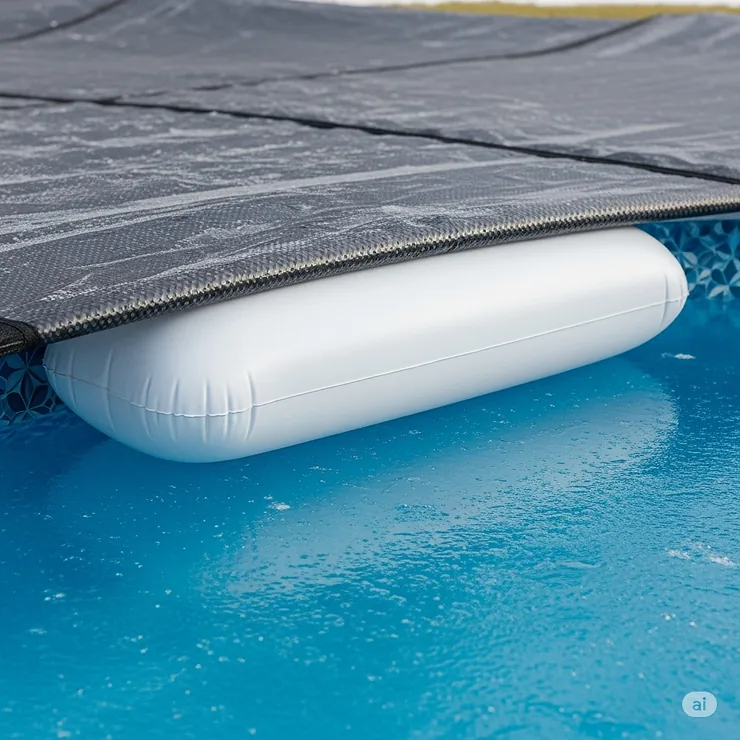
- Use an air pillow with solid covers. It lifts the center, sheds water toward the edges, and helps protect walls from ice pressure.
- Center and tension. Drape the cover evenly, thread the cable through the grommets, and tighten the winch until snug, not drum-tight.
- Re-check in the first 30 days. Cables settle. A quick retension prevents the classic midwinter flap.
Solar Cover Habits
The Department of Energy advises removing a cover just before swimming and replacing it as soon as you’re done. Build that into the routine: cover at dusk, uncover at swim time. Trim a solar sheet only after confirming fit, and store it dry and out of direct sun.
Spring Teardown
Brush off debris, drain standing water, rinse, dry completely, and fold loosely. A damp cover in a garage corner becomes a mildew factory by June.
Real-World Scenarios: Matching the Best Above Ground Pool Covers to Your Situation
Here are three profiles, each pairing a buyer with a cover and the reasoning behind it. These are illustrative scenarios, not case studies of real customers.
The snowbelt family. A 24-foot round pool, heavy snowfall, covered from November through April. Priority: not replacing the cover next year. The Blue Wave Gold 15-Year Solid Winter Cover or the Yankee Pool Pillow Sapphire Series Winter Cover fits, paired with an air pillow. Budget is mid-to-premium because a failed cover means a costly spring cleanup.
The tree-lined backyard. A 28-foot round, oak and maple overhead, owners who don’t want to run a cover pump in January. The Blue Wave Rugged Mesh 8-Year Winter Cover suits this setup, since water drains through and leaves stay out. They accept slightly more spring cleaning in exchange for less winter babysitting.
The cool-night sun-seeker. An 18-foot frame pool in a warm region where nights dip and daytime sun is strong. They swim most afternoons and want warmer water without paying for a heater. The In The Swim 18′ Standard Solar Cover is the budget pick, or the Sun2Solar 1200 Series Solar Cover if they want thicker material.
✨ Ready to Protect Your Pool?
🔍 Take your pool care to the next level with these carefully selected covers. Click on any highlighted product to check current pricing and availability. A little protection now means a cleaner, calmer pool season ahead!
Problem and Solution Guide: Fixing Common Above Ground Pool Cover Headaches
Most cover frustrations are predictable and fixable.
- Problem: Water pooling on a solid cover. Add an air pillow and a small cover pump. Remove standing water regularly, because a heavy pond can stress the cover and the cable.
- Problem: The cover keeps blowing off. Tighten the cable, confirm the overlap hangs fully over the top rail, and use corner tie-downs if the cover provides grommets for them. A 4-foot overlap, like the Blue Wave Gold 15-Year Solid Winter Cover offers, holds better than a short one.
- Problem: Algae under the cover. Switch to a solid cover with a dark underside, and balance and sanitize the water before closing. Mesh covers admit light, so algae pressure is higher.
- Problem: Solar cover flaking or tearing. Thinner blankets like the Intex Solar Cover are consumables, and UV exposure and chemical contact wear them down. Remove them during shock treatments and store them dry.
- Problem: The cover doesn’t fit. Measure the actual water surface and rail width, and add the manufacturer’s overlap. If you’re between sizes, size up for winter covers and for solar covers you plan to trim.
Winter vs. Solar vs. Mesh: Which of the Best Above Ground Pool Covers Fits Your Pool?
| Factor | Solid Winter | Mesh Winter | Solar |
|---|---|---|---|
| Primary job | Off-season protection | Off-season debris control | Heat and evaporation |
| Water handling | Collects on top | Drains through | Drain holes on some |
| Spring cleanup | Lightest | Moderate | Not applicable |
| Safety value | None | None | None |
| Best For | Blue Wave Gold 15-Year Solid Winter Cover, POOLACC 24 ft Winter Pool Cover | Blue Wave Rugged Mesh 8-Year Winter Cover | Sun2Solar 1200 Series Solar Cover, In The Swim 18′ Standard Solar Cover |
This table makes one thing clear: these are not competitors, they’re teammates. A solid cover gives the best spring water but demands pump management, while mesh trades some water clarity for convenience. Solar covers do a completely different seasonal job, which is why serious pool owners often own two covers.
The “Safety value” row deserves your attention. The Consumer Product Safety Commission has warned consumers about drowning hazards with solar pool covers, noting deaths tied to pool covers of various types. The takeaway is simple: never swim in a pool that is partly covered, and never treat a solar blanket or a winter tarp as a child barrier.
Features That Actually Matter (And Those That Don’t)
Marketing copy loves a superlative. Here’s how to filter it.
Features That Matter
- Scrim count and seams. Denser reinforcement and heat-sealed seams resist tearing, which is the first thing to fail in a storm.
- Overlap. An extra foot of overlap is the difference between a snug cover and one that slips off a wide rail.
- Hardware material. Zinc grommets and vinyl-coated cable resist corrosion from chemicals and moisture.
- Black underside. It blocks light that fuels algae.
- Mil thickness (solar). More mils generally means more insulation and longer life, with extra weight as the trade-off.
- Warranty structure. The fully covered period matters more than the headline number.
Features That Don’t
- “Tear-proof” slogans. Nothing is tear-proof. Look at specs instead.
- Color names. “Royal blue” versus “navy” changes nothing about performance, though the Department of Energy notes that cover color can slightly affect heat absorption.
- Giant warranty numbers. A 15-year headline with three full years is mostly a prorated discount.
Long-Term Cost and Maintenance: What Your Pool Cover Really Costs
Sticker price is the least interesting number. What matters is cost per season. Here’s how the picks stack up:
| Cover | Price Tier | Warranty Structure | Best For |
|---|---|---|---|
| Blue Wave Gold 15-Year Solid Winter Cover | Mid to upper | 15 yrs, 3 full | Long-haul winter value |
| POOLACC 24 ft Winter Pool Cover | Budget to mid | Check listing | Value-minded buyers |
| Blue Wave Rugged Mesh 8-Year Winter Cover | Mid | 8 yrs, 1 full | Pump-free convenience |
| Sun2Solar 1200 Series Solar Cover | Mid to upper | Check listing | Maximum heat gain |
| Intex Solar Cover | Low | Reviewers report none | Short-term budget heat |
Do a quick illustrative calculation: a cover costing about $150 that survives five winters works out to roughly $30 a year, while a $60 cover replaced every year costs twice that. The longer-lasting option wins as long as it genuinely lasts, which is why the warranty’s full-coverage window deserves scrutiny.
Solar covers follow the same logic, plus a payoff. By reducing evaporation, they also cut water, chemical, and heating costs. The Department of Energy points out that covering the pool is the most effective way to reduce pool heating costs. Even a modest cover pays you back in a hot, dry summer.
Safety, Regulations, and What Pool Covers Can’t Do
This is the section many cover guides skip. It’s also the most important.
Solar and winter covers are not safety covers. The Centers for Disease Control and Prevention reports that drowning is a leading cause of death for young children, and recommends layered protection, including four-sided fencing, close supervision, and swim skills. A pool cover that isn’t rated as a safety barrier is not part of that layer.
Medical references also warn that solar covers can be dangerous because a child may walk onto the surface, become entangled, and be hidden from view. Standing water on top of any cover is an additional hazard, since a child can drown in just a couple of inches.
True safety covers meet the ASTM F1346 standard and are a different product class entirely. If you have young children or pets, treat covers as housekeeping tools and rely on a certified fence, gate alarms, and an adult “pool watcher” for safety.
Common Mistakes When Buying the Best Above Ground Pool Covers
- Buying by pool size instead of cover size. Overlap isn’t optional. A cover that matches the pool diameter exactly will not fit.
- Chasing the lowest price. A cover that fails in January costs more than a good one, including cleanup and chemicals.
- Skipping the air pillow. With a solid cover, it protects the cover center and helps shed water.
- Leaving a solar cover on while swimming. Remove it. Safety and function both depend on it.
- Assuming one cover does everything. Solar blankets don’t winterize, and winter tarps don’t heat.
- Ignoring the fine print. Prorated warranties and short full-coverage windows change the real value.
- Over-tightening the cable. Snug is enough. Extreme tension stresses grommets and seams.
Frequently Asked Questions About the Best Above Ground Pool Covers
❓ How much overlap should an above ground pool cover have?
❓ Is a solid or mesh cover better for an above ground pool?
❓ Do I need an air pillow under my winter cover?
❓ How much warmer will a solar cover make my pool?
❓ Can an above ground pool cover prevent a child from drowning?
Conclusion: Choosing Among the Best Above Ground Pool Covers
The best above ground pool covers aren’t the fanciest or the cheapest. They’re the ones that match your job, your climate, and your patience. For snowy winters, the Blue Wave Gold 15-Year Solid Winter Cover and the Yankee Pool Pillow Sapphire Series Winter Cover lead on durability. The POOLACC 24 ft Winter Pool Cover is the value play for moderate climates. The Blue Wave Rugged Mesh 8-Year Winter Cover wins for pump-free convenience. For swim-season warmth, the Sun2Solar 1200 Series Solar Cover delivers premium thickness, while the In The Swim 18′ Standard Solar Cover and the Intex Solar Cover keep the budget friendly.
The pattern to remember: measure first, match the cover to its job, read the warranty’s full-coverage window, and treat every cover as a housekeeping tool rather than a safety device. For deeper pool safety guidance, the federal Pool Safely campaign offers free resources for families.
✨ Your Pool Deserves Better!
🏊 Pick the cover that fits your climate and budget, then click a highlighted product to check current pricing and availability. A few minutes of smart shopping today means a cleaner, calmer pool all year long!
Recommended for You
- Best Above Ground Pool Pump: 7 Smart Picks Ranked (2026)
- Deck Around Above Ground Pool: 7 Proven Picks for 2026
- Salt Water Above Ground: 7 Best Systems for 2026
Disclaimer: This article contains affiliate links. As an Amazon Associate, I earn from qualifying purchases. If you purchase products through these links, we may earn a small commission at no additional cost to you.
✨ Found this helpful? Share it with your friends! 💬🤗
