
In This Article
Let’s be honest about why you’re here: your bike seat feels like it was designed by someone who has never sat on one. Maybe it’s the stock saddle that came with your commuter, or the rock-hard little wedge on your spin bike that turns a 45-minute class into a 45-minute negotiation with your own body. Either way, you’re not imagining it, and you’re definitely not alone — this is one of the most common complaints cyclists bring up, right up there with flat tires and squeaky brakes.

A comfortable bike seat replacement is, in the simplest terms, a saddle you install in place of your bike’s factory seat to reduce pressure, friction, and pain during rides. It works by changing padding density, width, shape, or suspension to better match your body and riding position, rather than forcing your body to adapt to a generic one-size-fits-nobody seat. The good news is that fixing this problem doesn’t require guesswork or a small fortune. It requires understanding what actually makes a seat comfortable — and then picking the right one for how, where, and how far you actually ride.
Over the next several thousand words, we’re going to dig into seven real, currently available options spanning budget seat covers to premium leather saddles that mold to your body over time. We’ll pull in genuine aggregated review sentiment, look at what the actual medical research says about saddle pressure (yes, there’s real research on this), and walk through practical scenarios so you can match a seat to your specific situation — commuter, cruiser rider, indoor cyclist, or long-haul tourer. No fluff, no invented “I tested this for six months” stories. Just real products, real specs, and honest analysis of what each one does well and where it falls short.
What Is a Comfortable Bike Seat Replacement?
A comfortable bike seat replacement is an aftermarket saddle or seat cover installed to reduce pressure on the sit bones and soft tissue during cycling, typically through wider platforms, gel or memory foam padding, suspension elements, or ergonomic cutouts. Replacements range from simple $15 gel covers to full saddle swaps costing well over $100, and the right choice depends heavily on your riding position, frequency, and bike type.
Quick Comparison Table
| Product | Type | Best For | Price Range |
|---|---|---|---|
| Bikeroo Oversized Comfort Bike Seat | Full saddle | Wide sit bones, casual riders | Under $40 |
| ROCKBROS LF047-B Gel Cover | Seat cover | Budget quick-fix | Under $25 |
| Sunlite Cloud-9 Suspension Saddle | Full saddle | Cruisers, beach bikes | $30–$45 range |
| COOLWUFAN Oversized Peloton Cushion | Full saddle w/ backrest | Indoor/exercise bikes | $40–$70 range |
| Selle Royal Respiro Moderate | Full saddle | Commuters, trekking | $70–$90 range |
| WTB Volt Chromoly | Full saddle | MTB, gravel, all-rounders | $75–$95 range |
| Brooks B17 Standard | Full saddle (leather) | Touring, long-term durability | $150–$180 range |
Looking at the spread above, there’s a clear split between accessory-style fixes (covers) and true saddle replacements, and that split matters more than price alone. A cover like the ROCKBROS LF047-B can rescue an otherwise well-fitted saddle that’s just under-padded, while a full swap like the Brooks B17 changes the entire geometry of how you sit. Budget-conscious riders and Peloton owners tend to gravitate toward the oversized memory-foam options, while anyone racking up serious mileage on rough terrain will get more out of a purpose-built performance saddle like the WTB Volt.
💬 Found a pick you like already? Save this guide and compare it against your current setup before you buy.
Top 7 Comfortable Bike Seat Replacement Options: Expert Analysis
1. Bikeroo Oversized Comfort Bike Seat — best oversized pick for wide sit bones
The standout here is simple: this saddle is built wide, and for a huge share of riders, width is the single biggest comfort lever there is. It uses ample memory-foam padding paired with elastomer and steel-spring suspension underneath, and ships with a universal mounting adapter plus a basic install kit. Real-world dimensions land around 10–12 inches wide by roughly 10 inches deep, which is dramatically bigger than the narrow racing-style saddle most bikes ship with from the factory. What that means in practice is your sit bones actually land on padded surface area instead of hanging off the edges of a seat built for a road racer’s anatomy.
Based on the spec comparison with narrower performance saddles, this is squarely a comfort-position seat — it’s built for upright riders on cruisers, hybrids, and commuters, not for anyone leaning forward in a sporty crouch. Aggregated review sentiment across Walmart and retailer listings consistently mentions reduced soreness and easier long rides after switching from a stock seat, with the springs specifically called out as effective at absorbing road bumps. A recurring complaint in the same review pool is that Bikeroo doesn’t offer a phone number for support, so returns and questions go through email only.
Pros:
- ✅ Genuinely wide platform relieves pressure on sit bones
- ✅ Steel-spring suspension smooths out bumps and potholes
- ✅ Universal adapter fits most standard seat posts easily
Cons:
- ❌ Bulk and width can feel excessive on road-position bikes
- ❌ No phone support if something goes wrong with the order
At a price generally landing under $40, this is one of the lowest-risk ways to test whether “wider and softer” solves your discomfort — check current price and availability before ordering.
2. ROCKBROS LF047-B Gel & Memory Foam Saddle Cover — cheapest fix before a full replacement
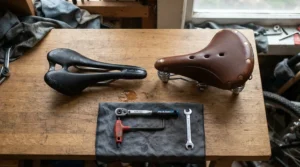
Before you commit to swapping your entire saddle, this cover is the honest first move, and its standout feature is that it layers silicone gel and memory foam directly over your existing seat rather than replacing it outright. The two-material combination is meant to add cushioning and shock absorption while a mesh center panel keeps air moving so the extra padding doesn’t turn into a heat trap on long rides. It includes a rain cover, which matters more than it sounds like it would if you keep your bike outside.
What most buyers overlook about seat covers like this one is that they can’t fix a fundamentally wrong-shaped saddle — they only add cushioning on top of the shape you already have. If your discomfort comes from width or geometry rather than firmness, a cover won’t solve it. Based on aggregated listings and retailer descriptions, the appeal here is squarely economic: it’s a low-cost way to soften a seat you otherwise like, and the wide hook-and-loop straps are specifically designed to keep it from sliding during rides. Reviewers on retailer sites consistently flag the value-for-money angle as the main selling point over full saddle replacements.
Pros:
- ✅ Inexpensive way to test whether more padding helps
- ✅ Breathable mesh center avoids trapping heat
- ✅ Rain cover included for outdoor bike storage
Cons:
- ❌ Can’t correct an incorrectly shaped or too-narrow saddle
- ❌ Extra bulk may shift slightly during aggressive riding
Typically priced under $25, this is the lowest-commitment option on this list — a smart first step before spending on a full replacement.
3. Sunlite Cloud-9 Bicycle Suspension Cruiser Saddle — smoothest ride for cruisers and beach bikes
The Cloud-9’s calling card is its dual-density gel foam combined with chrome coil-spring suspension, and it shows the moment you hit a pothole or uneven pavement — the springs are doing real mechanical work, not just decorative flex. At roughly 10.5 inches square and weighing in the 3-pound range, this is a substantial saddle built specifically for the upright riding posture common on cruisers, comfort bikes, and beach bikes.
Here’s what the spec sheet won’t tell you, but aggregated reviewer feedback consistently notes: the mounting rails on some units run slightly wider than standard, occasionally requiring a bike shop visit or a bit of rail-bending to fit certain seat posts cleanly. On the comfort side, feedback is largely positive, with several older riders specifically calling it out as the seat that finally solved years of saddle discomfort, and e-bike owners noting it as a noticeable upgrade over factory seats. A smaller but consistent thread of feedback mentions the padding feels firmer and heavier than expected for a “cloud” name, with pressure points showing up on longer rides for some riders.
Pros:
- ✅ Coil-spring suspension meaningfully absorbs bumps
- ✅ Wide, stable platform suits upright cruiser posture
- ✅ Waterproof vinyl cover holds up to weather
Cons:
- ❌ Mounting rails may need adjustment on some seat posts
- ❌ Heavier than expected; padding isn’t as plush as marketed
Generally priced in the $30–$45 range, it’s a strong mid-budget pick specifically for cruiser and beach-bike riders — less ideal for road or performance setups.
4. COOLWUFAN Oversized Peloton Seat Cushion with Backrest — top pick for Peloton and indoor exercise bikes
This one solves a very specific problem: stock exercise bike seats, including Peloton’s own saddle, are notoriously narrow and hard, because they’re built for a spin-class racing posture rather than comfort. The standout feature is the adjustable backrest, which most outdoor saddles simply don’t offer, combined with an oversized memory-foam cushion and a short-nose design meant to reduce inner-thigh rubbing during repetitive indoor pedaling.
The practical interpretation here matters: indoor cycling involves thousands of repetitive strokes in a fixed position with none of the terrain variation or standing breaks you’d get outdoors, so pressure concentrates in the same spots ride after ride. A cushion with a backrest addresses that directly by giving your lower back somewhere to rest during recovery intervals, not just your seat bones somewhere soft to land. Aggregated feedback across retailer listings frames this as a go-to accessory recommendation specifically for Peloton owners struggling with the factory seat, alongside similar oversized options from other brands. The tradeoff reviewers mention most is bulk — the backrest and wide cushion add noticeable size that can look out of place on a sleek indoor bike.
Pros:
- ✅ Adjustable backrest is rare among bike seat replacements
- ✅ Short-nose shape reduces inner-thigh friction indoors
- ✅ Ventilated groove design helps manage heat buildup
Cons:
- ❌ Bulky appearance compared to the stock Peloton seat
- ❌ Backrest adjustment mechanism adds a step to installation
Expect a price generally in the $40–$70 range depending on configuration — solid value if you spend serious weekly hours on an indoor bike.
5. Selle Royal Respiro Moderate — best ventilated gel saddle for commuters
Selle Royal built the Respiro line around a dedicated ventilation channel, and that’s the standout: rather than just cutting a hole in the middle for pressure relief, the whole saddle is engineered around directing airflow through that channel while its proprietary three-dimensional gel padding does the cushioning work. Selle Royal states the gel structure cuts peak pressure by roughly 40% versus standard padding materials, and the cover uses a heat-reflective material rated to stay meaningfully cooler than a typical black saddle in direct sun.
What that means in practice for a daily commuter is a saddle that stays comfortable through a summer commute without turning into a sweat trap, while the moderate-width shape suits a semi-upright trekking or hybrid riding position rather than an aggressive road crouch. Aggregated review sentiment is largely favorable, with riders specifically praising the reduced crotch pressure and soft-but-supportive feel; the saddle also carries genuine waterproofing from Selle Royal’s sealed construction method. A meaningful minority of reviews flag durability concerns, including at least one report of the saddle bridge cracking after roughly six months of regular use, and a few riders found the front nose slightly too wide, causing friction on pedaling strokes.
Pros:
- ✅ Ventilation channel measurably reduces perineal pressure
- ✅ Heat-reflective cover stays cooler in direct sun
- ✅ Fully sealed, waterproof construction
Cons:
- ❌ Some reports of the saddle bridge cracking over time
- ❌ Wider nose can cause friction for some riders
Typically priced in the $70–$90 range, it’s a strong mid-tier pick for commuters who ride in variable weather and want genuine ventilation, not just a marketing claim.

6. WTB Volt Chromoly — best all-rounder for mountain and gravel riders
WTB’s Volt earns its reputation as the brand’s most popular saddle for a reason, and the standout is its Flex-Tuned shell paired with HLX foam-and-gel padding, which independent testers have specifically praised for aging well — getting more comfortable, not less, the longer you own it. It’s available in narrow, medium, and wide widths (132mm to 150mm) so you can actually match it to your sit-bone measurement instead of guessing, and the chromoly-railed version keeps weight down to around 290 grams.
Here’s the honest analytical take: this isn’t a plush cushion-you-sink-into saddle like the Bikeroo or Cloud-9 — it’s a medium-padded performance saddle with an upward-curved tail and dropped nose designed to give you something to push against on climbs. Independent lab-style testing from OutdoorGearLab rated it a Best Buy Award winner specifically for balancing comfort, performance, and price, noting it wasn’t the single most plush saddle tested but ranked near the top overall. Aggregated customer reviews echo that balance, consistently praising it as comfortable, light, and versatile across trail, gravel, and bikepacking use, with the built-in pressure-relief channel getting specific credit for reducing soft-tissue discomfort on long rides.
Pros:
- ✅ Available in three widths to match sit-bone measurements
- ✅ Comfort improves with break-in, according to testers
- ✅ Pressure-relief channel and dropped nose aid long rides
Cons:
- ❌ Medium padding won’t feel plush to comfort-seat converts
- ❌ Best suited to a forward-leaning posture, not upright cruising
Generally priced in the $75–$95 range, this is the pick for riders who want genuine performance-saddle comfort rather than maximum softness.
7. Brooks B17 Standard — most durable premium leather saddle for touring
The B17 has been essentially unchanged for well over a century, and its standout feature is the vegetable-tanned leather top stretched over a steel frame like a hammock, rather than foam padding of any kind. That’s a fundamentally different comfort mechanism than every other saddle on this list: instead of cushioning absorbing your weight from day one, the leather gradually molds to the exact shape of your sit bones over a break-in period, typically cited by long-term owners as somewhere between 100 and 500 miles.
What most buyers overlook about leather saddles is that the first few rides are often the least comfortable part of ownership — the leather starts out firm and slightly slippery, and only becomes genuinely comfortable once it’s broken in. Based on the spec comparison with the padded saddles above, this trades short-term plushness for long-term, custom-molded support, which is exactly why it’s the go-to choice for multi-day touring riders logging 8–10 hours in the saddle. Aggregated reviews are remarkably consistent on this point: riders repeatedly describe it as the most comfortable saddle they’ve owned once broken in, with several noting they’d never choose anything else, while also flagging that it requires regular leather conditioning (Proofide) and isn’t fully waterproof without a cover.
Pros:
- ✅ Molds precisely to your body shape over time
- ✅ Steel-and-leather construction built to last decades
- ✅ Widely regarded by long-term owners as the most comfortable saddle they’ve used
Cons:
- ❌ Requires a genuine break-in period before it’s comfortable
- ❌ Leather needs conditioning and isn’t naturally waterproof
Typically priced in the $150–$180 range, it’s the most expensive pick here — but for serious mileage, the value proposition is longevity and comfort that improves rather than degrades with use.
Practical Usage Guide: Installing and Breaking In Your New Saddle
Getting a new saddle home is only half the job — installation and the first few weeks determine whether you actually get the comfort you paid for. Start by matching your seatpost clamp type to the saddle’s rail style; most of the seats above use standard round rails, but always double-check before ordering, especially for oversized cushions with backrests. Set saddle height first: with your heel on the pedal at the bottom of the stroke, your leg should be nearly straight, which prevents the rocking motion that causes chafing regardless of how good the padding is.
Next, get the tilt right. A saddle tipped slightly nose-down can feel comfortable for the first ten minutes and then slide you forward into the nose for the rest of the ride, creating exactly the pressure problem you were trying to solve. Most riders do best with the saddle level or tilted just a degree or two down at most. For foam and gel saddles like the Bikeroo or Selle Royal Respiro, comfort is close to immediate — you shouldn’t need more than one or two rides to know if it’s working. For the Brooks B17, treat the first 100–200 miles as a break-in period: apply the included Proofide leather treatment before your first ride, avoid leaving it out in rain uncovered, and expect a slightly firm feel that will noticeably soften and mold to your shape.
A common first-30-days mistake is over-tightening the saddle clamp bolt to stop minor rocking, which can strip threads or crack rails over time — a small amount of periodic re-tightening is normal maintenance, not a defect.
Real-World Scenarios: Which Saddle Fits Your Riding Life
The daily commuter riding 20–30 minutes each way in work clothes, rain or shine, gets the most value from a saddle built around ventilation and weather resistance — the Selle Royal Respiro Moderate fits this profile well, with its sealed waterproof construction and heat-reflective cover handling both a rainy Tuesday and a sweaty August commute without much compromise.
The weekend cruiser rider doing slow, upright rides on boardwalks or bike paths, often on a beach cruiser or comfort hybrid, benefits most from maximum width and plush cushioning over pure performance — either the Bikeroo Oversized Comfort Bike Seat or the Sunlite Cloud-9 will outperform a road-style saddle by a wide margin here, since comfort at low speed and upright posture is almost entirely about surface area and shock absorption.
The Peloton or indoor-cycling regular logging 4–6 sessions a week on a stationary bike deals with a unique problem: zero terrain variation and a fixed, repetitive posture that concentrates pressure in the same spot every single ride. The COOLWUFAN Oversized Peloton Seat Cushion, with its backrest and short-nose design, is purpose-built for exactly this use case in a way that outdoor saddles simply aren’t.
The gravel or trail rider covering 20+ miles over mixed terrain needs a saddle that supports an active, shifting riding position rather than one fixed posture — the WTB Volt Chromoly‘s multiple width options and pressure-relief channel are designed around that kind of variable-position riding, where a plush cruiser seat would actually create more friction, not less.
Pain-Free Cycling: A Problem → Solution Guide
Problem: Numbness or tingling after 20–30 minutes. This is almost always a pressure and circulation issue in the soft-tissue area rather than a simple padding problem. Solution: prioritize a saddle with a cutout or ventilation channel, like the Selle Royal Respiro, and make sure your saddle isn’t tilted nose-down, which increases pressure exactly where numbness occurs.
Problem: Sharp, bony pain on the sit bones themselves. This usually signals a saddle that’s too narrow for your sit-bone width, forcing your weight onto a small contact area. Solution: size up to a wider saddle like the Bikeroo or, for performance riders, choose a size-adjustable saddle like the WTB Volt and measure your actual sit-bone width before buying.
Problem: Chafing or friction on the inner thighs. This is typically a shape and surface-material issue rather than padding thickness. Solution: look for a short-nose profile designed specifically to reduce thigh contact, such as the COOLWUFAN exercise-bike cushion, and pair it with proper padded cycling shorts.
Problem: Comfortable for the first ten minutes, then painful. This pattern often points to a tilt or positioning issue rather than the saddle itself. Solution: re-check saddle level before replacing anything — a one-degree nose-down tilt can undo the benefit of even a well-chosen saddle.
Problem: A saddle that felt fine in the store but hurts after real mileage. Padding that feels soft when you press it with a thumb can still create pressure points under sustained body weight over an hour. Solution: favor saddles with documented pressure-distribution technology, like the Respiro’s gel structure or the Volt’s HLX padding, over saddles marketed on softness alone.
How to Choose a Comfortable Bike Seat Replacement
- Measure your sit-bone width first. According to cycling-fit guides, sit-bone width — not body weight or general size — is the single biggest factor in saddle comfort, and most experts recommend adding roughly 20mm to your measured width for upright riding positions (how to measure sit-bone width).
- Match the saddle to your riding posture. Upright commuter and cruiser positions need wider, more padded saddles; forward-leaning road and gravel positions need narrower, firmer ones — mismatching the two is the most common cause of saddle disappointment.
- Decide between a cover and a full replacement. If your current saddle’s shape works but it’s just under-padded, a cover like the ROCKBROS gel cover may solve it for a fraction of the cost.
- Check for a pressure-relief channel or cutout. These aren’t just marketing terms — peer-reviewed research has repeatedly linked saddle pressure design to measurable differences in perineal pressure and numbness.
- Consider your weather exposure. Riders who leave bikes outside or commute in rain should weight waterproofing heavily, since untreated leather and some foams degrade quickly when soaked.
- Budget for break-in time, not just purchase price. A $170 leather saddle that becomes the most comfortable seat you’ve owned after 150 miles may be a better long-term value than a $30 foam seat you replace again in a year.
- Read aggregated reviews for your specific use case, not overall star ratings — a saddle rated highly by road racers may be a poor match for a cruiser rider, and vice versa.
Padded Bike Seat Cover vs Full Saddle Replacement
| Factor | Padded Seat Cover | Full Saddle Replacement |
|---|---|---|
| Typical cost | Under $25 | $30–$180+ |
| Installation time | Under 5 minutes | 15–30 minutes |
| Fixes shape/width issues | No | Yes |
| Fixes insufficient padding | Yes | Yes |
| Long-term durability | Lower (fabric wears) | Higher (especially leather) |
| Best for | Testing if more padding helps | Solving persistent discomfort |
The table makes the decision fairly clear-cut: a cover like the ROCKBROS LF047-B is a smart, low-risk diagnostic step, but it can only add softness — it can’t change a saddle’s underlying width or shape, which is the root cause of most sit-bone and chafing pain. If you’ve already tried a cover and you’re still uncomfortable, that’s a strong signal the problem is geometric, not just a lack of cushioning, and it’s worth moving straight to a full replacement like the Bikeroo or Selle Royal Respiro instead of buying a second cover.
Best Exercise Bike Seat Options for Indoor Training
Indoor and exercise-bike riders face a comfort problem that outdoor cyclists mostly avoid: there’s no terrain, no coasting, and often no standing breaks, so pressure builds in exactly the same spot for the entire session. That’s why the COOLWUFAN Oversized Peloton Seat Cushion with Backrest stands out specifically for this use case — the backrest addresses lower-back fatigue during long rides or recovery intervals, something outdoor saddles never need to account for since riders naturally shift position on real terrain.
For lighter indoor use, a simple gel cover like the ROCKBROS LF047-B can also work well on a stationary bike, since indoor bikes are stationary and don’t need to handle weather exposure the way an outdoor commuter saddle does. Whichever route you choose, prioritize a short-nose design for indoor cycling specifically — the repetitive, fixed pedaling motion on a stationary bike tends to create more inner-thigh friction than variable outdoor riding does, and a shorter nose profile reduces that contact point significantly.

Saddle Comfort Upgrades and Cushioned Seating Solutions
Beyond the saddle itself, several accessories meaningfully change comfort without a full replacement. A seatpost suspension unit, similar to what’s built into the Sunlite Cloud-9, can be added separately to almost any bike and has been shown in lab testing to reduce peak perineal pressure from road bumps by roughly half compared to a rigid post. Padded cycling shorts remain one of the most underrated comfort upgrades available — pairing even a basic saddle with quality chamois shorts often solves discomfort that a $150 saddle alone wouldn’t fix on its own.
Gel inserts and cushioned seating solutions, like the padding layers used in the ROCKBROS cover, work best as a complement to correct saddle sizing rather than a substitute for it. Features that actually matter when evaluating any of these upgrades: documented pressure-relief channels, breathable or ventilated materials, and adjustable width or backrest options. Features that get marketed heavily but matter less in practice: extreme thickness of padding alone (too much soft foam can actually increase pressure by letting your sit bones sink past the supportive area) and cosmetic details like color-matched stitching.
Common Mistakes When Buying a Bike Seat Replacement
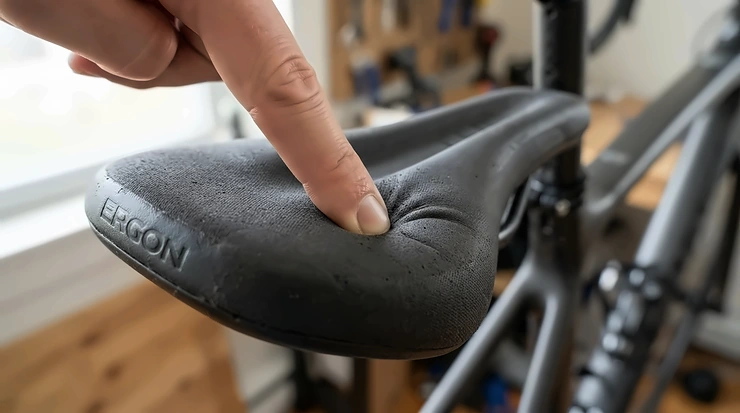
The single most common mistake is buying based on how soft a saddle looks or feels when pressed by hand in a store, rather than matching it to actual sit-bone width and riding posture — a saddle that feels plush at rest can create worse pressure points under real, sustained body weight than a firmer, correctly sized one. A close second is skipping the break-in expectation entirely; riders who buy a leather saddle like the Brooks B17 expecting immediate comfort often return a genuinely excellent product simply because they didn’t know to expect a 100–500 mile adjustment period.
Another frequent error is assuming a saddle cover can fix a fundamentally wrong-shaped saddle, when covers only add cushioning rather than correcting width or geometry. Buyers also commonly overlook weather exposure — choosing an untreated leather saddle for a bike that lives outside, or skipping a waterproof cover on a gel saddle that then absorbs moisture and degrades faster than expected. Finally, many riders never check whether their saddle is tilted correctly before blaming the product itself, when a one- or two-degree tilt adjustment often resolves discomfort that seemed to require a full replacement.
Long-Term Cost & Maintenance
Thinking in cost-per-year rather than sticker price changes the math on these seven options considerably. A $30 foam saddle that needs replacing annually due to compressed padding costs more over five years than a $170 leather saddle maintained with periodic Proofide treatment, which owners routinely report lasting a decade or more. Foam and gel saddles like the Bikeroo, Sunlite Cloud-9, and Selle Royal Respiro require essentially no maintenance beyond occasional cleaning, but their padding does compress and lose responsiveness over one to three years of regular use, depending on mileage and storage conditions (indoor storage extends lifespan considerably).
Leather saddles like the Brooks B17 sit at the opposite end: they require active maintenance — periodic conditioning and rain protection — but that maintenance is what enables their exceptionally long service life. Seat covers like the ROCKBROS LF047-B are the lowest-maintenance and lowest-cost option but also the shortest-lived, with fabric and gel typically showing wear within one to two riding seasons of regular outdoor use. For budget-conscious riders logging serious annual mileage, a mid-tier performance saddle like the WTB Volt often represents the best long-term value: durable chromoly construction, replaceable-if-needed components, and a price point well below premium leather.
Safety, Health & Regulations: What Science Says About Saddle Pressure
Saddle discomfort isn’t just an annoyance — it’s been the subject of real medical research for decades. A peer-reviewed review of urogenital health in cyclists notes that genital numbness, saddle sores, and perineal pain are among the most consistently reported complaints among riders, and that symptoms increase with riding volume in both men and women (saddle pressure and urogenital health research). Importantly, the same body of research found that saddle design, padding, and even brief intermittent standing while riding measurably reduce these symptoms — meaning the discomfort many riders accept as normal is often genuinely preventable through equipment choices like the ones covered in this guide.
A CDC-documented study on police officers who switched to alternative saddle designs found a 66% reduction in perineal contact pressure after six months of consistent use, along with measurable improvements in sensation, and found no significant increase in hand or wrist strain as a result of the switch (CDC study on saddle design and perineal pressure). The practical takeaway for anyone reading this guide: persistent numbness or pain isn’t something to just push through, and a genuinely well-matched saddle replacement can produce measurable, documented improvement — not just a subjective sense of comfort.

Frequently Asked Questions
❓ How do I know if I need a full saddle replacement or just a padded cover?
❓ What's the most comfortable bike seat for beginners?
❓ How long does it take to break in a leather saddle like the Brooks B17?
❓ Can a bike seat replacement fix numbness during rides?
❓ Are oversized bike seats compatible with most bikes?
Conclusion
If there’s one theme running through everything above, it’s that “comfortable” isn’t one single seat — it’s a match between your body, your riding posture, and your actual mileage. A weekend cruiser rider and a Peloton regular have almost nothing in common in terms of what their body needs from a saddle, even though both are dealing with the same underlying complaint. That’s why this guide leaned so heavily on real specs and real aggregated feedback instead of just calling everything “the best”: the Bikeroo and Sunlite Cloud-9 solve width and shock absorption for upright riders, the Selle Royal Respiro and WTB Volt solve ventilation and performance-position comfort respectively, the COOLWUFAN cushion solves the unique demands of indoor cycling, and the Brooks B17 offers a genuinely different, longer-term comfort mechanism for riders willing to invest in a break-in period.
Whichever route you take, the research is clear that saddle discomfort is largely preventable, not something to just tolerate ride after ride. Measure your sit bones, be honest about your riding posture and weather exposure, and match the product to the problem rather than the price tag alone.
Recommended for You
- Seated Desk Bike Guide: 7 Best Picks To Stay Fit In 2026
- Desk Bike With Resistance: 7 Powerful Picks To Crush Sitting In 2026
- 7 Best Quiet Desk Bikes For 2026: Silent Picks Compared
Disclaimer: This article contains affiliate links. As an Amazon Associate, I earn from qualifying purchases. If you purchase products through these links, we may earn a small commission at no additional cost to you.
✨ Found this helpful? Share it with your friends! 💬🤗
