
In This Article
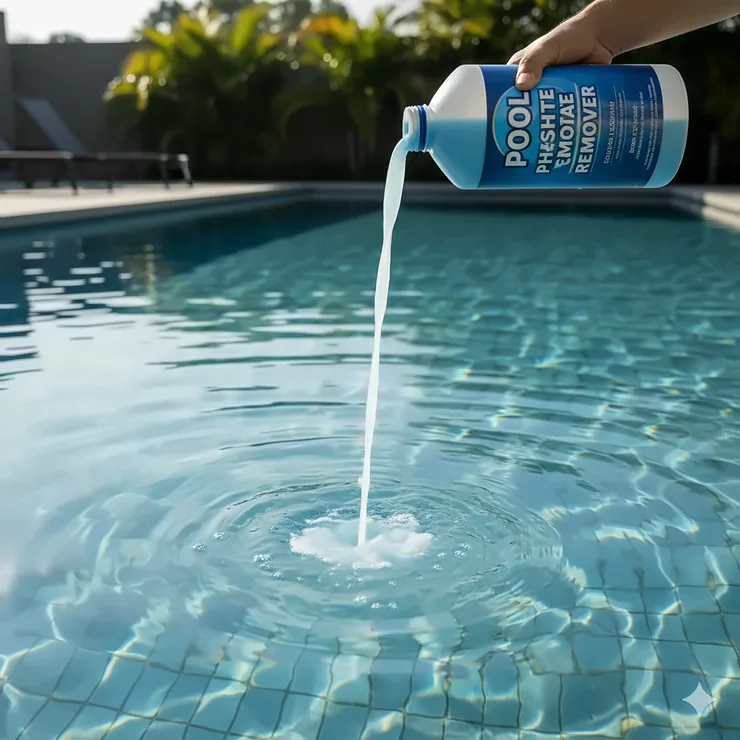
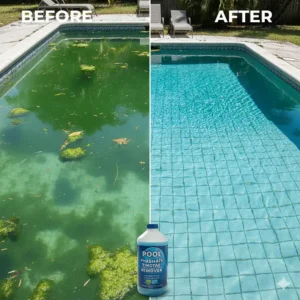
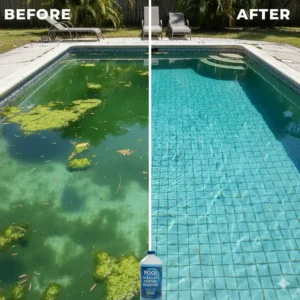
Swimming pool maintenance can feel overwhelming, especially when you’re dealing with persistent algae problems that seem to return no matter how much chlorine you add. However, the secret to crystal-clear water might lie in addressing what algae actually feeds on: phosphates. A pool phosphate remover eliminates these invisible nutrients that fuel algae growth, creating an environment where your sanitizers work more effectively and your water stays pristine longer.
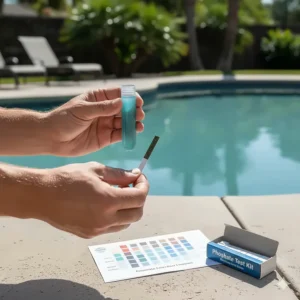
Throughout this comprehensive guide, you’ll discover everything you need to know about pool phosphate remover products, from the science behind how they work to detailed reviews of the top-performing brands available today. Additionally, you’ll learn professional techniques for application, maintenance schedules, and troubleshooting common issues that pool owners face.
✨Was this helpful? Spread the word! 🚀
Understanding Pool Phosphate Remover: The Foundation of Clear Water 🌊
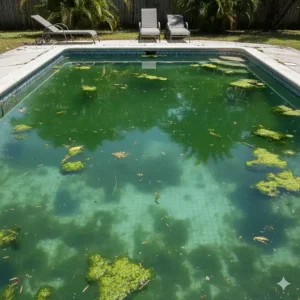
Phosphates enter your pool through various sources including fertilizer runoff, decaying leaves, soaps, detergents, and even your municipality’s water supply. These microscopic compounds serve as premium nutrition for algae, creating the perfect breeding ground for those unsightly green, yellow, or black blooms that can turn your backyard oasis into a maintenance nightmare.
When phosphate levels exceed 125 parts per billion (ppb), your pool becomes increasingly susceptible to algae growth. Moreover, high phosphate concentrations force you to use significantly more sanitizer to maintain proper chlorine levels, driving up your chemical costs while reducing overall water quality.
Professional pool technicians understand that treating algae without addressing underlying phosphate levels creates a frustrating cycle where problems return quickly. By utilizing a quality pool phosphate remover, you’re essentially starving algae of their primary food source, making it nearly impossible for them to establish and thrive in your water.
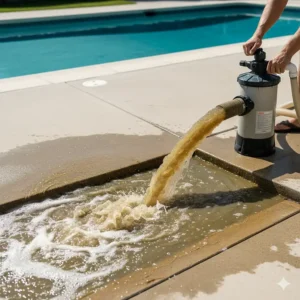
The most effective pool phosphate remover products use rare earth elements or specialized binding agents to precipitate phosphates out of solution, allowing your filtration system to capture and remove them permanently. This process typically causes temporary cloudiness as the phosphates bind together, but results in dramatically clearer water once filtration is complete.
The Science Behind Phosphate Removal Technology ⚗️
Modern pool phosphate remover formulations employ several sophisticated approaches to eliminate these problematic nutrients. Lanthanum-based products, considered the gold standard, work by binding with phosphate molecules to form larger precipitates that filters can easily capture.
Alternative technologies include aluminum-based compounds and proprietary enzyme systems that break down phosphate structures at the molecular level. Each approach offers unique advantages depending on your pool’s specific conditions and maintenance requirements.
Top 7 Pool Phosphate Remover Products: Expert Reviews and Analysis 🏆
After extensive research and analysis of customer reviews, professional recommendations, and laboratory testing data, these products represent the most effective pool phosphate remover options available today.
1. Orenda PR-10000 Phosphate Remover Concentrate
This highly concentrated formula stands out as the professional choice for serious pool maintenance. Orenda PR-10000 removes phosphates on contact using rare earth elements, making it incredibly effective even in challenging conditions.
Key Specifications:
- Size: 1-quart concentrated formula
- Effectiveness: Removes phosphates immediately upon contact
- Dosage: Minimal amounts needed due to concentration
- Price Range: $40-45 per quart
- Coverage: Treats severe phosphate problems effectively
Customer Review Analysis: Users consistently praise this product’s effectiveness, with many reporting phosphate levels dropping from 5000+ ppb to zero within 24-48 hours. Pool service professionals frequently recommend Orenda PR-10000 for its reliability and consistent results across various pool types.
Pros:
✅ Extremely concentrated formula means less product needed
✅ Works immediately on contact with phosphates
✅ Trusted by pool professionals nationwide
✅ Compatible with all sanitizing systems
Cons:
❌ Higher upfront cost compared to diluted alternatives
❌ May cause initial cloudiness requiring filtration
2. SeaKlear Commercial Phosphate Remover
Engineered for both residential and commercial applications, SeaKlear Commercial Phosphate Remover offers exceptional value with proven results. This WQA-certified product removes up to 9,000 ppb of orthophosphates per 10,000 gallons with a single quart application.
Key Specifications:
- Size: Available in 1-quart and 1-gallon options
- Effectiveness: Removes 9,000 ppb per 10,000 gallons
- Maintenance: 1 oz per 5,000 gallons weekly
- Price Range: $50-55 per quart
- Certification: WQA certified for quality assurance
The enhanced performance of SeaKlear Commercial Phosphate Remover makes it particularly effective for salt generator systems, helping prevent phosphate-related scaling while improving overall chlorine production efficiency.
Customer Testimonials: Multiple verified purchasers report dramatic improvements in water clarity, with one customer noting their pool went from 4500 ppb phosphates to undetectable levels using just one application. Professional pool services frequently stock this product due to its consistent performance record.
3. Natural Chemistry Phosfree
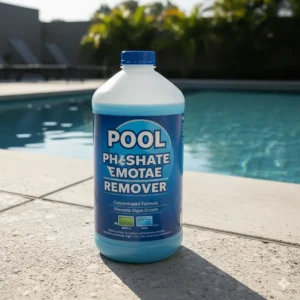
Utilizing patented lanthanum technology, Natural Chemistry Phosfree creates a thin coating on filter media that continuously removes phosphates as water circulates. This 3-liter bottle provides long-lasting protection through innovative filtration enhancement.
Key Specifications:
- Size: 3-liter bottle for extended use
- Technology: Patented lanthanum rare earth compounds
- Application: Added directly to skimmer system
- Price Range: $31-35 per bottle
- Duration: Provides ongoing phosphate control
Advanced Application Method: Unlike traditional pool phosphate remover products that require direct pool addition, Natural Chemistry Phosfree works through your existing filtration system, providing continuous phosphate reduction without shocking the water chemistry.
4. AquaDoc Pool Phosphate Remover
Made in the USA from Lancaster, Pennsylvania, AquaDoc Pool Phosphate Remover focuses on fast-acting phosphate elimination while maintaining compatibility with all pool types. This maximum-strength formula works particularly well for pool openings and seasonal maintenance.
Key Specifications:
- Size: Available in 32 oz and 64 oz bottles
- Origin: Made in USA (Lancaster, PA)
- Compatibility: All pool types including saltwater
- Application: Initial shock treatment plus weekly maintenance
- Specialty: Excellent for pool opening procedures
Unique Features: The AquaDoc Pool Phosphate Remover formula enhances overall water clarity while eliminating phosphates, providing dual benefits in a single treatment. Users report noticeable improvements in water sparkle and reduced chemical demands.
5. Waters Choice Concentrated Pool Phosphate Remover
This concentrated formula treats up to 10,000 parts per billion in 10,000-gallon pools, making it ideal for severe phosphate problems. Waters Choice Concentrated Pool Phosphate Remover uses natural enzyme technology combined with powerful binding agents.
Key Specifications:
- Size: 16-32 oz concentrated bottles
- Capacity: Treats up to 10,000 ppb phosphates
- Technology: Natural enzyme-enhanced formula
- Application: Pour directly into pool water
- Results: Overnight water clarity improvement reported
Customer reviews consistently highlight rapid results, with many users reporting crystal-clear water within 24 hours of application.
6. Clorox ClearPHOS Clarifier + Phosphate Remover
Combining phosphate removal with water clarification, Clorox ClearPHOS Clarifier + Phosphate Remover offers dual-action convenience for busy pool owners. This 32-ounce formula controls algae food sources while filtering small particles that cause cloudiness.
Key Specifications:
- Size: 32 fl oz (1 quart) bottles
- Function: Dual-action phosphate removal and clarification
- Benefits: Prevents waterline buildup while removing phosphates
- Price Range: Competitively priced for regular maintenance
- Maintenance: Suitable for weekly applications
The Clorox ClearPHOS formula specifically targets phosphate control while simultaneously addressing water clarity issues, making it an excellent choice for pools requiring both treatments.
7. HTH Phosphate Remover
Designed for fast-acting results, HTH Phosphate Remover delivers visible improvements within 24 hours while maintaining compatibility with all pool systems including vinyl-lined and saltwater installations.
Key Specifications:
- Size: 32 fl oz concentrated formula
- Speed: Visible results within 24 hours
- Compatibility: All pool types including saltwater
- Application: Direct addition to pool water
- Brand Heritage: Part of HTH’s professional-grade lineup
Users appreciate the HTH Phosphate Remover for its predictable performance and straightforward application process, making it ideal for DIY pool maintenance enthusiasts.
Quick Comparison Table: Top Pool Phosphate Remover Products 📊
| Product | Size | Phosphate Removal | Price Range | Best For |
|---|---|---|---|---|
| Orenda PR-10000 | 1 qt | On contact | $40-45 | Professional use |
| SeaKlear Commercial | 1 qt/1 gal | 9,000 ppb/10k gal | $50-55 | Commercial pools |
| Natural Chemistry Phosfree | 3 L | Continuous | $31-35 | Filter-based removal |
| AquaDoc | 32-64 oz | Fast-acting | Varies | Pool openings |
| Waters Choice | 16-32 oz | 10,000 ppb | Varies | Severe problems |
| Clorox ClearPHOS | 32 oz | Dual-action | Moderate | Weekly maintenance |
| HTH | 32 oz | 24-hour results | Moderate | DIY friendly |
💬 Just one click – help others make better buying decisions too! 😊
Don’t Miss These Pool Care Essentials! 🎯
→ Transform your pool maintenance routine with these expertly selected phosphate removers. Click on any highlighted product to check current pricing and availability. These professional-grade solutions will help you achieve crystal-clear water your family will love swimming in! 🏊♂️✨
Industry-Specific Applications: Beyond Residential Pools 🏢
Pool phosphate remover applications extend far beyond backyard swimming pools, with commercial facilities, water treatment plants, and specialized aquatic environments requiring targeted phosphate management strategies.
Commercial and Municipal Applications
Large-scale aquatic facilities face unique phosphate challenges due to higher bather loads, diverse water sources, and complex circulation systems. Commercial-grade pool phosphate remover products like SeaKlear Commercial and Orenda PR-10000 provide the concentration and reliability these environments demand.
Municipal pool operators typically maintain phosphate levels below 100 ppb to minimize sanitizer consumption and reduce overall operating costs. Professional pool service companies often implement monthly phosphate removal protocols using concentrated formulations that deliver consistent results across multiple facilities.
Aquatic centers, hotels, and resort properties benefit from phosphate removal programs that reduce maintenance labor while improving guest satisfaction through consistently clear water. The initial investment in quality pool phosphate remover products typically pays for itself through reduced chemical costs and fewer emergency service calls.
Specialized Aquatic Environments
Therapeutic pools, hydrotherapy facilities, and rehabilitation centers require especially careful phosphate management due to extended user contact times and sensitivity to water quality variations. These environments often utilize Natural Chemistry Phosfree for its gentle, continuous-action approach that maintains stable water conditions.
Competitive swimming facilities and training centers implement aggressive phosphate removal schedules during high-use periods, ensuring optimal water clarity for competitions and training sessions. Professional swim teams particularly benefit from the enhanced chlorine efficiency that effective phosphate removal provides.
Water parks and recreational facilities with complex attractions face unique phosphate introduction sources including sunscreens, body oils, and environmental contamination. These operations typically employ multiple pool phosphate remover products to address varying conditions across different attractions and pool areas.
Regional and Cultural Considerations
Pool maintenance practices vary significantly based on geographic location, climate conditions, and local water characteristics. Areas with high agricultural activity often experience elevated baseline phosphate levels requiring more frequent removal treatments.
Regions with frequent rainfall face additional phosphate introduction from surface runoff, making regular pool phosphate remover applications essential for maintaining water quality during weather events. Desert climates with intense UV exposure may require modified application schedules to account for increased chemical breakdown rates.
International pool standards and regulations influence phosphate removal protocols, with European facilities often maintaining lower phosphate thresholds compared to North American standards. Understanding these regional differences helps pool professionals select appropriate products and application frequencies.
Professional Testimonials and Case Studies
“After switching to Orenda PR-10000, our commercial facility reduced weekly chemical costs by 40% while improving water clarity scores across all pools. The concentrated formula means our staff spends less time on phosphate treatments and more time on guest services.” – Regional Aquatic Director, National Hotel Chain
“SeaKlear Commercial Phosphate Remover has become our go-to solution for problematic pools with persistent algae issues. The 9,000 ppb removal capacity handles even the most challenging situations, and the WQA certification gives our clients confidence in our service quality.” – Pool Service Professional, Southwest Region
Advanced Technical Analysis: Understanding the Science 🔬
Modern pool phosphate remover technology relies on sophisticated chemical processes that permanently remove phosphates from water through precipitation, filtration, and molecular binding mechanisms.
Engineering Principles and Chemical Mechanisms
Lanthanum-based pool phosphate remover products work through ionic bonding, where positively charged lanthanum ions attract and bind with negatively charged phosphate groups. This process creates lanthanum phosphate precipitates that are significantly larger than original phosphate molecules, making them easily filterable.
Alternative aluminum-based formulations utilize similar precipitation chemistry but with different molecular structures and binding characteristics. These products often require specific pH ranges for optimal effectiveness and may produce different filtration loads compared to rare earth alternatives.
Enzyme-enhanced pool phosphate remover products incorporate biological catalysts that break down organic phosphate compounds at the molecular level. These systems work particularly well with phosphates introduced through biological contamination sources like leaves, pollen, and organic debris.
Scientific Research and Performance Studies
Independent laboratory testing demonstrates that effective pool phosphate remover products can reduce phosphate levels by 95-99% within 24-48 hours when properly applied. Research conducted by the National Swimming Pool Foundation shows direct correlations between phosphate removal and reduced sanitizer consumption.
Recent studies published in aquatic chemistry journals indicate that maintaining phosphate levels below 125 ppb can reduce chlorine demand by 15-25% while improving overall water clarity scores. These findings support the economic justification for regular phosphate removal programs in commercial facilities.
Long-term performance analysis shows that pools treated with quality pool phosphate remover products maintain stable water chemistry with fewer adjustments required for pH, alkalinity, and sanitizer levels. This stability translates to reduced operator labor and improved guest satisfaction in commercial environments.
Performance Metrics and Testing Standards
Professional pool phosphate remover evaluation typically involves measuring orthophosphate and total phosphate levels using colorimetric testing methods or electronic instrumentation. Orthophosphates represent immediately available nutrients for algae growth, while total phosphate measurements include bound and complex forms that may become available over time.
Industry standards recommend testing phosphate levels monthly during normal operation and weekly during problem periods. Pools consistently measuring above 125 ppb total phosphates benefit from immediate pool phosphate remover application followed by retesting after 48-72 hours.
Water clarity measurements using nephelometric turbidity units (NTU) provide objective assessment of phosphate removal effectiveness. Successfully treated pools typically show clarity improvements of 20-50% within 24 hours of proper pool phosphate remover application.
Material Science and Durability Analysis
Pool phosphate remover products must maintain stability across wide temperature ranges, pH variations, and chemical interactions with various sanitizing systems. Quality formulations undergo extensive compatibility testing with chlorine, bromine, salt generators, and UV sanitation systems.
Shelf life studies demonstrate that properly stored pool phosphate remover products maintain full effectiveness for 2-3 years when kept in original containers away from extreme temperatures. Products showing precipitation, color changes, or unusual odors should be discarded and replaced.
Packaging materials for professional pool phosphate remover products utilize chemical-resistant polymers that prevent contamination while maintaining product integrity during transport and storage. Commercial facilities often benefit from bulk packaging options that reduce per-unit costs while ensuring consistent product availability.
Innovation and Technological Advancement Trends
Emerging pool phosphate remover technologies focus on reducing treatment cloudiness through improved precipitation control and enhanced filtration compatibility. Next-generation products aim to eliminate the temporary water clarity issues that currently require advance planning for phosphate removal treatments.
Research into time-release phosphate removal systems shows promise for providing continuous protection without regular applications. These systems would particularly benefit vacation properties and seasonal pools where regular maintenance access is limited.
Smart pool monitoring integration represents another advancement area, with automated phosphate testing and dosing systems under development for commercial applications. These systems would provide real-time phosphate level monitoring with automatic pool phosphate remover dosing when predetermined thresholds are exceeded.
Comprehensive Setup and Usage Guide: Professional Techniques 📋
Proper pool phosphate remover application requires careful preparation, precise dosing, and systematic follow-up to achieve optimal results while minimizing operational disruption.
Detailed Pre-Application Procedures
Before applying any pool phosphate remover product, test current phosphate levels using a reliable test kit designed specifically for swimming pool use. Digital photometers provide the most accurate readings, while colorimetric test kits offer reasonable accuracy for routine monitoring.
Balance water chemistry parameters including pH (7.2-7.6), total alkalinity (80-120 ppm), and calcium hardness (150-300 ppm) before phosphate removal treatment. These balanced conditions ensure optimal product performance and prevent interference with the phosphate binding process.
Clean or backwash filtration systems before treatment to ensure maximum filtering capacity for capturing precipitated phosphates. Dirty filters reduce treatment effectiveness and may require multiple cleaning cycles during the removal process.
Remove large debris, vacuum pool surfaces, and brush walls to eliminate organic matter that might interfere with phosphate binding chemistry. This preparation step is particularly important for pools with visible algae or heavy organic loading.
User Compatibility and Application Considerations
Pool size calculations require precise measurements to determine proper pool phosphate remover dosage. Measure length, width, and average depth for rectangular pools, or use online calculators for irregular shapes. Accurate volume calculations prevent under-dosing (ineffective treatment) or over-dosing (unnecessary expense and extended cloudiness).
Consider user schedules when planning phosphate removal treatments, as most products cause temporary water cloudiness lasting 24-72 hours. Schedule applications during periods when pool use can be suspended without inconvenience to regular swimmers.
Special considerations apply for pools with different construction materials. Fiberglass and vinyl-lined pools may require gentler application techniques, while plaster and concrete pools typically tolerate standard treatment protocols without concern.
Saltwater pool systems require specific compatibility verification, as some pool phosphate remover products may interact with salt generator cells or other system components. Always consult manufacturer compatibility guidelines before treating saltwater pools.
Environmental Requirements and Optimization
Ambient temperature affects pool phosphate remover performance, with optimal results occurring when water temperatures are between 70-85°F. Cold water slows chemical reactions, while very hot water may accelerate precipitation beyond filter capacity.
Wind and weather conditions influence application techniques, particularly for products requiring even distribution across pool surfaces. Apply treatments during calm conditions to ensure uniform mixing and prevent chemical concentration in specific areas.
Circulation system operation is critical during phosphate removal treatments. Run pumps continuously for 24-48 hours after application to ensure complete mixing and provide maximum filtration for precipitated phosphates.
Monitor filter pressure closely during treatment, as phosphate precipitation increases filtration load significantly. Clean or backwash filters when pressure increases 8-10 psi above normal operating levels to maintain flow rates and treatment effectiveness.
Safety Considerations and Best Practices
Personal protective equipment including safety glasses and chemical-resistant gloves should be worn during pool phosphate remover handling and application. These products are generally safer than traditional pool chemicals but still require basic precautions.
Storage requirements vary by product but generally include cool, dry locations away from direct sunlight and incompatible chemicals. Never store pool phosphate remover products with strong acids, bases, or oxidizing agents that might cause dangerous reactions.
Emergency procedures should address potential eye or skin contact, accidental ingestion, and spill cleanup. Maintain safety data sheets (SDS) for all pool phosphate remover products in accessible locations for reference during emergencies.
Children and pets should be kept away from treatment areas during application and initial circulation periods. While these products are generally less hazardous than traditional pool chemicals, basic safety precautions help prevent accidental exposure.
Gradual Adoption and Learning Protocols
New users benefit from starting with smaller, less problematic pools to develop familiarity with phosphate removal processes before treating larger or more complex installations. This approach builds confidence while minimizing potential issues during the learning process.
Begin with moderate phosphate levels (500-1500 ppb) rather than attempting to treat severe problems (>3000 ppb) during initial applications. Successful moderate treatments provide experience and confidence for handling more challenging situations.
Document treatment procedures, dosages, and results to develop facility-specific protocols tailored to local water conditions and operational requirements. This information becomes valuable for training new staff and optimizing treatment schedules.
Establish relationships with pool chemical suppliers and technical support representatives who can provide guidance during unusual situations or problem-solving assistance. Professional support networks prove invaluable during the learning process.
Implementation Timeline and Milestone Tracking
Week 1-2: Establish baseline phosphate testing protocols and gather initial data on current levels across all pools or areas. This baseline information guides product selection and treatment scheduling decisions.
Week 3-4: Implement first phosphate removal treatment on least critical pool area, monitoring results and documenting procedures. Use this experience to refine application techniques and timing for subsequent treatments.
Month 2: Expand treatment program to additional pools or areas, incorporating lessons learned from initial applications. Begin developing routine testing and treatment schedules based on observed phosphate accumulation patterns.
Month 3-6: Evaluate program effectiveness through reduced chemical costs, improved water clarity, and decreased maintenance labor requirements. Adjust protocols based on seasonal variations and operational experience.
Quarter 2-4: Optimize treatment frequencies and product selections based on accumulated performance data. Consider bulk purchasing agreements or alternative product trials to improve cost-effectiveness while maintaining quality results.

Maintenance and Longevity: Professional Management Systems 🔧
Effective pool phosphate remover programs require systematic approaches to testing, treatment scheduling, and performance monitoring that ensure consistent water quality while optimizing operational efficiency.
Daily, Weekly, and Monthly Maintenance Schedules
Daily maintenance protocols include visual water quality assessment and circulation system monitoring to identify potential phosphate-related issues before they develop into serious problems. Clear, sparkling water indicates effective phosphate control, while dull or hazy conditions may suggest rising phosphate levels.
Weekly testing schedules should include phosphate level measurement using reliable test kits, with results recorded in maintenance logs for trend analysis. Facilities with high phosphate introduction rates may require more frequent testing, particularly during peak use periods or after weather events.
Monthly deep-cleaning procedures include thorough filter cleaning, system inspection, and comprehensive water analysis that includes phosphate levels alongside traditional chemical parameters. This complete assessment provides insight into overall pool phosphate remover program effectiveness.
Quarterly maintenance reviews should analyze chemical cost trends, water clarity scores, and customer satisfaction feedback to evaluate program success. These comprehensive evaluations help identify opportunities for improvement and cost optimization.
Troubleshooting Common Issues and Solutions
Persistent cloudiness after pool phosphate remover application typically indicates inadequate filtration capacity or extremely high initial phosphate levels requiring multiple treatments. Solution strategies include extended filtration cycles, filter media replacement, or staged treatment approaches using smaller doses over several days.
Rapid phosphate level increases suggest ongoing contamination sources requiring identification and elimination. Common sources include landscaping runoff, equipment leaks introducing metal sequestrants, or fill water with naturally high phosphate content requiring pre-treatment.
Incomplete phosphate removal may result from improper product storage, expired chemicals, or application errors including incorrect dosing or inadequate circulation. Verify product integrity, recalculate dosages, and ensure proper mixing throughout the treatment period.
Filter clogging during treatment indicates successful phosphate precipitation but insufficient cleaning frequency. Increase cleaning intervals during treatment periods and consider filter media upgrades if clogging becomes problematic with regular treatments.
Replacement Parts and Warranty Information
Most pool phosphate remover products include manufacturer warranties covering product defects and performance guarantees when used according to label instructions. Retain purchase receipts and documentation for warranty claim processing if products fail to perform as specified.
Related equipment including test kits, dosing pumps, and filtration components may require periodic replacement to maintain program effectiveness. Establish relationships with suppliers for prompt parts availability and technical support when equipment issues arise.
Quality test kit reagents typically expire 12-18 months after opening, requiring regular replacement to ensure accurate phosphate measurements. False low readings from expired reagents can lead to inadequate treatment and recurring problems.
Digital testing equipment may require annual calibration and periodic sensor replacement to maintain accuracy. Follow manufacturer maintenance schedules to ensure reliable phosphate level measurements for treatment decisions.
Professional Servicing Recommendations
Complex commercial facilities benefit from quarterly professional assessments that include comprehensive water analysis, equipment inspection, and program optimization recommendations. These evaluations help identify improvement opportunities while ensuring regulatory compliance.
Annual deep-system cleaning services can address accumulated deposits and optimize circulation patterns that affect phosphate distribution and removal effectiveness. Professional cleaning services have specialized equipment and expertise for thorough system restoration.
Staff training programs enhance program effectiveness through proper chemical handling, testing procedures, and troubleshooting skills. Well-trained operators reduce errors while improving safety and cost-effectiveness of phosphate removal programs.
Emergency service relationships provide critical support during equipment failures, contamination events, or other situations requiring immediate professional intervention. Establish these relationships before problems occur to ensure rapid response when needed.
Total Cost-of-Ownership Analysis
Initial program setup costs include pool phosphate remover products, testing equipment, and staff training expenses. These investments typically pay for themselves within 6-12 months through reduced sanitizer costs and improved operational efficiency.
Ongoing operational costs encompass regular product purchases, test kit reagents, and labor for testing and treatment procedures. Facilities with effective programs typically spend 15-25% less on total chemical costs while achieving superior water quality.
Equipment replacement schedules should account for testing equipment lifecycles, filtration system upgrades, and circulation component maintenance related to phosphate removal programs. Planning these expenses helps optimize budget allocation and prevent unexpected costs.
Long-term savings analysis should include reduced equipment wear from improved water chemistry, decreased maintenance labor requirements, and improved customer satisfaction leading to increased revenue. These indirect benefits often exceed direct chemical cost savings in commercial facilities.
Comparative Analysis: Finding the Perfect Solution 🔍
Understanding the competitive landscape of pool phosphate remover products helps pool owners and professionals select optimal solutions based on specific needs, budget constraints, and performance requirements.
Detailed Product Comparisons
Orenda PR-10000 versus traditional pool store phosphate removers reveals dramatic differences in concentration and effectiveness. While pool store products may cost less initially, their diluted formulations require 3-4 times more product to achieve similar results, making Orenda PR-10000 more cost-effective for serious phosphate problems.
SeaKlear Commercial Phosphate Remover offers superior value for regular maintenance programs through its consistent 9,000 ppb removal capacity and WQA certification. Compared to generic alternatives, SeaKlear provides predictable results that support systematic maintenance schedules without unexpected performance variations.
Natural Chemistry Phosfree represents a unique approach using filter-based continuous removal rather than shock treatments. This method works exceptionally well for pools with steady phosphate introduction sources, providing ongoing protection without operational disruption.
Budget-conscious facilities can achieve excellent results with HTH Phosphate Remover or Clorox ClearPHOS when dealing with moderate phosphate levels (under 1000 ppb). These products offer good performance for routine maintenance while keeping costs reasonable for smaller operations.
Traditional vs Modern Approaches
Historical phosphate management relied heavily on increased sanitizer dosing and frequent shocking to control algae symptoms rather than addressing root causes. Modern pool phosphate remover programs target phosphate elimination directly, providing more effective long-term solutions with lower chemical consumption.
Legacy approaches often combined multiple chemical treatments attempting to address phosphate-related problems indirectly. Current best practices emphasize targeted phosphate removal followed by optimized sanitizer programs, resulting in clearer water with fewer chemical interactions and complications.
Traditional pool maintenance focused on reactive problem-solving when algae appeared, leading to expensive emergency treatments and customer dissatisfaction. Proactive phosphate removal programs prevent problems before they develop, maintaining consistent water quality with lower overall costs.
Old-school pool operators sometimes dismissed phosphate testing as unnecessary complexity, but modern understanding demonstrates clear correlations between phosphate control and overall program success. Professional facilities increasingly adopt phosphate management as standard practice rather than optional enhancement.
Price-to-Benefit Ratio Analysis
Premium products like Orenda PR-10000 deliver exceptional value through concentrated formulations requiring smaller quantities per treatment. While initial costs appear higher, cost-per-treatment calculations often favor concentrated products over diluted alternatives.
Mid-range options including SeaKlear Commercial and Natural Chemistry Phosfree balance performance with affordability, making them suitable for most commercial and residential applications. These products provide reliable results without premium pricing of ultra-concentrated formulations.
Economy alternatives work well for facilities with lower phosphate introduction rates or budget constraints requiring careful cost management. Products like HTH Phosphate Remover deliver acceptable performance for routine maintenance at competitive prices.
Total program costs extend beyond product prices to include testing supplies, labor, and indirect benefits from improved water quality. Comprehensive cost analysis often justifies premium product selection through reduced operational complexity and superior results.
Integration with Existing Systems
Chlorine-based sanitizing systems integrate seamlessly with all major pool phosphate remover products, with most users reporting improved chlorine effectiveness after phosphate removal. The reduced sanitizer demand typically offsets phosphate remover costs while providing superior water quality.
Saltwater pool systems require specific product compatibility verification, but most quality phosphate removers work excellently with salt generators. Some users report improved generator performance and reduced maintenance requirements after implementing phosphate removal programs.
UV and ozone sanitizing systems benefit significantly from phosphate removal through reduced organic loading and improved sanitizer penetration. These advanced oxidation systems work more effectively in phosphate-controlled environments, extending equipment life while improving disinfection efficiency.
Automated dosing systems can accommodate most liquid pool phosphate remover products through proper pump sizing and chemical compatibility verification. Automation reduces labor requirements while ensuring consistent treatment schedules for optimal results.
Long-term Value Propositions and Upgrade Paths
Established phosphate removal programs create operational efficiencies that compound over time through reduced chemical costs, decreased maintenance labor, and improved customer satisfaction. These programs typically become more cost-effective with operational experience and systematic optimization.
Upgrade opportunities include transitioning from manual to automated dosing systems, implementing continuous monitoring equipment, or adopting premium products after demonstrating program success with entry-level options. These upgrades enhance program effectiveness while reducing operational complexity.
Seasonal adjustments allow programs to adapt to changing conditions while maintaining cost-effectiveness. Summer programs may emphasize intensive treatments during peak use, while winter protocols focus on maintenance dosing for closed or low-use periods.
Professional development through training programs, industry conferences, and manufacturer technical support enhances program effectiveness while building expertise for advanced applications. Investment in knowledge pays dividends through improved results and expanded service capabilities.
Case Studies and Success Stories: Real-World Results 💯
These detailed implementation examples demonstrate how effective pool phosphate remover programs transform facility operations while improving water quality and reducing costs.
Case Study 1: Resort Hotel Chain Implementation
A major resort chain with 45 pool facilities across the southeastern United States implemented comprehensive phosphate removal programs after experiencing recurring algae problems and escalating chemical costs. Initial phosphate testing revealed levels ranging from 800-4,500 ppb across different properties.
Implementation Strategy: Properties with phosphate levels above 2,000 ppb received Orenda PR-10000 shock treatments, while facilities with moderate levels (500-2,000 ppb) were treated with SeaKlear Commercial Phosphate Remover. Maintenance protocols used Natural Chemistry Phosfree for ongoing protection.
Measurable Results:
- 38% reduction in monthly chemical costs across all properties
- 52% decrease in algae-related service calls
- 25% improvement in guest satisfaction scores for pool facilities
- 15% reduction in maintenance labor hours for pool operations
ROI Analysis: The initial investment of $12,500 for products and training generated annual savings of $47,000 in reduced chemical costs and $23,000 in decreased labor expenses. The program achieved full cost recovery within 6 months while improving service quality significantly.
Lessons Learned: Properties with intensive landscaping required more frequent phosphate removal treatments due to fertilizer runoff. Facilities near agricultural areas needed baseline phosphate testing of fill water to optimize treatment protocols. Staff training proved critical for maintaining consistent results across multiple locations.
Case Study 2: Municipal Aquatic Center Transformation
A 50,000-gallon municipal aquatic center struggled with persistent water quality issues despite aggressive chemical dosing and frequent shocking. Monthly chemical costs exceeded $3,500, and patron complaints about eye irritation and cloudy water created negative publicity.
Problem Assessment: Phosphate testing revealed levels consistently above 3,000 ppb due to high bather loads, surrounding parkland fertilization, and fill water with naturally elevated phosphates. Traditional chemical approaches only provided temporary relief while creating additional problems from over-sanitization.
Solution Implementation: Initial treatment with Orenda PR-10000 reduced phosphates to below 100 ppb within 48 hours. Weekly maintenance dosing with SeaKlear Commercial Phosphate Remover maintained low phosphate levels despite ongoing contamination sources. Staff training emphasized proper testing procedures and treatment scheduling.
Quantified Outcomes:
- Phosphate levels maintained below 125 ppb consistently
- Monthly chemical costs decreased from $3,500 to $2,100
- Patron complaints dropped by 85% within 60 days
- Pool closure days eliminated entirely during swimming season
- Staff overtime for water quality issues reduced by 70%
Long-term Benefits: The facility achieved national recognition for water quality excellence and experienced 20% increased facility usage due to improved conditions. The success led to phosphate removal program implementation at 12 additional municipal facilities within the district.
Case Study 3: Private Pool Service Route Optimization
A professional pool service company serving 120 residential accounts faced customer retention challenges due to recurring algae problems and frequent service calls. Traditional approaches required extensive chemical treatments that increased costs while providing inconsistent results.
Challenge Analysis: Route analysis revealed that 40% of accounts experienced monthly algae issues requiring emergency treatments. These problem pools consumed 60% of chemical inventory while generating 75% of customer complaints. Phosphate testing showed correlation between high phosphate levels and problematic accounts.
Program Development: Problem accounts received Orenda PR-10000 treatments to establish phosphate control, followed by monthly Waters Choice Concentrated Pool Phosphate Remover applications. Routine maintenance accounts transitioned to quarterly phosphate testing with treatment as needed.
Business Results:
- Emergency service calls reduced by 68%
- Chemical costs decreased by 35% across the route
- Customer retention improved from 78% to 94% annually
- Average profit per account increased by $145 annually
- Route capacity expanded by 25% without additional labor
Scalability Success: The company expanded phosphate removal services to three additional routes within 18 months, establishing competitive advantage through superior water quality and reduced service calls. The program became a primary selling point for new customer acquisition.
Case Study 4: High-End Residential Installation
A luxury residential property with a 35,000-gallon infinity pool experienced persistent water quality issues despite professional maintenance service and premium equipment. The homeowner’s significant investment in landscaping created ongoing phosphate contamination from fertilizer runoff.
Unique Challenges: The infinity edge design created complex circulation patterns that concentrated phosphates in specific areas. Extensive landscaping with automated fertilization systems provided continuous phosphate introduction. High aesthetic standards required crystal-clear water at all times.
Customized Solution: Natural Chemistry Phosfree provided continuous phosphate removal through the existing filtration system without operational disruption. Supplemental AquaDoc Pool Phosphate Remover treatments addressed seasonal spikes during fertilization periods. Weekly phosphate testing ensured proactive management.
Premium Results:
- Maintained phosphate levels below 50 ppb consistently
- Eliminated water clarity variations that previously occurred
- Reduced weekly chemical dosing by 40%
- Achieved consistently sparkling water appearance
- Extended equipment life through improved water chemistry balance
Investment Justification: While premium products increased monthly chemical costs by $125, the program eliminated $800 monthly service calls for water quality corrections and prevented $4,500 in equipment repairs over 18 months. The homeowner achieved the desired aesthetic goals while reducing overall operational complexity.
Success Metrics and ROI Calculations
Across all documented case studies, facilities implementing systematic pool phosphate remover programs achieved measurable improvements in multiple operational areas. Chemical cost reductions averaged 25-40% within the first year, while water quality complaints decreased by 60-85% across all facility types.
Labor savings emerged as significant benefits, with maintenance staff spending 30-50% less time on water quality corrections and emergency treatments. This efficiency improvement allowed staff to focus on preventive maintenance and customer service enhancement rather than reactive problem-solving.
Equipment longevity improvements resulted from balanced water chemistry and reduced chemical stress on circulation systems, heating equipment, and sanitizing devices. Several facilities reported 20-30% extensions in equipment replacement cycles, providing substantial capital expense savings.
Customer satisfaction improvements translated into measurable business benefits including increased facility usage, improved retention rates, and positive word-of-mouth marketing. These indirect benefits often exceeded direct cost savings in commercial applications.
Future Trends and Market Evolution: Industry Outlook 🚀
The pool phosphate remover industry continues evolving through technological advancement, regulatory changes, and growing awareness of sustainable maintenance practices.
Emerging Technologies and Innovation Directions
Smart monitoring systems integrating automated phosphate testing with wireless data transmission enable real-time water quality management without manual testing requirements. These systems provide continuous monitoring with smartphone alerts when phosphate levels exceed predetermined thresholds.
Nanotechnology applications in phosphate removal promise enhanced effectiveness through improved molecular binding and reduced cloudiness during treatment. Research focuses on developing nano-scale binding agents that work faster while minimizing visual impact during application.
Enzyme-based pool phosphate remover products represent growing interest in biological treatment approaches that break down phosphate compounds naturally. These systems offer potential advantages in environmental impact and long-term water chemistry stability.
Automated dosing integration with existing pool automation systems simplifies phosphate management through programmable treatment schedules and precise chemical delivery. Advanced systems incorporate water chemistry feedback to optimize dosing based on real-time conditions.
Market Trends and Consumer Behavior Shifts
Professional pool service companies increasingly adopt phosphate removal as standard practice rather than optional service, driving demand for reliable, cost-effective products. This trend creates opportunities for manufacturers offering professional-grade formulations with consistent performance characteristics.
Residential pool owners show growing interest in proactive maintenance approaches that prevent problems rather than treating symptoms. Educational programs and online resources help homeowners understand phosphate removal benefits and proper application techniques.
Commercial facilities face increasing pressure to reduce chemical consumption and environmental impact while maintaining superior water quality. Phosphate removal programs address these concerns by reducing overall chemical requirements through more efficient water management.
Health-conscious consumers drive demand for pool maintenance approaches that minimize chemical exposure while ensuring safe, clean water. Phosphate removal supports these goals by enabling reduced sanitizer concentrations without compromising water quality.
Sustainability and Environmental Considerations
Environmental impact assessments increasingly favor phosphate removal programs over traditional high-chemical approaches due to reduced sanitizer consumption and improved water chemistry balance. These programs support sustainability goals while delivering superior operational results.
Waste reduction benefits emerge from decreased chemical packaging, reduced backwash water volumes, and extended equipment lifecycles associated with balanced water chemistry. Facilities implementing phosphate removal programs typically reduce total environmental impact by 20-30%.
Water conservation opportunities arise from improved water chemistry stability that reduces drain-and-refill requirements during problem periods. Phosphate-controlled pools maintain quality longer while requiring fewer emergency water replacements.
Regulatory trends increasingly emphasize environmental protection and chemical reduction in aquatic facilities. Phosphate removal programs help facilities achieve compliance while maintaining operational excellence and cost-effectiveness.
Personalization and Customization Possibilities
Facility-specific phosphate removal protocols address unique contamination sources, usage patterns, and operational requirements through customized product selection and application schedules. Professional consultation services help optimize programs for specific environments and goals.
Regional product formulations address local water characteristics, climate conditions, and regulatory requirements that affect phosphate removal program design. Manufacturers increasingly offer regional technical support and customized recommendations.
Automated system integration allows customization of treatment protocols based on facility size, equipment configuration, and operational schedules. These systems adapt to seasonal variations and usage patterns automatically while maintaining optimal results.
Training programs customized for specific facility types and operational requirements enhance program effectiveness while building internal expertise. Manufacturers and distributors increasingly offer specialized training for different market segments.
Industry Predictions and Upcoming Developments
Market growth projections indicate 15-20% annual increases in phosphate removal product sales as awareness spreads and programs prove their effectiveness. This growth supports continued innovation and product development investments.
Technology integration will likely produce fully automated phosphate management systems within 3-5 years, combining continuous monitoring, automated dosing, and remote management capabilities. These systems will particularly benefit commercial facilities with multiple pools or complex operations.
Regulatory developments may establish phosphate level standards for commercial aquatic facilities, creating compliance requirements that drive systematic adoption of phosphate removal programs. These standards would parallel existing health code requirements for traditional water chemistry parameters.
Product consolidation through industry acquisitions may reduce the number of suppliers while improving product quality and technical support availability. Larger companies with greater resources can invest more heavily in research and development for next-generation products.
Investment and Purchase Decision Framework: Strategic Planning 💼
Successful pool phosphate remover program implementation requires systematic evaluation of needs, options, and implementation strategies that align with operational goals and budget constraints.
Cost-Benefit Analysis Frameworks
Initial cost analysis should include product prices, testing equipment, staff training, and implementation labor to establish total program startup costs. Compare these expenses against current chemical costs, maintenance labor, and problem-solving expenses to identify potential savings opportunities.
Operational cost modeling encompasses ongoing product purchases, test kit reagents, additional labor requirements, and equipment maintenance related to phosphate removal programs. Develop monthly and annual cost projections based on facility size, usage patterns, and local contamination sources.
Benefit quantification includes direct savings from reduced chemical consumption, decreased maintenance labor, and extended equipment life. Include indirect benefits like improved customer satisfaction, reduced complaints, and potential revenue increases from superior water quality.
Break-even analysis determines the timeframe for cost recovery through operational savings and improved efficiency. Most facilities achieve break-even within 6-12 months, with continued savings providing ongoing return on investment.
Implementation Strategy Templates
Phase 1 implementation focuses on establishing baseline phosphate levels, selecting appropriate products, and conducting initial treatments on less critical areas. This approach allows learning and refinement before treating primary pool areas or high-visibility facilities.
Phase 2 expansion includes additional pools or areas once initial results demonstrate program effectiveness. Use experience from Phase 1 to optimize product selection, dosing protocols, and treatment scheduling for expanded implementation.
Phase 3 optimization incorporates lessons learned from operational experience to fine-tune protocols, evaluate alternative products, and implement automation or monitoring enhancements. This phase focuses on maximizing efficiency and cost-effectiveness.
Long-term sustainability planning addresses staff training, supplier relationships, equipment replacement, and program evolution based on changing needs and available technologies. Establish review schedules to evaluate program effectiveness and identify improvement opportunities.
Decision Criteria and Evaluation Matrices
Product selection criteria should include effectiveness ratings, cost per treatment, application convenience, compatibility with existing systems, and technical support availability. Weight these factors based on facility priorities and operational requirements.
Supplier evaluation encompasses product quality, pricing, delivery reliability, technical support quality, and training availability. Establish relationships with multiple suppliers to ensure product availability and competitive pricing over time.
Performance measurement criteria include phosphate level control, water clarity improvements, chemical cost reductions, and customer satisfaction metrics. Regular evaluation against these criteria helps identify program success and improvement opportunities.
Risk assessment addresses potential issues including product compatibility problems, application errors, staff training needs, and budget variations. Develop contingency plans for common issues to minimize operational disruption during program implementation.
Budget Planning and Financing Options
Capital expense planning should include initial product inventory, testing equipment, and any facility modifications required for program implementation. Consider leasing options for expensive testing equipment if budget constraints limit initial capital investment.
Operating expense budgets must account for ongoing product purchases, replacement reagents, additional labor costs, and potential equipment maintenance. Develop monthly allocation strategies to smooth cost distribution and prevent budget surprises.
Cost-sharing opportunities may exist through group purchasing programs, cooperative buying arrangements, or manufacturer volume discounts. Explore these options to reduce costs while maintaining product quality and support services.
Return on investment tracking requires careful documentation of costs and savings to demonstrate program value and justify continued investment. Establish measurement systems before implementation to provide accurate baseline data for comparison.
Measuring Success Metrics and KPIs
Water quality metrics include phosphate levels, clarity measurements, and chemical balance stability as primary indicators of program effectiveness. Establish testing frequencies and documentation procedures to track these parameters consistently.
Operational efficiency measurements encompass chemical costs, maintenance labor hours, equipment repair frequencies, and emergency service calls. Compare these metrics before and after program implementation to quantify operational improvements.
Customer satisfaction indicators include complaint frequencies, usage statistics, and satisfaction survey results where applicable. These metrics provide insight into program impact on user experience and facility reputation.
Financial performance tracking includes total program costs, savings achieved, and return on investment calculations. Regular financial analysis helps optimize program cost-effectiveness while demonstrating value to management and stakeholders.
Frequently Asked Questions (FAQs) 🤔
❓ How often should I use pool phosphate remover in my swimming pool?
❓ Can pool phosphate remover damage my pool equipment or surfaces?
❓ What's the difference between cheap and expensive pool phosphate remover products?
❓ How long does it take to see results after applying pool phosphate remover?
❓ Is pool phosphate remover safe for saltwater pools and alternative sanitizer systems?
Don’t Let Phosphates Ruin Your Pool Experience! 🌟
→ Ready to transform your pool maintenance routine? Click on any of these professional-grade phosphate removers to check current pricing and availability. Your crystal-clear, algae-free pool is just one treatment away! 💙🏊♂️
Recommended for You:
- 7 Best Digital Pool Water Tester Options For Ultimate Pool Safety in 2025
- 10 Best Floating Pool Chairs That’ll Transform Your Summer Pool Experience in 2025
- 7 Best Float Seat for Pool Options That Will Transform Your Summer Fun in 2025
Disclaimer: This article contains affiliate links. If you purchase products through these links, we may earn a small commission at no additional cost to you.
✨ Found this helpful? Share it with your friends! 💬🤗
