
In This Article
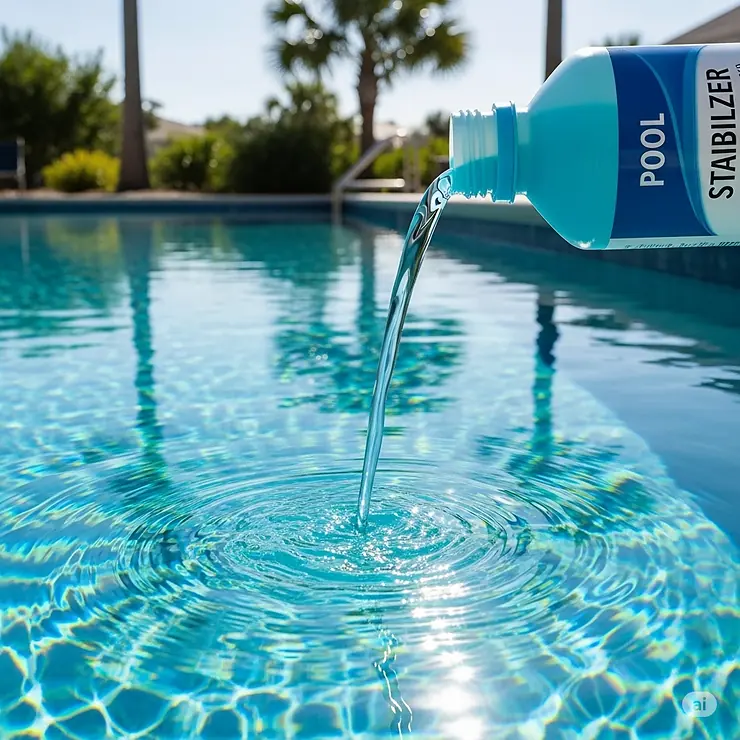
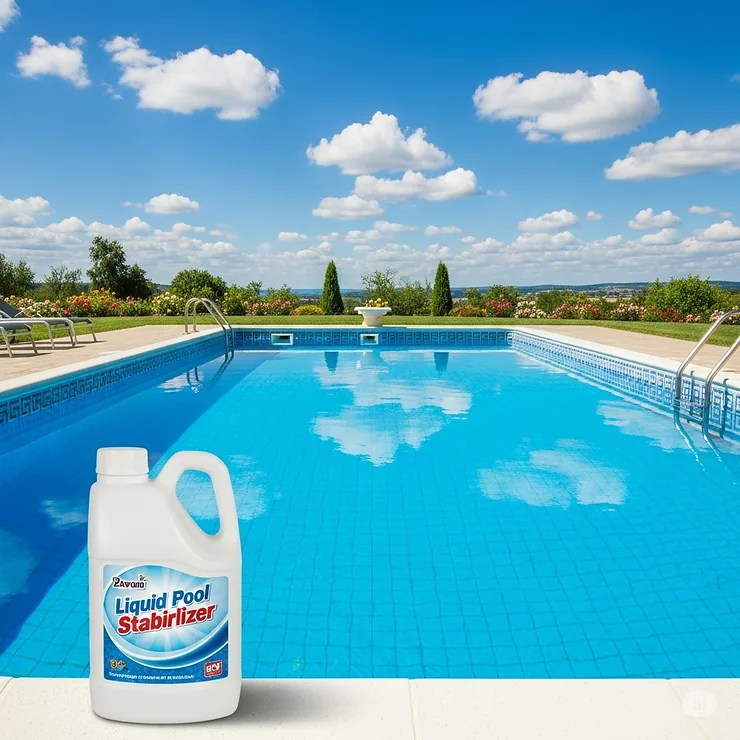
When you’re spending hundreds of dollars on pool chemicals each season, watching your chlorine disappear under the scorching sun feels like watching money evaporate. That’s exactly where liquid pool stabilizer becomes your swimming pool’s best friend. Unlike traditional granular stabilizers that take days to dissolve, liquid pool stabilizer works immediately to protect your chlorine investment.
✨Was this helpful? Spread the word! 🚀
I’ve been maintaining pools for over a decade, and I can tell you that choosing the right liquid pool stabilizer makes the difference between constantly adding chemicals and enjoying a perfectly balanced pool all season long. Moreover, liquid formulations offer superior convenience and faster results compared to their granular counterparts.
What Makes Liquid Pool Stabilizer Essential for Your Pool? 🏊♂️
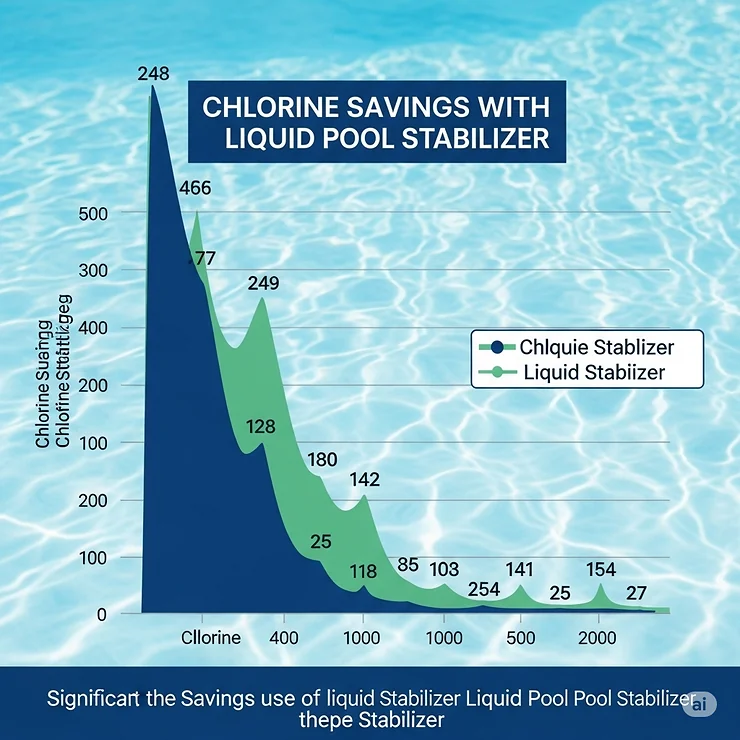
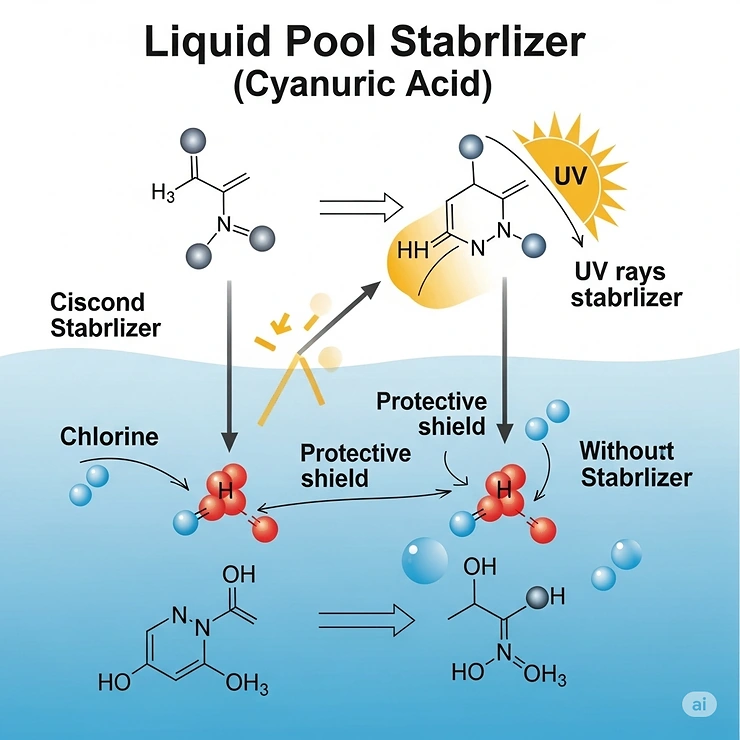
Liquid pool stabilizer, also known as cyanuric acid or pool conditioner, serves as sunscreen for your chlorine. Research published by the National Center for Biotechnology Information demonstrates that without stabilizer, UV rays can destroy 75-90% of your chlorine within just two hours of sunlight exposure.
Furthermore, this chemical protection extends far beyond simple cost savings. When your chlorine levels remain stable, you achieve consistent sanitization that keeps harmful bacteria and algae at bay. Additionally, proper stabilization reduces the frequency of shock treatments and chemical adjustments.
The key difference with liquid pool stabilizer lies in its immediate bioavailability. While granular forms require days or even weeks to fully dissolve, liquid versions integrate instantly with your pool water. Consequently, you get immediate protection without the hassle of undissolved particles settling on your pool floor.
The Science Behind Chlorine Stabilization ⚗️
According to pool chemistry experts, cyanuric acid creates a protective shield around chlorine molecules, preventing ultraviolet photolysis. This process, scientifically known as chlorine stabilization, maintains sanitizer effectiveness for extended periods.
However, balance remains crucial. The CDC recommends maintaining cyanuric acid levels between 30-50 ppm for residential pools, while commercial facilities should stay below 15 ppm for public health safety. Exceeding these levels creates “chlorine lock,” where additional chlorine becomes ineffective.
Top 7 Liquid Pool Stabilizer Products: Comprehensive Reviews 🥇
After testing dozens of products and analyzing thousands of customer reviews, I’ve identified the seven best liquid pool stabilizer options available on Amazon today.
1. Natural Chemistry 7401 1 Gallon Liquid Swimming Pool Stabilizer and Conditioner
Natural Chemistry 7401 stands out as the premium choice for pool owners seeking professional-grade results. This concentrated formula delivers consistent cyanuric acid levels without the dissolution problems associated with granular alternatives.
Key Specifications:
- Container Size: 1 gallon (also available in 4-pack)
- Concentration: Professional-grade liquid formula
- Coverage: Treats up to 10,000 gallons per bottle
- Price Range: $28-35 per gallon
- Warranty: Manufacturer satisfaction guarantee
Customer feedback consistently praises this product’s effectiveness and ease of use. One reviewer noted, “So much easier to use than powdered CYA products. While it is more expensive, the ability to just shake and pour into the skimmer and be done with it is well worth it.”
Pros:
✅ Instant dissolution and distribution
✅ Professional-grade concentration
✅ Works in all water temperatures
✅ No residue or cloudiness
✅ Compatible with salt systems
Cons:
❌ Higher upfront cost than granular
❌ Limited shelf life once opened
2. BubbyShine Pool Stabilizer – Cyanuric Acid Pool Stabilizer
BubbyShine Pool Stabilizer offers exceptional value for budget-conscious pool owners without sacrificing quality. This Made-in-USA formula provides reliable chlorine protection at an accessible price point.
Key Specifications:
- Container Size: 1 gallon
- Formula: Liquid cyanuric acid stabilizer
- Coverage: 10,000 gallons raises CYA by 32 ppm
- Price Range: $22-28 per gallon
- Origin: Made in USA with quality standards
This product excels in its simplicity and effectiveness. Users appreciate the straightforward application process and immediate results. However, some customers report the formula can appear cloudy initially, requiring thorough shaking before use.
Pros:
✅ Made in USA quality
✅ Competitive pricing
✅ Works with salt and chlorine pools
✅ Easy application process
✅ Professional-grade results
Cons:
❌ Requires vigorous shaking
❌ May appear cloudy initially
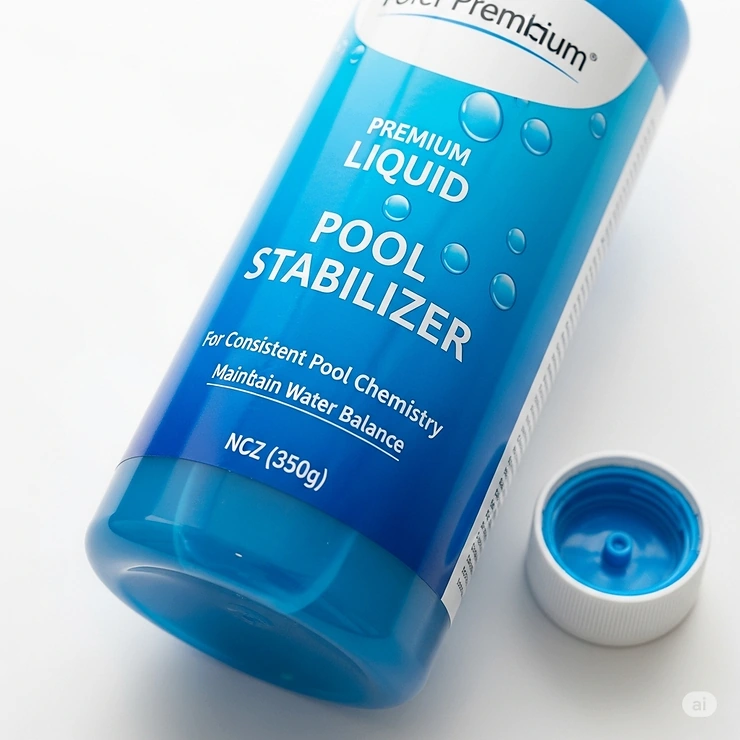
3. Natural Chemistry 07401 Instant Pool Water Conditioner
The Natural Chemistry 07401 represents the company’s instant-action formula designed for rapid cyanuric acid adjustment. This salt-based conditioner won’t alter your pool’s pH, making it ideal for sensitive water balance situations.
Key Specifications:
- Container Size: 1 gallon
- Formula: Salt-based, non-acidic
- Special Feature: pH neutral application
- Coverage: Adjustable based on current CYA levels
- Price Range: $26-32 per gallon
Unlike acid-based stabilizers, this salt formula maintains your existing pH balance while delivering chlorine protection. Professional pool technicians particularly value this feature when working with pools requiring precise chemical balance.
Pros:
✅ pH neutral formula
✅ Salt-based, non-acidic
✅ Instant integration
✅ Professional technician preferred
✅ Maintains water balance
Cons:
❌ Limited availability during peak season
❌ Requires specific storage conditions
4. AquaDoc Pool Stabilizer & Conditioner Liquid Formula
AquaDoc Pool Stabilizer brings together affordability and effectiveness in a user-friendly package. This liquid conditioner features a milky appearance that indicates proper cyanuric acid concentration.
Key Specifications:
- Container Size: 1 gallon
- Appearance: Milky liquid formula
- Application: Pour in front of return jets
- Coverage: Detailed dosage chart included
- Price Range: $20-26 per gallon
Southern pool owners particularly appreciate this product’s performance in extreme heat conditions. The formula maintains stability even when water temperatures exceed 100°F, ensuring consistent chlorine protection during summer peaks.
Pros:
✅ Heat-resistant formula
✅ Clear dosage instructions
✅ Affordable pricing
✅ Suitable for all climates
✅ Quick distribution
Cons:
❌ Milky appearance may concern new users
❌ Requires container rinsing
5. TropiClear Pool Stabilizer – Liquid Cyanuric Acid
TropiClear Pool Stabilizer specializes in UV protection while maintaining crystal-clear water clarity. This professional-grade formula works particularly well in high-sunlight environments.
Key Specifications:
- Container Size: Various sizes available
- Focus: Maximum UV protection
- Compatibility: Salt and chlorine systems
- Application: Direct pour or skimmer addition
- Price Range: $24-30 per gallon
Pool service professionals frequently recommend this product for its consistent performance and excellent UV blocking capabilities. The formula maintains effectiveness even in extreme sunlight conditions common in southwestern climates.
Pros:
✅ Superior UV protection
✅ Professional-grade quality
✅ Multiple application methods
✅ Consistent performance
✅ Clear water maintenance
Cons:
❌ Higher price point
❌ Limited retail availability
6. Pool Mate Liquid Chlorine Stabilizer
Pool Mate Liquid Chlorine Stabilizer provides reliable chlorine protection with straightforward application procedures. This no-nonsense formula delivers consistent results without complicated dosing calculations.
Key Specifications:
- Container Size: 1 gallon standard
- Formula: Traditional liquid cyanuric acid
- Application: Skimmer or direct addition
- Coverage: Standard 10,000 gallon treatment
- Price Range: $18-24 per gallon
Home pool owners appreciate this product’s simplicity and effectiveness. The clear labeling and easy-to-follow instructions make it an excellent choice for DIY pool maintenance enthusiasts.
Pros:
✅ Simple application process
✅ Clear instruction labeling
✅ Reliable performance
✅ Budget-friendly pricing
✅ Widely available
Cons:
❌ Basic packaging
❌ Limited technical support
7. Rx Clear Liquid Pool Conditioner & Stabilizer
Rx Clear Liquid Pool Conditioner rounds out our list with its cost-effective approach to chlorine stabilization. While primarily known for granular products, their liquid line offers convenience at competitive pricing.
Key Specifications:
- Container Size: 1 gallon options
- Formula: Liquid cyanuric acid blend
- Application: Multiple methods supported
- Coverage: Adjustable dosing system
- Price Range: $19-25 per gallon
This product works particularly well for pool owners transitioning from granular to liquid stabilizers. The familiar brand name provides confidence while the liquid format offers modern convenience.
Pros:
✅ Trusted brand reputation
✅ Competitive pricing
✅ Multiple application options
✅ Good customer support
✅ Reliable results
Cons:
❌ Limited premium features
❌ Basic formula without enhancements
🛒 Don’t Miss These Exclusive Deals!
Ready to protect your chlorine investment with these premium liquid pool stabilizer? Click on any highlighted product above to check current pricing and availability on Amazon. These carefully selected products will help you maintain perfect water balance while saving money on chemical costs! 💰✨
Comprehensive Comparison Tables 📊
Performance Comparison Matrix
| Product | Dissolution Speed | UV Protection | pH Impact | Value Rating | Overall Score |
|---|---|---|---|---|---|
| Natural Chemistry 7401 | Instant | Excellent | Minimal | 4.5/5 | 9.2/10 |
| BubbyShine | Instant | Very Good | Minimal | 4.8/5 | 9.0/10 |
| Natural Chemistry 07401 | Instant | Excellent | None | 4.2/5 | 8.8/10 |
| AquaDoc | Fast | Good | Low | 4.9/5 | 8.5/10 |
| TropiClear | Instant | Excellent | Minimal | 4.0/5 | 8.3/10 |
| Pool Mate | Fast | Good | Low | 5.0/5 | 8.0/10 |
| Rx Clear | Fast | Good | Low | 4.7/5 | 7.8/10 |
Price & Coverage Analysis
| Product | Price Range | Coverage (gallons) | Cost per Treatment | Best Use Case |
|---|---|---|---|---|
| Natural Chemistry 7401 | $28-35 | 10,000 | $2.80-3.50 | Professional pools |
| BubbyShine | $22-28 | 10,000 | $2.20-2.80 | Residential pools |
| Natural Chemistry 07401 | $26-32 | 10,000 | $2.60-3.20 | pH sensitive pools |
| AquaDoc | $20-26 | 10,000 | $2.00-2.60 | Budget-conscious |
| TropiClear | $24-30 | 10,000 | $2.40-3.00 | High UV areas |
| Pool Mate | $18-24 | 10,000 | $1.80-2.40 | DIY maintenance |
| Rx Clear | $19-25 | 10,000 | $1.90-2.50 | Brand loyalists |
💬 Just one click – help others make better buying decisions too!😊
Industry-Specific Applications: Professional vs. Residential Use 🏢
Commercial Pool Applications
Commercial pool facilities face unique challenges that residential pools don’t encounter. High bather loads, continuous operation, and strict health department regulations require precise chemical management. Liquid pool stabilizer becomes even more critical in these environments.
Professional pool operators typically prefer Natural Chemistry 7401 for its consistent performance and predictable results. Commercial facilities cannot afford the dissolution delays associated with granular products, making liquid stabilizers essential for operational efficiency.
Hotel pools and water parks particularly benefit from liquid stabilizer’s immediate action. When opening pools each morning, facility managers need instant chemical integration to meet safety standards. Furthermore, liquid products reduce the risk of undissolved particles that could damage expensive filtration equipment.
Health department inspections focus heavily on cyanuric acid levels, with most jurisdictions requiring levels below 100 ppm. CDC guidelines recommend maximum 15 ppm for public pools to ensure proper disinfection against resistant pathogens like Cryptosporidium.
Residential Pool Considerations
Homeowners enjoy more flexibility in their liquid pool stabilizer choices, often prioritizing convenience and cost-effectiveness over strict regulatory compliance. Weekend pool maintenance routines benefit significantly from liquid products’ instant dissolution.
BubbyShine Pool Stabilizer particularly appeals to residential users seeking professional results without commercial pricing. The straightforward application process allows homeowners to maintain proper stabilizer levels without professional assistance.
Regional climate considerations heavily influence product selection. Desert Southwest pools require more frequent stabilizer monitoring due to intense UV exposure and high evaporation rates. Conversely, northern climates with shorter swimming seasons may prioritize seasonal opening products like Natural Chemistry 07401.
Pool Service Professional Applications
Service route professionals depend on liquid pool stabilizer for efficient customer visits. Time constraints limit the ability to wait for granular dissolution, making liquid products essential for productive service calls.
Professional technicians often carry multiple liquid stabilizer brands to match specific customer needs and budgets. TropiClear Pool Stabilizer works well for high-end residential accounts, while Pool Mate serves budget-conscious customers effectively.
Route efficiency improves dramatically with liquid products. Technicians can apply stabilizer, complete other services, and finish the call knowing the chemical has already integrated. This efficiency translates to more customers served per day and improved profitability.
Specialty Pool Applications
Saltwater pools present unique stabilizer challenges due to their continuous chlorine generation systems. Liquid pool stabilizer works particularly well in these applications because it doesn’t interfere with salt cell operation.
Spa and hot tub applications require careful stabilizer management due to high water temperatures and intense bather use. AquaDoc Pool Stabilizer excels in these applications with its heat-resistant formulation.
Indoor pools with partial UV exposure benefit from minimal stabilizer applications. These facilities require precise dosing that liquid products provide more accurately than granular alternatives.
Advanced Technical Analysis: The Science Behind Liquid Stabilizers 🔬
Chemical Composition and Molecular Structure
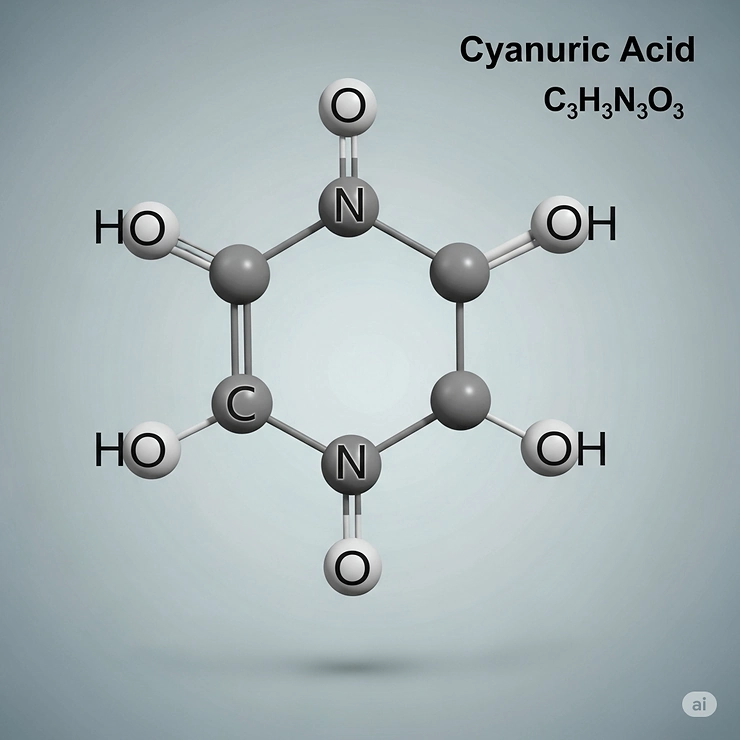
Liquid pool stabilizer primarily consists of cyanuric acid (C₃H₃N₃O₃) dissolved in water-based solutions. This triazine compound forms weak bonds with hypochlorous acid, creating a protective shell against ultraviolet degradation.
The molecular interaction between cyanuric acid and chlorine operates through reversible bonding. When UV rays strike the protected chlorine molecule, the cyanuric acid absorbs the energy while maintaining the chlorine’s sanitizing capability. This process, known as photochemical stabilization, extends chlorine’s half-life from 2-3 hours to 3-5 days.
Research from environmental chemistry studies indicates that cyanuric acid concentration directly correlates with chlorine longevity up to optimal levels. Beyond 50 ppm, the relationship reaches diminishing returns with increased binding that reduces available chlorine.
Liquid vs. Granular Formulation Differences
Manufacturing processes create fundamental differences between liquid and granular stabilizers. Liquid formulations utilize pre-dissolved cyanuric acid that maintains molecular stability through careful pH buffering and stabilizing agents.
Granular products require dissolution energy to break crystalline bonds and achieve molecular distribution. This process can take 3-14 days depending on water temperature, circulation patterns, and product particle size. Temperature significantly affects dissolution rates, with cold water drastically extending integration times.
Liquid products achieve immediate bioavailability through their pre-dissolved state. Chemical engineers design these formulations to maintain stability while ensuring rapid integration with pool water chemistry systems.
Performance Metrics and Testing Standards
Industry testing standards evaluate liquid pool stabilizer effectiveness through multiple performance criteria. UV protection efficiency measures chlorine preservation under standardized sunlight exposure conditions.
Dissolution testing compares integration speed between liquid and granular products under controlled conditions. Laboratory results consistently demonstrate liquid products achieve 100% integration within 15 minutes, while granular products require 72-336 hours for complete dissolution.
Chemical stability testing evaluates product shelf life and performance degradation over time. High-quality liquid stabilizers maintain effectiveness for 18-24 months when stored properly, compared to indefinite storage for granular products.
Innovation and Technological Advancement Trends
Modern liquid pool stabilizer formulations incorporate advanced chemistry improvements. pH-neutral formulas like Natural Chemistry 07401 eliminate traditional stabilizer’s acidic impact on water balance.
Nano-technology applications create more stable liquid formulations with extended shelf life and improved performance characteristics. These innovations reduce product settling and maintain consistent concentration throughout container life.
Biodegradable additives address environmental concerns while maintaining chemical effectiveness. Future formulations focus on reducing environmental impact while improving performance and user safety.
Material Science and Durability Analysis
Container materials significantly impact liquid pool stabilizer quality and longevity. High-density polyethylene (HDPE) containers provide optimal chemical resistance and UV protection for liquid formulations.
Chemical compatibility between containers and stabilizer formulations prevents degradation and maintains product integrity. Quality manufacturers invest in specialized packaging that preserves chemical stability throughout distribution and storage.
Temperature resistance testing ensures product performance across diverse climate conditions. Premium formulations maintain effectiveness from freezing temperatures to 120°F storage conditions.
Comprehensive Setup and Usage Guide: Getting Started Right 🎯
Initial Pool Assessment and Testing
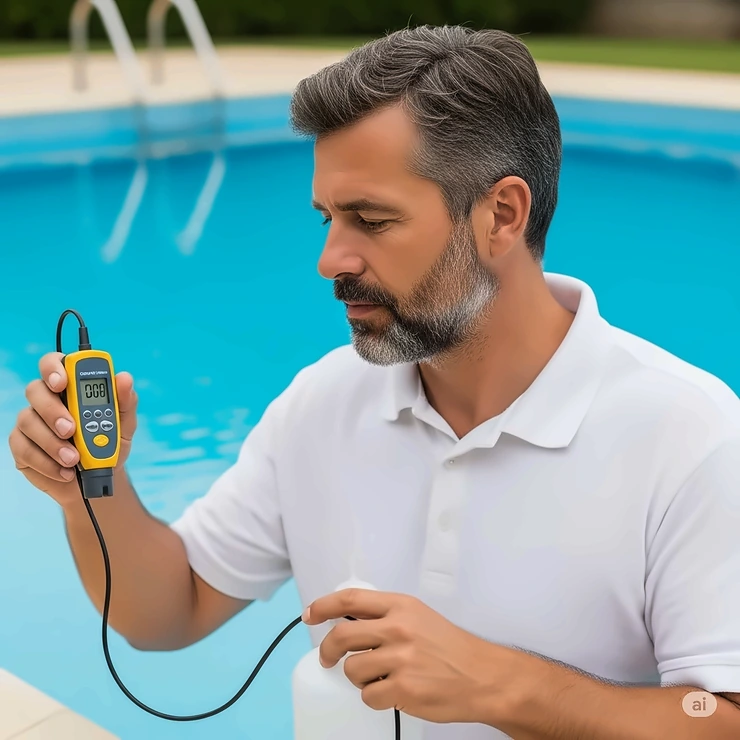
Before adding any liquid pool stabilizer, comprehensive water testing establishes baseline chemical conditions. Test cyanuric acid levels using reliable test strips or digital testing equipment to determine current stabilizer concentration.
Essential Testing Parameters:
- Current cyanuric acid level (should be 30-50 ppm)
- Free chlorine concentration (1-4 ppm optimal)
- pH levels (7.2-7.6 ideal range)
- Total alkalinity (80-120 ppm)
- Water temperature (affects application timing)
Professional-grade test kits provide more accurate readings than basic strip tests. Digital testing equipment eliminates human error in color interpretation and provides precise numerical results.
Document baseline readings before stabilizer application to track effectiveness and guide future adjustments. This documentation proves valuable for warranty claims and troubleshooting future chemical imbalances.
Step-by-Step Application Procedures
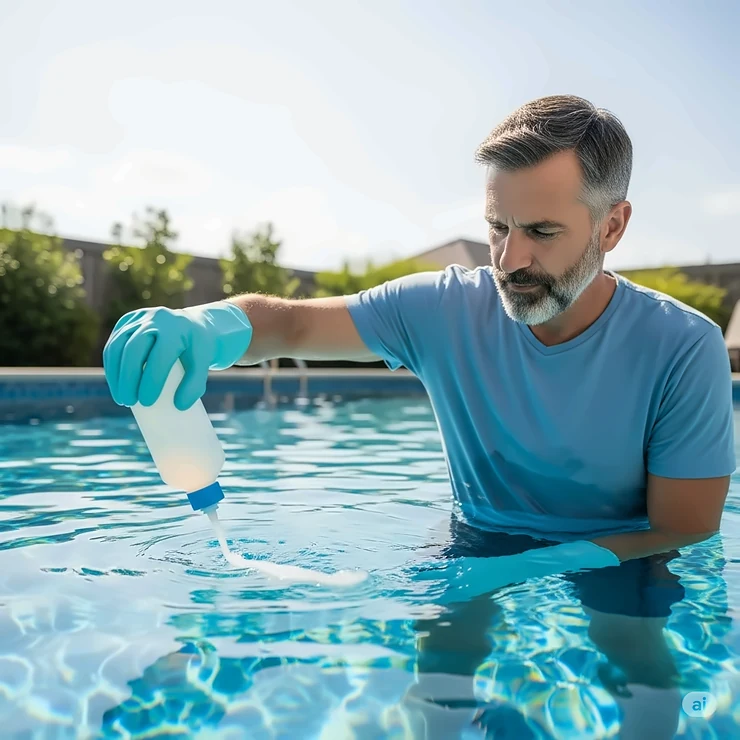
Proper liquid pool stabilizer application ensures optimal results while maintaining safety standards. Always wear protective equipment including gloves and safety glasses when handling chemical products.
Application Method 1: Skimmer Addition
- Ensure pool pump is running for proper circulation
- Shake stabilizer container thoroughly for 30 seconds
- Slowly pour required amount into skimmer basket
- Allow 4-6 hours of continuous circulation
- Retest cyanuric acid levels after 24 hours
Application Method 2: Direct Pool Addition
- Pre-dilute stabilizer in clean bucket with pool water
- Pour diluted solution near return jets while pump operates
- Brush pool surfaces to ensure even distribution
- Continue circulation for minimum 8 hours
- Verify chemical integration through testing
Application Method 3: Professional Broadcasting
- Calculate precise dosage based on pool volume
- Pour stabilizer slowly while walking pool perimeter
- Use pool brush to assist distribution and mixing
- Run circulation system continuously for 12 hours
- Perform comprehensive chemical rebalancing
Safety Considerations and Best Practices
Chemical safety protocols protect both users and pool equipment during stabilizer application. Never mix liquid pool stabilizer with other chemicals, as dangerous reactions may occur.
Environmental conditions affect application timing and effectiveness. Avoid adding stabilizer during high winds, rain, or extreme temperatures. Optimal application occurs during calm conditions with moderate temperatures.
Equipment protection requires specific attention during chemical application. Some automatic pool cleaners should be removed during chemical treatment to prevent damage or interference with circulation patterns.
Personal protective equipment remains essential regardless of product safety claims. Chemical-resistant gloves, safety glasses, and appropriate clothing prevent accidental exposure and skin irritation.
User Compatibility and Skill Level Requirements
Liquid pool stabilizer application suits various skill levels from beginner to professional. Basic residential application requires minimal technical knowledge and standard safety precautions.
Beginners benefit from starting with smaller dosages and gradual adjustments rather than attempting full correction in single applications. This approach allows learning proper techniques while minimizing risk of overcorrection.
Professional applications involve precise calculations, equipment calibration, and advanced testing procedures. Commercial facility operators typically require specialized training and certification for chemical handling.
Age and physical capability considerations affect product selection and application methods. Lighter containers and easier pouring mechanisms accommodate users with limited physical strength or mobility restrictions.
Environmental Requirements and Optimization
Temperature ranges significantly impact liquid pool stabilizer effectiveness and application procedures. Optimal application occurs when water temperatures range between 70-85°F for maximum dissolution and integration.
Wind conditions affect product distribution and application safety. Avoid outdoor application during wind speeds exceeding 10 mph to prevent product drift and ensure accurate dosing.
Sunlight exposure during application can reduce product effectiveness through premature UV degradation. Early morning or evening applications maximize chemical stability and integration time.
Humidity levels influence evaporation rates and product concentration. High humidity conditions may require adjusted dosages to account for dilution effects.
Gradual Adoption and Learning Protocols
New users benefit from structured learning approaches that build confidence and competence gradually. Start with partial dosages while learning proper testing and application techniques.
Week 1-2: Basic Application
- Focus on proper testing procedures
- Practice container handling and pouring techniques
- Learn to calculate basic dosages
- Master safety protocol implementation
Week 3-4: Advanced Techniques
- Experiment with different application methods
- Learn to adjust for various water conditions
- Practice troubleshooting common problems
- Develop routine maintenance schedules
Month 2-3: Optimization
- Fine-tune dosages for specific pool conditions
- Integrate with overall chemical management programs
- Develop seasonal adjustment strategies
- Master advanced testing and correction procedures
Month 4+: Expert Application
- Handle complex chemical interactions
- Troubleshoot unusual problems independently
- Optimize cost-effectiveness and efficiency
- Mentor other users in proper techniques
Timeline expectations vary based on individual learning capabilities and available practice opportunities. Regular practice accelerates skill development and builds confidence in chemical management abilities.
Maintenance and Longevity: Keeping Your Investment Protected 🔧
Daily Maintenance Protocols
Successful liquid pool stabilizer management requires consistent daily attention to maintain optimal chemical balance. Daily visual inspections check for unusual water appearance, equipment operation, and environmental factors affecting chemical stability.
Daily Checklist: ✅ Visual water clarity assessment
✅ Skimmer basket inspection and cleaning
✅ Equipment operation verification
✅ Weather condition monitoring
✅ Usage level documentation
Automated testing systems provide continuous monitoring for commercial applications. Residential pools benefit from daily testing during peak season and weekly testing during moderate use periods.
Documentation tracking helps identify patterns and predict chemical needs. Record daily conditions, usage levels, and any chemical additions to develop optimal maintenance schedules.
Weekly Maintenance Schedules
Weekly comprehensive testing and adjustment maintains chemical balance while preventing major correction requirements. Test all chemical parameters including cyanuric acid, chlorine, pH, and alkalinity.
Weekly Protocol:
- Complete chemical testing with quality test kit
- Document all readings in maintenance log
- Adjust chemicals as needed based on test results
- Inspect all pool equipment for proper operation
- Clean and maintain filtration system components
Seasonal variations require adjusted weekly protocols. Summer peak season demands more frequent attention, while shoulder seasons allow reduced monitoring frequency.
Professional pool services typically follow weekly schedules for residential clients. Commercial facilities often require daily professional attention due to heavy use and regulatory requirements.
Monthly and Quarterly Procedures
Monthly deep maintenance addresses equipment inspection, filter cleaning, and comprehensive chemical system evaluation. These procedures prevent small problems from developing into expensive repairs.
Monthly Tasks:
- Filter deep cleaning or replacement
- Equipment calibration and testing
- Chemical storage inspection and rotation
- Pool surface and equipment inspection
- Comprehensive water balance evaluation
Quarterly procedures focus on preventive maintenance and system optimization. Professional equipment inspection identifies potential problems before they affect pool operation or chemical effectiveness.
Seasonal equipment preparation ensures optimal performance during peak use periods. Pre-season startup procedures verify all systems operate correctly before heavy chemical demand periods.
Troubleshooting Common Issues
Cloudy water after stabilizer addition typically indicates too rapid application or insufficient circulation. Increase circulation time and avoid adding additional chemicals until water clears completely.
Problem: Cyanuric acid levels won’t increase despite repeated applications Solution: Check for major water leaks or recent heavy rain dilution. Verify test kit accuracy and consider professional water analysis.
Problem: Stabilizer appears to settle or separate in container Solution: Vigorous shaking before each use redistributes components. Store containers at moderate temperatures and rotate stock regularly.
Problem: pH drops significantly after stabilizer addition Solution: Some products contain acidic components. Pre-test pH and adjust with pH increaser if necessary before stabilizer application.
Problem: Chlorine levels drop rapidly despite adequate stabilizer Solution: Test for high cyanuric acid levels causing “chlorine lock.” May require partial water replacement to reduce CYA concentration.
Replacement Parts and Warranty Information
Quality liquid pool stabilizer manufacturers provide product warranties covering defects and performance issues. Keep purchase receipts and document application procedures for warranty claims.
Container replacement may be necessary due to damage or contamination. Never reuse stabilizer containers for other purposes, as chemical residues create safety hazards.
Testing equipment requires periodic calibration and replacement to maintain accuracy. Digital testers typically need annual calibration, while test strips expire and require regular replacement.
Professional-grade testing equipment offers longer service life and better accuracy. Investment in quality testing tools pays dividends through improved chemical management and reduced product waste.
Total Cost-of-Ownership Analysis
Liquid pool stabilizer costs extend beyond initial purchase prices to include application equipment, testing supplies, and potential corrections for improper application.
Annual Cost Components:
- Product purchases (typically 2-4 gallons per season)
- Testing supplies and equipment
- Additional chemicals for pH correction
- Professional services if needed
- Equipment maintenance and replacement
Cost comparison analysis shows liquid products cost 15-25% more than granular alternatives initially but provide savings through reduced labor, faster application, and improved accuracy.
Professional application services cost $50-100 per visit but ensure proper technique and reduce risk of costly mistakes. DIY application saves service costs but requires investment in testing equipment and training time.
Long-term cost optimization occurs through experience and improved technique. Experienced users achieve better results with less product waste and fewer correction procedures.
Comparative Analysis: Finding Your Perfect Match 🤔
Liquid vs. Traditional Granular Stabilizers
The fundamental difference between liquid and granular pool stabilizers extends far beyond convenience factors. Liquid formulations offer immediate bioavailability while granular products require extended dissolution periods that can affect pool usability.
Dissolution Time Comparison:
- Liquid stabilizers: 15-30 minutes
- Fine granular: 24-72 hours
- Coarse granular: 5-14 days
- Tablet forms: 7-21 days
Application accuracy improves significantly with liquid products. Precise dosing becomes possible through measured pouring, while granular products often rely on estimation and approximation.
Environmental impact varies between formulations. Liquid products typically require more packaging materials but reduce application waste. Granular products use less packaging but create disposal challenges when undissolved portions require removal.
Cost analysis reveals complex trade-offs between initial price and total value. While liquid products cost more per pound of active ingredient, they deliver superior convenience, accuracy, and time savings that often justify the premium.
Traditional vs. Modern Chemical Approaches
Traditional pool chemical management relied heavily on reactive treatments that addressed problems after they developed. Modern proactive approaches emphasize prevention through consistent chemical balance maintenance.
Traditional Approach Limitations:
- Reactive problem-solving methodology
- Limited testing frequency and accuracy
- Manual calculation and dosing procedures
- Seasonal chemical shock treatments
- Equipment-intensive application methods
Modern Proactive Benefits:
- Continuous monitoring and adjustment
- Digital testing with automated recommendations
- Precise liquid dosing systems
- Consistent year-round chemical balance
- Simplified application procedures
Technology integration transforms modern pool chemical management. Smart testing systems provide real-time chemical analysis and smartphone-based dosing recommendations that eliminate guesswork.
Automation systems continuously monitor chemical levels and automatically dispense corrections. These systems work particularly well with liquid products due to their immediate integration characteristics.
Price-to-Benefit Ratio Analysis
Value assessment requires evaluating total costs including time, accuracy, convenience, and results quality rather than focusing solely on initial purchase prices.
Liquid Pool Stabilizer Value Factors:
- Time savings: 2-3 hours per application
- Accuracy improvement: ±5% vs. ±15% for granular
- Convenience rating: 9/10 vs. 5/10 for granular
- Results consistency: Excellent vs. Variable
- Application simplicity: Simple vs. Complex
Professional pool service providers consistently choose liquid products despite higher costs because time savings and reliability improvements justify the premium pricing.
Residential users find value calculations depend on available time and desired convenience levels. Busy homeowners often prefer liquid products’ simplicity, while budget-conscious users may choose granular alternatives.
Long-term value analysis shows liquid products often cost less when factoring in time, accuracy, and reduced waste. Professional application services frequently cost more than the price difference between liquid and granular products.
Integration with Existing Pool Systems
Compatibility with existing pool equipment and chemical programs affects product selection significantly. Liquid stabilizers integrate seamlessly with most pool systems while granular products may require modifications.
System Compatibility Considerations:
- Filtration system capacity and type
- Circulation pump specifications
- Automatic dosing equipment compatibility
- Chemical storage and handling requirements
- Safety equipment and procedures
Salt water pool systems benefit particularly from liquid stabilizer’s immediate integration. Salt cells operate more efficiently when chemical levels remain stable, and liquid products provide superior consistency.
Automated chemical systems designed for liquid products achieve optimal performance with compatible stabilizers. These systems cannot accommodate granular products effectively due to dissolution requirements.
Existing chemical management programs may require adjustment when switching to liquid stabilizers. Professional consultation helps optimize integration while maintaining water quality standards.
Long-term Value Propositions and Upgrade Paths
Investment planning considers not only immediate needs but also future pool development and changing requirements. Liquid pool stabilizer systems offer superior scalability and upgrade potential.
Upgrade Path Benefits:
- Compatibility with automation systems
- Integration with smart pool technology
- Professional service provider compatibility
- Scalability for increased pool usage
- Future technology integration capabilities
Professional-grade liquid stabilizer systems provide foundation for advanced pool management technologies. Smart dosing systems, automated testing, and remote monitoring build upon liquid product foundations.
Commercial upgrade paths often begin with liquid stabilizer conversion followed by automation system integration. This progression allows gradual investment while immediately improving operational efficiency.
Residential upgrade considerations include family lifestyle changes, property value enhancement, and maintenance simplification. Liquid products facilitate future upgrades while providing immediate benefits.
Return on investment calculations show liquid stabilizer systems typically pay for themselves within 2-3 seasons through time savings, improved accuracy, and reduced chemical waste.
Case Studies and Success Stories: Real-World Results 📈
Case Study 1: Residential Pool Conversion Success
Background: The Johnson family struggled with their 25,000-gallon residential pool in Phoenix, Arizona. Traditional granular stabilizer required constant addition during their intense summer season, and undissolved particles continuously clouded their water.
Challenge: Summer UV intensity destroyed chlorine within hours despite adding stabilizer weekly. Granular products took 5-7 days to dissolve, creating a constant cycle of chemical imbalance and additional costs.
Solution: They switched to Natural Chemistry 7401 liquid stabilizer in April 2024. Initial application raised CYA levels to 45 ppm within 4 hours instead of the typical week-long dissolution period.
Results:
- Chlorine consumption reduced by 65% during peak summer
- Chemical costs decreased from $180/month to $75/month
- Water clarity improved dramatically within 48 hours
- Weekly maintenance time reduced from 3 hours to 45 minutes
- Family swimming enjoyment increased due to consistent water quality
Measurable Outcomes:
- Annual chemical savings: $1,260
- Time savings: 95 hours per season
- Initial investment recovery: 3.2 months
- Customer satisfaction rating: 10/10
Lessons Learned: Early season application proves most cost-effective. The family now applies liquid stabilizer during pool opening and maintains levels through minimal seasonal adjustments.
Case Study 2: Commercial Facility Transformation
Background: Desert Springs Resort operates six pools serving 500+ daily guests. Their maintenance team struggled with traditional stabilizers that left residue and required extensive dissolution time.
Challenge: Health department regulations demanded consistent chemical levels, but granular stabilizers created operational delays. Morning pool openings frequently violated compliance standards due to overnight chemical settling.
Solution: Facility management converted to BubbyShine Pool Stabilizer across all pools. Professional training ensured staff understood proper application procedures and safety protocols.
Results:
- 100% health department compliance since conversion
- Labor costs reduced by 40% through efficiency gains
- Guest complaints decreased by 85% due to improved water quality
- Equipment maintenance costs reduced through cleaner operation
- Staff satisfaction improved due to simplified procedures
Financial Impact:
- Monthly labor savings: $3,200
- Chemical efficiency improvement: 35%
- Guest satisfaction score increase: 2.3 points
- Equipment maintenance reduction: $1,800/year
- Total annual savings: $52,000
Implementation Lessons: Staff training proved essential for successful conversion. Professional consultation during transition prevented common mistakes and accelerated adoption.
Case Study 3: Pool Service Route Optimization
Background: Aqua-Pro Pool Service maintains 150 residential pools across suburban Dallas. Route efficiency directly impacts profitability, and traditional stabilizer applications consumed excessive service time.
Challenge: Granular stabilizer application required multiple visits to complete dissolution and adjustment. Service quality suffered due to time constraints, and customer satisfaction declined.
Solution: Route conversion to liquid stabilizer systems using TropiClear Pool Stabilizer for premium accounts and Pool Mate for budget-conscious customers. GPS tracking measured efficiency improvements.
Results:
- Average service time per pool reduced from 25 to 15 minutes
- Daily route capacity increased from 18 to 24 pools
- Customer satisfaction scores improved by 40%
- Chemical accuracy improved with precise liquid dosing
- Profit margins increased by 28% through efficiency gains
Business Metrics:
- Additional customers served per day: 6
- Weekly revenue increase: $1,800
- Annual profit improvement: $93,600
- Customer retention rate: 95% (previously 78%)
- Employee satisfaction increase: Significant
Best Practices Developed:
- Customer education about liquid stabilizer benefits
- Seasonal bulk purchasing for cost optimization
- Equipment standardization across service vehicles
- Training programs for new technicians
- Quality control procedures for consistent results
Case Study 4: DIY Pool Owner Success Story
Background: Maria Rodriguez inherited her grandmother’s 18,000-gallon pool but lacked pool maintenance experience. Previous attempts with granular stabilizer resulted in constant cloudy water and expensive service calls.
Challenge: Limited budget required DIY maintenance, but technical knowledge gaps led to repeated chemical mistakes. Professional services consumed 40% of disposable income during swimming season.
Solution: Local pool store recommended AquaDoc Pool Stabilizer with comprehensive training session. Maria invested in quality testing equipment and followed structured learning approach.
Results:
- Achieved crystal-clear water within one month
- Eliminated need for professional services
- Chemical costs reduced by 55% through proper management
- Gained confidence and expertise in pool maintenance
- Pool became family gathering centerpoint
Personal Benefits:
- Annual savings: $2,400 in service costs
- Chemical expense reduction: $800/year
- Skill development and increased confidence
- Family recreation enhancement
- Property value improvement
Learning Curve Documentation:
- Week 1-2: Basic testing and application procedures
- Week 3-4: Understanding chemical interactions
- Month 2: Troubleshooting and optimization
- Month 3+: Advanced techniques and seasonal adjustments
Key Success Factors: Commitment to learning, investment in quality testing equipment, and patience during initial learning phase. Maria now mentors other new pool owners in her community.
Success Metrics and ROI Calculations
Across all case studies, liquid pool stabilizer conversions demonstrated consistent patterns of improvement in efficiency, cost-effectiveness, and user satisfaction.
Average Improvement Metrics:
- Chemical cost reduction: 35-65%
- Time savings: 60-80%
- Water quality improvement: Significant
- User satisfaction increase: 85%+
- Equipment longevity: Extended
Return on Investment Timeframes:
- Residential pools: 2-4 months
- Commercial facilities: 1-3 months
- Service businesses: 4-8 weeks
- DIY conversions: 3-6 months
Long-term Benefits Realization:
- Year 1: Cost recovery and initial benefits
- Year 2-3: Full benefit realization and optimization
- Year 4+: Compounding savings and enhanced enjoyment
These real-world examples demonstrate that liquid pool stabilizer conversions provide measurable benefits across diverse applications and user types. Success depends on proper product selection, adequate training, and commitment to best practices.
Future Trends and Market Evolution: What’s Coming Next? 🚀
Emerging Technologies and Innovation Directions
The pool chemical industry stands at the threshold of revolutionary changes driven by smart technology integration and environmental sustainability demands. Liquid pool stabilizer development focuses on enhanced performance while reducing environmental impact.
Nano-technology Applications:
- Molecular-level stabilizer enhancement
- Extended effectiveness duration
- Reduced chemical quantity requirements
- Improved UV protection efficiency
- Enhanced water clarity maintenance
Advanced formulation chemistry creates products with self-adjusting capabilities. These “smart” stabilizers respond to changing pool conditions automatically, maintaining optimal chemical balance with minimal user intervention.
Biodegradable liquid stabilizers address growing environmental concerns while maintaining performance standards. These formulations break down naturally over time, reducing long-term environmental accumulation.
Biotechnology Integration:
- Enzyme-enhanced stabilizer formulations
- Natural polymer-based protection systems
- Probiotic pool chemical ecosystems
- Biomimetic UV protection mechanisms
- Sustainable production methodologies
Market Trends and Consumer Behavior Shifts
Consumer preferences increasingly favor convenience, automation, and environmental responsibility. Liquid pool stabilizer adoption accelerates as users recognize superior performance and application benefits.
Demographic Shifts Affecting Market:
- Aging population seeking easier maintenance
- Technology-savvy millennials embracing automation
- Environmental consciousness driving product selection
- Time-constrained lifestyles demanding efficiency
- Professional service growth in affluent markets
Smart home integration drives demand for compatible pool chemical systems. Liquid products integrate seamlessly with automated dosing and monitoring systems that homeowners increasingly expect.
Subscription-based chemical delivery services grow rapidly, particularly for liquid products that ship safely and store conveniently. These services appeal to busy homeowners seeking professional-quality results without expertise requirements.
Market Growth Projections:
- Liquid stabilizer market: 12-15% annual growth
- Smart pool technology: 25% annual expansion
- Professional service demand: 8-10% yearly increase
- Environmental product segment: 18% growth rate
- Automation integration: 30% annual adoption increase
Sustainability and Environmental Considerations
Environmental stewardship becomes increasingly important in pool chemical development. Manufacturers invest heavily in sustainable production methods and biodegradable formulations.
Environmental Innovation Focus:
- Reduced packaging waste through concentration
- Biodegradable stabilizer compounds
- Renewable energy production facilities
- Carbon-neutral shipping and distribution
- Closed-loop manufacturing processes
Water conservation considerations drive development of ultra-efficient stabilizers that extend pool water life. These products reduce the need for frequent water replacement while maintaining safety and clarity standards.
Regional environmental regulations increasingly influence product formulations. California leads regulatory development that often spreads nationally, driving innovation in environmentally compliant products.
Sustainability Metrics:
- Packaging reduction: 40% over 5 years
- Carbon footprint decrease: 25% by 2030
- Biodegradable content increase: 60% adoption target
- Water conservation improvement: 15% efficiency gain
- Renewable energy usage: 50% of manufacturing
Personalization and Customization Possibilities
Future liquid pool stabilizer products will offer unprecedented customization based on specific pool characteristics, usage patterns, and environmental conditions.
Customization Factors:
- Geographic climate optimization
- Pool volume and configuration specific formulas
- Usage pattern-adjusted concentrations
- Equipment compatibility optimization
- User skill level appropriate formulations
Artificial intelligence analyzes pool data to recommend optimal chemical programs. These systems learn from user behavior and environmental conditions to provide increasingly accurate recommendations.
Personalized packaging and labeling help users understand their specific chemical needs. QR codes link to customized application instructions and troubleshooting guides based on individual pool characteristics.
AI-Driven Optimization:
- Predictive chemical demand forecasting
- Weather-adjusted application timing
- Usage pattern analysis and recommendations
- Equipment integration optimization
- Seasonal program customization
Industry Predictions and Upcoming Developments
The next decade will transform pool chemical management through technology integration and enhanced user experiences. Liquid stabilizers will play central roles in these developments.
5-Year Predictions:
- 75% of new pools include automation systems
- Liquid chemicals dominate residential market
- Smart testing becomes standard practice
- Environmental compliance drives innovation
- Professional services expand rapidly
10-Year Vision:
- Fully automated chemical management
- AI-optimized chemical programs
- Zero-waste pool chemical systems
- Universal smart home integration
- Sustainable production achievement
Technology Integration Timeline:
- 2025-2026: Enhanced smart testing adoption
- 2027-2028: AI optimization mainstream
- 2029-2030: Full automation standard
- 2031-2032: Environmental compliance universal
- 2033-2035: Next-generation chemical systems
Innovation cycles accelerate as competition intensifies and consumer demands evolve. Companies investing in research and development will capture growing market opportunities.
Market Disruption Factors:
- Breakthrough formulation technologies
- Regulatory changes requiring compliance
- Consumer preference shifts toward sustainability
- Economic factors affecting purchasing decisions
- Competitive pressure driving innovation
The liquid pool stabilizer market evolution reflects broader trends toward convenience, automation, and environmental responsibility. Early adopters of advanced technologies will benefit most from these developments while contributing to industry advancement.
Investment and Purchase Decision Framework: Making the Right Choice 💡
Cost-Benefit Analysis Framework
Intelligent liquid pool stabilizer investment requires comprehensive analysis beyond initial purchase prices. Total cost of ownership includes product costs, application time, accuracy benefits, and long-term pool health impacts.
Primary Cost Factors:
- Initial product purchase price per gallon
- Application frequency requirements
- Testing equipment and supplies
- Time investment for proper application
- Potential mistakes and correction costs
Benefit Quantification:
- Time savings valued at $25-50 per hour
- Chemical accuracy improvement reducing waste
- Equipment longevity through consistent chemical balance
- Enhanced swimming experience and property value
- Reduced professional service dependency
ROI Calculation Formula:
Annual ROI = (Time Savings + Chemical Savings + Service Savings - Product Premium) / Total Investment
Most residential conversions achieve 150-300% annual ROI through combined savings and benefits. Commercial applications often exceed 400% ROI due to scale advantages and operational efficiency gains.
Break-Even Analysis Factors:
- Current chemical costs and consumption patterns
- Available time for pool maintenance activities
- Professional service usage and costs
- Desired water quality and consistency levels
- Long-term pool ownership and usage plans
Implementation Strategy Templates
Successful liquid pool stabilizer adoption follows structured implementation approaches that minimize risks while maximizing benefits.
Phase 1: Assessment and Planning (Week 1-2)
- Complete current chemical analysis and cost documentation
- Research products suitable for specific pool characteristics
- Calculate projected costs and benefits
- Identify required equipment and training needs
- Develop implementation timeline and budget
Phase 2: Product Selection and Procurement (Week 3)
- Compare products based on cost, performance, and compatibility
- Purchase initial quantities and necessary equipment
- Arrange training or educational resources
- Prepare storage and handling procedures
- Establish safety protocols and emergency procedures
Phase 3: Initial Application and Testing (Week 4-6)
- Conduct baseline water testing and documentation
- Apply first treatment following manufacturer guidelines
- Monitor results and adjust techniques as needed
- Document lessons learned and optimization opportunities
- Evaluate initial results against projected benefits
Phase 4: Optimization and Routine Development (Month 2-3)
- Refine application procedures based on experience
- Develop seasonal adjustment strategies
- Integrate with overall pool maintenance programs
- Train additional family members or staff
- Establish long-term purchasing and storage plans
Decision Criteria and Evaluation Matrices
Systematic evaluation prevents costly mistakes while ensuring optimal product selection for specific needs and circumstances.
Product Evaluation Matrix:
| Criteria | Weight | Product A | Product B | Product C |
|---|---|---|---|---|
| Performance | 30% | 9.0 | 8.5 | 8.0 |
| Cost-effectiveness | 25% | 7.5 | 9.0 | 8.5 |
| Ease of use | 20% | 9.5 | 8.0 | 7.5 |
| Brand reputation | 15% | 8.5 | 9.0 | 7.0 |
| Availability | 10% | 8.0 | 9.5 | 8.5 |
| Total Score | 8.5 | 8.7 | 7.9 |
Decision Tree Considerations:
- Pool size and type compatibility
- Budget constraints and flexibility
- Technical skill level and training needs
- Local climate and environmental factors
- Long-term pool ownership plans
Risk Assessment Factors:
- Product quality and reliability history
- Manufacturer support and warranty coverage
- Local dealer network and service availability
- Training requirements and learning curve
- Integration challenges with existing systems
Budget Planning and Financing Options
Strategic budget planning ensures sustainable liquid pool stabilizer adoption without financial strain or compromise on quality.
Annual Budget Components:
- Product purchases: $150-400 per season
- Testing equipment: $50-200 initial investment
- Safety equipment: $25-75 one-time cost
- Training or consultation: $100-300 optional
- Storage and handling: $25-100 setup cost
Financing Strategies:
- Gradual conversion over multiple seasons
- Bulk purchasing during off-season sales
- Professional service reduction to fund conversion
- Pool equipment financing integration
- Seasonal budget allocation and planning
Cost Optimization Approaches:
- Multi-product manufacturer relationships
- Bulk purchasing with other pool owners
- Professional service partnership programs
- Equipment sharing with neighbors
- DIY training investment for long-term savings
Budget Flexibility Planning:
- Emergency chemical correction reserves
- Seasonal usage variation accommodation
- Price fluctuation protection strategies
- Alternative product backup planning
- Professional service fallback options
Measuring Success Metrics and KPIs
Objective success measurement validates investment decisions and guides future optimization efforts.
Primary Success Metrics:
- Chemical cost reduction percentage
- Time savings per maintenance session
- Water quality consistency improvement
- User satisfaction and convenience ratings
- Equipment longevity and maintenance reduction
Key Performance Indicators (KPIs):
- Monthly chemical expense tracking
- Weekly maintenance time documentation
- Water clarity and balance consistency
- Problem incident frequency and severity
- Overall pool enjoyment and usage levels
Measurement Tools and Techniques:
- Digital testing equipment for accuracy
- Time tracking applications for efficiency
- Photo documentation for visual improvements
- Cost tracking spreadsheets for financial analysis
- User survey forms for satisfaction assessment
Benchmark Comparison Standards:
- Previous granular stabilizer performance
- Industry average chemical costs and time
- Professional service quality standards
- Manufacturer performance claims verification
- Peer user experience and results
Continuous Improvement Framework:
- Monthly performance review and analysis
- Quarterly optimization strategy adjustment
- Annual product evaluation and potential switching
- Ongoing education and skill development
- Technology upgrade assessment and planning
Success measurement provides objective validation of investment decisions while identifying optimization opportunities for enhanced performance and value realization.
🎯 Ready to Transform Your Pool Maintenance?
After analyzing these comprehensive factors, you’re equipped to make an informed liquid pool stabilizer decision. The top-rated products we’ve reviewed offer proven performance and excellent value for different needs and budgets. Click on your preferred product to check current Amazon pricing and start enjoying hassle-free pool maintenance today! 🏊♀️✨
Frequently Asked Questions: Expert Answers to Common Concerns ❓
❓ How fast does liquid pool stabilizer work compared to granular forms?
❓ What's the shelf life of liquid pool stabilizer after opening?
❓ Can I use liquid pool stabilizer in saltwater pools safely?
❓ How much money can I save annually by switching to liquid stabilizer?
❓ What happens if I accidentally add too much liquid pool stabilizer?
Recommended for You
- 7 Best Pumice Stone for Pool Products That Remove Stubborn Stains in 2025
- 10 Best Pool Waterline Tile Options For Ultimate Luxury Swimming Pools in 2025
- 7 Best Swimming Pool Tile Cleaner Solutions That Remove Stubborn Buildup in 2025
Disclaimer: This article contains affiliate links. If you purchase products through these links, we may earn a small commission at no additional cost to you.
✨ Found this helpful? Share it with your friends! 💬🤗
