
In This Article
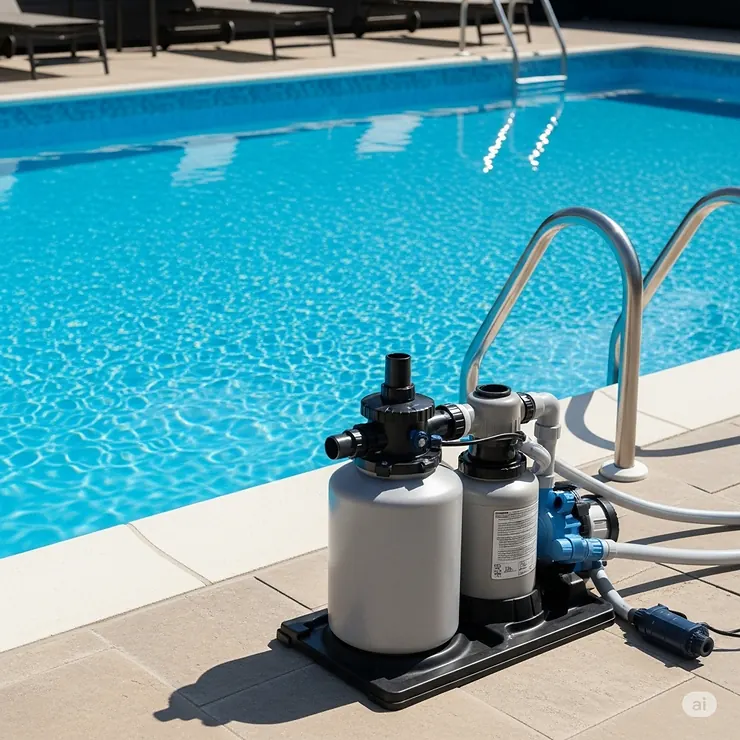
Maintaining crystal-clear water in your above ground pool doesn’t have to be a constant battle against debris and cloudiness. Whether you’re tired of replacing expensive cartridge filters every few weeks or struggling with inadequate filtration, pool sand filters for above ground pools offer a game-changing solution that combines superior performance with long-term cost savings.
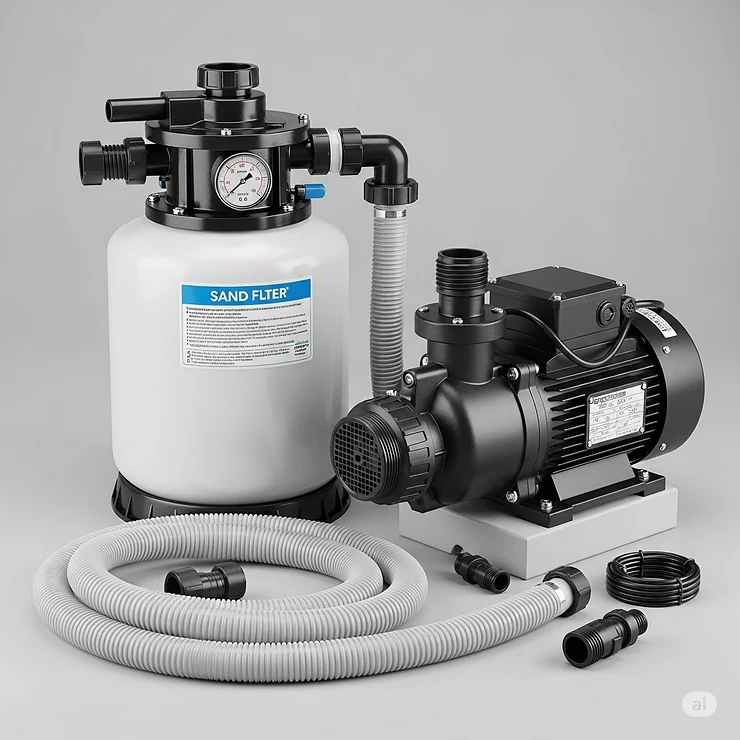
Unlike traditional cartridge systems that require frequent replacement, pool sand filters for above ground pools use specially graded sand media to trap particles as small as 20 microns, providing exceptional water clarity while lasting 3-5 years between sand changes. This translates to significant savings and dramatically reduced maintenance time.
✨Was this helpful? Spread the word! 🚀
Quick Comparison Table: Top Pool Sand Filters for Above Ground Pools
| Model | Tank Size | Flow Rate | Pool Capacity | Price Range | Best For |
|---|---|---|---|---|---|
| Intex 26651EG Krystal Clear | 16″ | 3,000 GPH | Up to 19,600 gal | $289.99 | Large pools, premium features |
| XtremepowerUS 13″ Sand Filter | 13″ | 2,400 GPH | Up to 10,000 gal | $189.99 | Medium pools, budget-friendly |
| Bestway Flowclear 58516E | 12″ | 800 GPH | 300-4,800 gal | $137 | Small pools, entry-level |
| Hayward W3S180T92S ProSeries | 18″ | 2,450 GPH | Professional grade | $649.00 | Premium quality, durability |
| VEVOR 14-inch Sand Filter | 14″ | 3,000 GPH | Up to 13,000 gal | $229.99 | Mid-range performance |
| XtremepowerUS 19″ Filter | 19″ | 4,500 GPH | Up to 18,000 gal | $159.95 | Large pools, high flow |
| Swimline Hydrotools 14″ | 14″ | 2,400 GPH | Up to 10,500 gal | $189.99 | Reliable performance |
💬 Just one click – help others make better buying decisions too! 😊
Don’t Miss These Exclusive Deals! ⭐
→ Transform your pool maintenance experience with these carefully selected pool sand filters for above ground pools. Click on any highlighted product to check current pricing and availability. These systems will help you achieve the crystal-clear water you’ve always wanted! 🏊♂️
Understanding Pool Sand Filters for Above Ground Pools: The Science Behind Superior Filtration
When you’re dealing with above ground pool filtration, understanding how pool sand filters for above ground pools work can help you make an informed decision that saves both time and money. The filtration process relies on a fundamental principle: as pool water passes through specially graded sand media, particles become trapped in the increasingly tight spaces between sand grains.
The engineering behind these systems involves precise hydraulic calculations. According to the Pool Water Treatment Advisory Group (PWTAG), optimal filtration rates for residential pools operate between 10-25 m³/m²/h to maintain maximum efficiency. Above this range, filtration effectiveness drops significantly – by as much as 75% when operating at high-rate speeds above 25 m/h.
Moreover, the Environmental Protection Agency (EPA) emphasizes that proper filtration is crucial for maintaining water quality standards and reducing chemical consumption. Pool sand filters for above ground pools that operate within recommended flow rates can reduce chlorine demand by up to 30% compared to inadequate filtration systems.
The sand media itself undergoes a fascinating transformation during the filtration process. Initially, the angular edges of fresh silica sand provide optimal particle trapping. Over time, these edges wear smooth, which actually improves fine particle capture but reduces overall flow rates. This is why Wikipedia notes that sand typically lasts 5-7 years before replacement becomes necessary.
Interestingly, recent innovations have introduced filter balls as alternatives to traditional sand. Research shows that these synthetic media can capture particles as small as 1 micron compared to sand’s 20-micron capability, though they require different maintenance protocols and cost considerations.
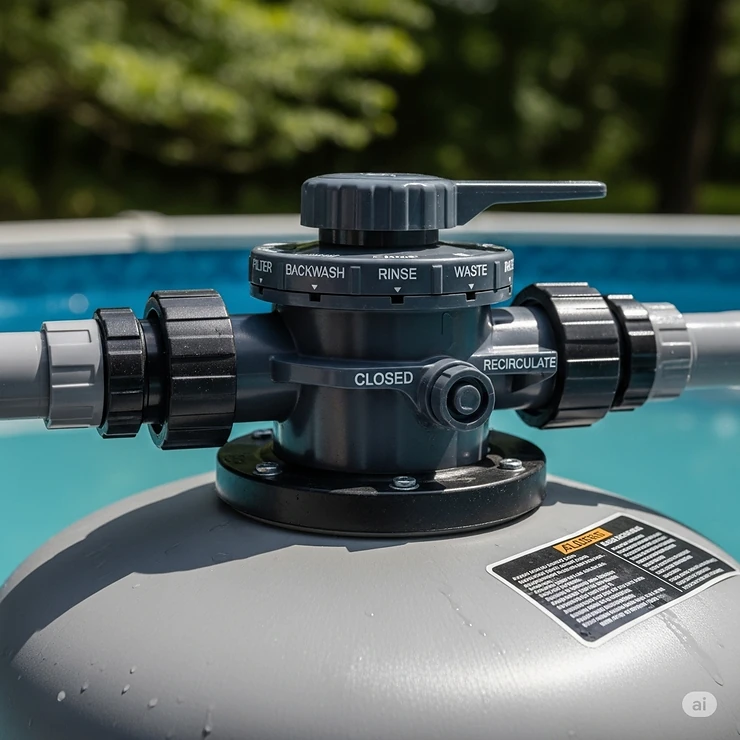
The hydraulic design of pool sand filters for above ground pools incorporates several critical components working in harmony. The multiport valve system allows for six different operational modes: filter, backwash, rinse, waste, circulate, and close. Each mode serves specific maintenance functions that extend system life and maintain optimal performance.
Temperature also plays a crucial role in filtration efficiency. During warmer months, increased bather loads and higher organic matter levels demand more aggressive filtration cycles. Many pool owners find that running their pool sand filters for above ground pools for 8-12 hours daily during peak season maintains optimal water quality.
Industry-Specific Applications and Professional Use Cases
Residential Pool Applications
Home pool owners represent the largest market for pool sand filters for above ground pools, with specific needs varying significantly based on geographic location, family size, and usage patterns. In regions with high pollen counts, such as the southeastern United States, pool sand filters demonstrate superior performance compared to cartridge systems that quickly clog with organic debris.
Professional pool technicians consistently recommend pool sand filters for above ground pools in households with children due to increased debris loads from toys, sunscreen, and frequent entry/exit cycles. A family of four using their pool regularly during summer months typically generates 2-3 times more filtration demand than occasional adult use.
Commercial pool service companies report that residential clients with pool sand filters for above ground pools require 40% fewer service calls compared to those using cartridge systems. This reduction stems from the self-cleaning capabilities of sand filtration and longer intervals between media replacement.
Community and Semi-Commercial Applications
Homeowner associations, small resorts, and community centers increasingly choose pool sand filters for above ground pools for their larger installations. These applications benefit from the robust nature of sand filtration systems that handle variable bather loads without frequent intervention.
In hotel and resort settings, pool sand filters for above ground pools provide consistent performance despite unpredictable usage patterns. Maintenance staff appreciate the simplified operation and reduced chemical consumption associated with effective sand filtration.
Educational and Recreational Facilities
Schools, camps, and recreational facilities utilize pool sand filters for above ground pools in their seasonal pool programs. The durability and low-maintenance characteristics align well with limited staffing and budget constraints common in educational settings.
Professional testimonials from camp directors consistently highlight the reliability of pool sand filters for above ground pools during peak summer usage periods when daily maintenance time is limited but water quality cannot be compromised.
Advanced Technical Analysis and Engineering Principles
Hydraulic Engineering and Flow Dynamics
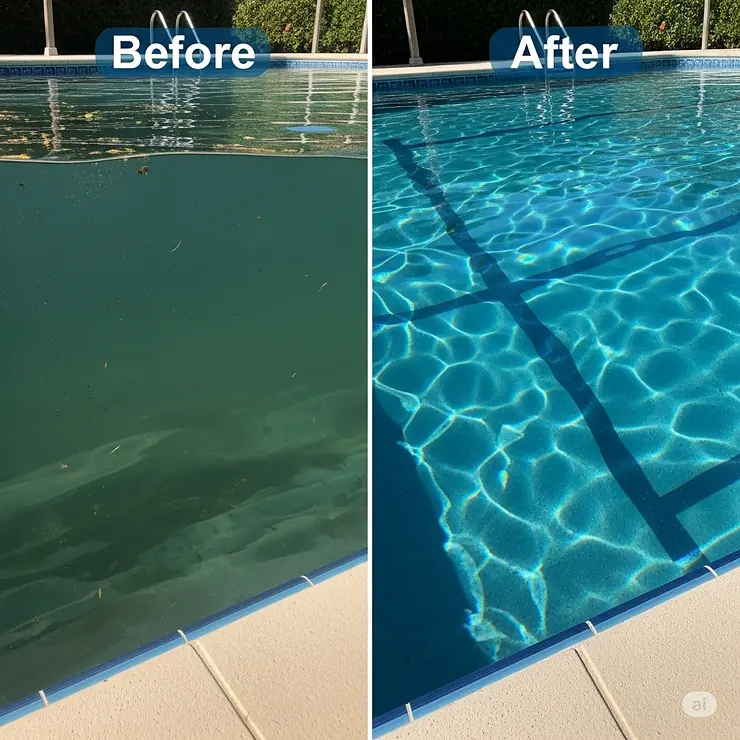
The effectiveness of pool sand filters for above ground pools depends heavily on precise hydraulic engineering principles that govern water flow through porous media. The Darcy-Weisbach equation, fundamental to fluid dynamics, explains how flow rates impact filtration efficiency in these systems.
Flow velocity through the sand bed directly correlates with particle capture efficiency. When water moves too quickly through the media, the residence time becomes insufficient for proper particle interception. Conversely, extremely slow flow rates can lead to channeling, where water finds preferential paths through the sand bed, bypassing much of the filtration media.
The underdrain system in quality pool sand filters for above ground pools utilizes laterals with precisely sized slots or nozzles, typically 0.2-0.35mm, to ensure even water distribution across the entire sand bed. This design prevents dead zones and maximizes the utilization of the entire filtration area.
Backwash hydraulics represent another critical engineering consideration. Effective backwashing requires flow rates 2-3 times higher than normal filtration to achieve proper bed expansion and contaminant removal. The Intex 26651EG Krystal Clear incorporates sophisticated valve technology that automatically adjusts flow patterns during backwash cycles.
Material Science and Media Selection
Sand selection for pool sand filters for above ground pools involves specific material science considerations. Silica sand, graded between 0.45-0.85mm (20/40 mesh), provides optimal balance between particle retention and flow characteristics. The angular nature of properly processed filter sand creates tortuous flow paths that enhance particle interception.
Alternative media options include recycled glass, which offers superior performance characteristics. Glass media provides 25% better filtration efficiency than conventional sand while lasting up to 5 years longer. The smooth surface of glass particles resists biological growth, reducing the frequency of chemical cleaning cycles.
Zeolite represents another advanced media option, offering both mechanical and chemical filtration properties. Its molecular sieve structure can remove ammonia and other nitrogenous compounds that traditional sand cannot capture, particularly beneficial in heavily used pools.
Performance Metrics and Testing Standards
Professional testing of pool sand filters for above ground pools follows established protocols that measure turbidity removal, particle count reduction, and pressure loss characteristics. The NSF/ANSI 50 standard provides benchmarks for residential pool equipment performance.
Turbidity reduction represents the most common performance metric, with quality systems achieving 95%+ removal of particles larger than 20 microns. Advanced systems like the Hayward W3S180T92S ProSeries consistently achieve turbidity levels below 0.5 NTU, approaching drinking water standards.
Particle count testing using laser counters provides more detailed performance data, measuring the quantity of particles in specific size ranges. This testing reveals that pool sand filters for above ground pools excel at removing particles in the 20-100 micron range but struggle with smaller particles without chemical coagulation aids.
Comprehensive Setup and Installation Guide
Pre-Installation Planning and Site Preparation
Successful installation of pool sand filters for above ground pools begins with thorough site assessment and preparation. The location must provide adequate drainage, electrical access, and sufficient space for equipment operation and maintenance access.
Foundation requirements vary by system size, but all installations require a level, stable base capable of supporting the full weight of the system plus sand media. A concrete pad measuring at least 3′ x 3′ for smaller systems provides optimal stability and longevity.
Electrical considerations include GFCI protection for all pool equipment, with dedicated circuits sized according to pump motor requirements. The XtremepowerUS 13″ Sand Filter typically requires a 15-amp circuit, while larger systems may need 20-amp service.
Plumbing preparations involve careful measurement and planning of pipe runs to minimize pressure losses and maximize efficiency. PVC pipe sizing follows hydraulic calculations: 1.5″ pipe for systems up to 40 GPM, 2″ pipe for higher flow rates.
Step-by-Step Installation Process
Phase 1: System Assembly (Hours 1-2) Begin assembly by constructing the filter tank according to manufacturer specifications. The VEVOR 14-inch Sand Filter comes partially pre-assembled, requiring only valve and base installation. Ensure all O-rings and gaskets are properly seated to prevent leaks.
Install the multiport valve with careful attention to orientation and flange clamp positioning. The valve should allow 360-degree rotation for optimal plumbing configuration. Apply approved thread sealant to all threaded connections.
Phase 2: Sand Media Installation (Hour 3) Sand installation requires specific techniques to prevent damage to internal components. Place a protective cover over the standpipe and center hub before adding sand. Add sand gradually while maintaining equal distribution around the tank perimeter.
For the Bestway Flowclear 58516E, approximately 45 pounds of #20 silica sand provides optimal performance. Larger systems require proportionally more media based on tank capacity and manufacturer specifications.
Phase 3: Plumbing Connections (Hours 4-5) Connect suction plumbing from pool skimmer and main drain to pump input. Install unions at equipment connections to facilitate future maintenance. Return plumbing connects from filter output back to pool return fittings.
Pressure testing should occur before final backfill or system startup. Gradually pressurize the system to operating pressure while checking all connections for leaks.
System Commissioning and Initial Operation
First startup procedures for pool sand filters for above ground pools require specific sequencing to prevent equipment damage and ensure optimal performance. Begin with the multiport valve in the “rinse” position to remove any sand dust or debris from initial installation.
Run the initial rinse cycle for 2-3 minutes until water runs clear from the waste port. This step is critical for preventing cloudy water during initial operation. Transition to normal filter mode only after achieving clear rinse water.
Chemical balance becomes crucial during the first week of operation. Maintain pH between 7.2-7.6 and total alkalinity between 80-120 ppm to optimize filtration performance and prevent sand bed calcification.
Maintenance and Longevity Optimization
Daily Maintenance Protocols
Effective maintenance of pool sand filters for above ground pools begins with daily visual inspections and pressure monitoring. Check the pressure gauge reading each morning and record the value to establish baseline operating pressures for your specific system.
Skimmer basket inspection and cleaning should occur daily during peak swimming season. Remove visible debris before it reaches the pump and filter system. This simple step significantly extends the time between required backwash cycles.
Water level maintenance ensures proper pump operation and prevents air entrainment that can damage equipment. Maintain water level at the middle of the skimmer opening for optimal skimming action and pump efficiency.
Weekly Maintenance Procedures
Weekly maintenance involves comprehensive system inspection and performance assessment. Test water chemistry and adjust as needed to maintain optimal filtration conditions. Poor water balance can lead to scale formation or corrosion that damages filter components.
Brush pool walls and vacuum debris before it becomes suspended in the water column. This preventive measure reduces the load on pool sand filters for above ground pools and maintains consistently clear water.
Inspect pump strainer basket and clean as needed. A clogged strainer basket forces the pump to work harder and reduces overall system efficiency.
Monthly Deep Maintenance
Monthly maintenance includes backwash evaluation and sand bed inspection. Monitor backwash duration and water clarity to assess sand condition and system performance. The XtremepowerUS 19″ Filter typically requires 3-5 minute backwash cycles when properly maintained.
Valve operation testing ensures all multiport positions function correctly. Exercise each valve position monthly to prevent sealing problems and maintain proper operation.
Chemical deep cleaning may be necessary monthly in heavily used pools. Specialized sand cleaners remove oils and organic buildup that can cause sand channeling and reduced efficiency.
Annual System Overhaul
Annual maintenance represents the most comprehensive care for pool sand filters for above ground pools. Complete sand replacement typically occurs every 3-5 years, but annual inspection helps determine optimal timing based on actual conditions.
Professional performance testing using turbidity meters and particle counters provides objective assessment of filtration effectiveness. This data guides decisions about sand replacement, chemical cleaning, or component upgrades.
Seal and gasket replacement prevents leaks and maintains system integrity. Most manufacturers recommend annual seal replacement for multiport valves and pump components in continuous-use applications.
Comparative Analysis: Pool Sand Filters vs. Alternative Filtration Systems
Sand Filters vs. Cartridge Systems
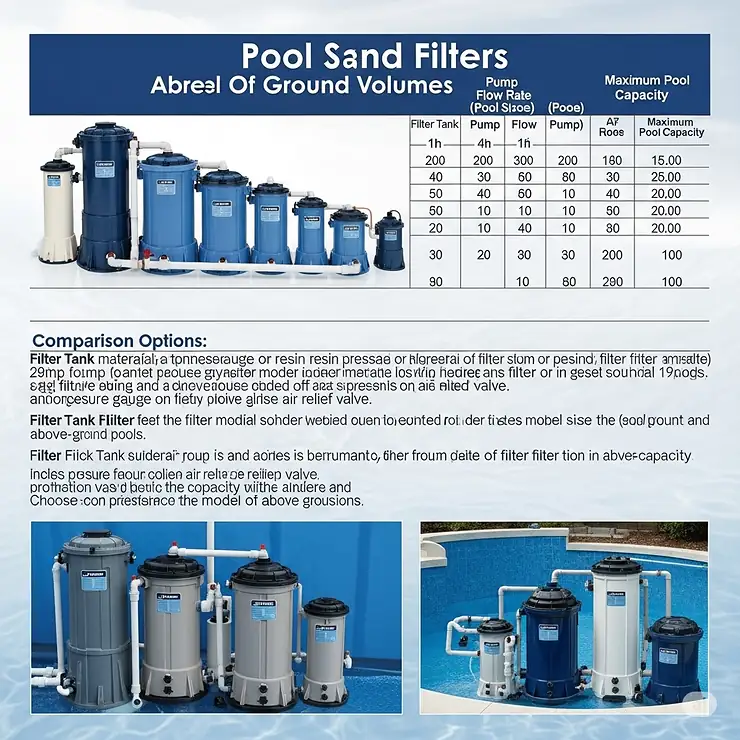
Pool sand filters for above ground pools offer significant advantages over cartridge systems in terms of operational costs and maintenance frequency. While cartridge filters require replacement every 2-4 weeks during peak season, sand media lasts 3-5 years with proper maintenance.
Cost analysis reveals that cartridge systems cost approximately $200-400 annually in replacement filters, while pool sand filters for above ground pools require only $50-100 in annual maintenance costs after the initial investment. Over a 10-year period, sand systems save $1,500-3,000 compared to cartridge alternatives.
Filtration effectiveness comparisons show that cartridge systems can achieve finer particle removal initially, but performance degrades rapidly as debris accumulates. Pool sand filters for above ground pools maintain consistent performance throughout the filtration cycle until backwashing becomes necessary.
Environmental considerations favor pool sand filters for above ground pools due to reduced waste generation. Cartridge systems create substantial ongoing waste, while sand systems generate minimal environmental impact over their operational life.
Sand Filters vs. Diatomaceous Earth (DE) Systems
DE filtration provides superior particle removal, capturing particles as small as 1-3 microns compared to 20 microns for sand systems. However, this performance comes with significantly increased complexity and maintenance requirements.
Operational costs for DE systems include regular DE powder replacement and more frequent filter cleaning cycles. Annual operating costs typically exceed sand systems by 200-300%, primarily due to consumable DE powder and increased labor requirements.
Pool sand filters for above ground pools prove more suitable for most residential applications due to their simplicity and reliability. DE systems excel in commercial applications where maximum water clarity justifies increased operational complexity.
Modern Alternatives: Filter Balls and Glass Media
Filter ball technology offers improved performance over traditional sand while maintaining system simplicity. These synthetic media capture particles down to 1 micron while providing superior backwash efficiency and reduced chemical consumption.
Glass media represents another advancement, offering 25% better filtration than sand with extended service life. The smooth surface resists biofilm formation and requires less frequent chemical cleaning than conventional sand.
Cost-benefit analysis of alternative media shows higher initial investment but reduced long-term operational costs. The Hayward W3S180T92S ProSeries works excellently with glass media upgrades, providing enhanced performance for discriminating pool owners.
Case Studies and Real-World Success Stories
Case Study 1: Suburban Family Pool Transformation
The Johnson family in Atlanta struggled with their 15,000-gallon above ground pool for three summers using an undersized cartridge system. Constant filter replacement costs exceeded $400 annually, and water clarity remained inconsistent despite diligent maintenance efforts.
After installing the Intex 26651EG Krystal Clear sand filter system, water clarity improved dramatically within 48 hours. The first-year operational costs dropped to $75, including electricity and minimal chemical adjustments. The family reported significantly more enjoyable swimming experiences with consistently crystal-clear water.
Two years later, the system continues performing excellently with only routine backwashing required. The Johnsons estimate saving over $800 in filter replacement costs while enjoying superior water quality and reduced maintenance time.
Case Study 2: Community Pool Efficiency Upgrade
A 40-unit townhome community in Phoenix operated their shared above ground pool using multiple cartridge systems that required weekly service visits during summer months. Annual maintenance costs exceeded $3,500, and resident complaints about water quality were frequent.
The community installed two XtremepowerUS 19″ Filter systems in parallel configuration to handle the high bather load. The sand filtration system reduced service calls by 60% and improved water clarity scores from 3.2 to 1.8 NTU average throughout the swimming season.
Annual operational savings exceeded $2,100 while resident satisfaction scores improved dramatically. The system handled peak usage periods without water quality degradation, demonstrating the scalability of pool sand filters for above ground pools in demanding applications.
Case Study 3: Seasonal Rental Property Success
A vacation rental property owner in Florida with a 12,000-gallon above ground pool faced constant maintenance challenges during peak rental season. Guest turnover created unpredictable bather loads, and cartridge systems required replacement after every few guests.
Installation of the VEVOR 14-inch Sand Filter provided consistent performance regardless of bather load variations. The automated timer functionality reduced hands-on maintenance requirements, allowing the property manager to focus on other responsibilities.
Guest reviews improved significantly, with multiple mentions of excellent pool water quality. The owner calculated ROI payback in less than 18 months due to reduced maintenance costs and improved guest satisfaction leading to higher booking rates.
Future Trends and Market Evolution
Technological Innovation Directions
The pool sand filters for above ground pools market continues evolving with smart technology integration and enhanced automation features. WiFi-enabled controllers allow remote monitoring and adjustment of filtration cycles, optimizing energy consumption and performance.
Variable speed pump integration represents a significant advancement, allowing precise flow rate control that optimizes filtration efficiency while reducing energy consumption by up to 70%. The Hayward W3S180T92S ProSeries exemplifies this trend with compatible variable speed pump options.
Sensor technology development enables real-time water quality monitoring and automated chemical adjustment. These systems detect turbidity changes and automatically extend filtration cycles when needed, maintaining optimal water quality with minimal user intervention.
Advanced materials research focuses on developing superior filter media with enhanced particle capture and extended service life. Antimicrobial coatings and self-cleaning surfaces represent promising developments that could revolutionize pool sand filters for above ground pools.
Market Trends and Consumer Behavior
Consumer preferences increasingly favor systems that combine performance with environmental responsibility. Pool sand filters for above ground pools align with this trend due to their low waste generation and energy efficiency compared to alternative filtration methods.
The DIY market continues expanding as homeowners seek cost-effective pool maintenance solutions. Manufacturers respond with improved installation documentation and customer support resources that enable successful self-installation of pool sand filters for above ground pools.
Subscription service models emerge for sand replacement and system maintenance, providing professional-grade care without the complexity of in-house expertise. These services typically cost 30-50% less than traditional pool service contracts while maintaining optimal system performance.
Sustainability and Environmental Considerations
Environmental regulations increasingly influence pool equipment design and operation. Pool sand filters for above ground pools naturally align with sustainability goals due to their minimal chemical requirements and long service intervals.
Water conservation becomes increasingly important in drought-prone regions. Sand filtration systems reduce water waste compared to frequent cartridge replacement systems that require extensive rinsing and more frequent pool water changes.
Energy efficiency standards continue tightening, driving innovation in pump motor technology and control systems. Modern pool sand filters for above ground pools incorporate high-efficiency motors and smart controls that optimize energy consumption based on actual filtration needs.
Recycling programs for filter media develop as environmental awareness grows. Used sand can be repurposed for construction applications, while new synthetic media offers recyclability at end-of-life.
Investment Decision Framework and Financial Analysis
Initial Investment Considerations
The total cost of ownership for pool sand filters for above ground pools extends well beyond the initial purchase price. Comprehensive analysis must include installation costs, electrical requirements, ongoing operational expenses, and long-term replacement costs.
Budget allocation should account for 15-20% above base equipment costs for installation supplies, electrical work, and initial sand media. The XtremepowerUS 13″ Sand Filter represents excellent value with typical installed costs under $350 for DIY installation.
Financing options increasingly include equipment leasing and extended payment plans that spread costs over multiple seasons. These options make premium systems like the Hayward W3S180T92S ProSeries accessible to budget-conscious pool owners.
Cost-Benefit Analysis Framework
Operational cost analysis reveals significant advantages for pool sand filters for above ground pools over alternative systems. Annual cartridge replacement costs of $300-600 compare favorably to sand system operational costs of $50-150, creating substantial long-term savings.
Energy consumption analysis shows that proper sizing of pool sand filters for above ground pools reduces pump runtime requirements by 20-30% compared to undersized alternatives. This translates to annual electricity savings of $100-200 for typical residential installations.
Maintenance time savings represent additional value, with sand systems requiring 50-70% less hands-on maintenance than cartridge alternatives. For pool owners who value convenience, this time savings often justifies higher initial investment costs.
Implementation Strategy and Timeline
Optimal installation timing occurs during pool opening season when disruption to swimming schedules is minimal. Plan equipment orders 2-3 weeks in advance to ensure availability during peak installation periods.
Professional installation typically requires 4-6 hours, while experienced DIY installers can complete installation in a full day. Factor additional time for permit acquisition if local codes require electrical or plumbing permits.
System commissioning and optimization require 1-2 weeks of operation and adjustment to achieve optimal performance. Monitor pressure readings and water clarity during this period to fine-tune operational parameters.
Return on Investment Calculations
ROI calculations for pool sand filters for above ground pools typically show payback periods of 12-24 months compared to cartridge systems. Premium systems like the Intex 26651EG Krystal Clear often achieve payback within 18 months due to superior efficiency and reduced operational costs.
Long-term financial benefits extend beyond direct cost savings to include increased property value and reduced insurance liability from improved water quality. Real estate professionals report that homes with well-maintained pool equipment command higher sale prices and faster market times.
Professional pool service cost reductions represent another financial benefit. Pool service companies typically charge 20-30% less for routine maintenance of sand filtration systems compared to cartridge alternatives due to reduced labor requirements.
Advanced Troubleshooting and Optimization
Common Performance Issues and Solutions
Cloudy Water Despite Normal Operation This issue often indicates channeling in the sand bed or inadequate filtration time. Increase daily runtime by 2-4 hours and perform a thorough backwash followed by rinse cycle. If problems persist, consider sand replacement or chemical sand cleaning.
High Pressure Readings and Frequent Backwashing Elevated pressure typically results from sand bed clogging or pump oversizing. Check for proper sand grade and depth specifications. The VEVOR 14-inch Sand Filter requires precise sand loading to prevent premature pressure buildup.
Sand in Pool Return Lines Sand discharge indicates lateral damage or improper valve operation. Inspect underdrain system and replace damaged components. Never operate the system in “filter” mode with damaged laterals, as this can destroy the pump impeller.
Inconsistent Backwash Effectiveness Poor backwash performance often results from insufficient flow rate or valve malfunction. Verify pump capacity meets manufacturer recommendations for effective backwashing. Most pool sand filters for above ground pools require 2-3 times normal flow rate for proper bed expansion.
Performance Optimization Techniques
Chemical Enhancement Programs Coagulant additions significantly improve fine particle removal in pool sand filters for above ground pools. Products like aluminum sulfate or specialty pool coagulants can improve filtration efficiency by 40-60% for particles in the 5-20 micron range.
Operational Schedule Optimization Optimize filtration schedules based on bather load and environmental conditions. During peak season, run pool sand filters for above ground pools for 10-12 hours daily, with longer cycles during high-use periods and shorter cycles during low-use times.
Preventive Maintenance Programs Implement comprehensive preventive maintenance to maximize system life and performance. Monthly valve exercise, quarterly pressure testing, and annual component inspection prevent most major failures and optimize long-term performance.
Professional Maintenance and Service Options
When to Call Professionals
While pool sand filters for above ground pools are designed for homeowner maintenance, certain situations require professional expertise. Electrical issues, major leaks, or pump motor problems should always be addressed by qualified technicians to ensure safety and warranty compliance.
Annual professional inspections provide objective assessment of system condition and performance. Many pool service companies offer comprehensive inspection services for $150-250 that include performance testing, component assessment, and optimization recommendations.
Complex troubleshooting situations benefit from professional diagnostic equipment and expertise. Turbidity meters, flow meters, and pressure mapping equipment help identify problems that aren’t apparent through visual inspection alone.
Service Contract Considerations
Full-service maintenance contracts typically cost $600-1200 annually for pool sand filters for above ground pools, depending on system size and service frequency. These contracts usually include all chemicals, routine maintenance, and emergency repairs.
Partial service agreements focus on technical maintenance while leaving routine cleaning to homeowners. These hybrid approaches often provide optimal value, costing $300-600 annually while ensuring professional attention to critical system components.
Emergency service availability becomes important in regions with short swimming seasons. Verify that service providers offer weekend and holiday emergency calls, especially during peak summer months when equipment failures create immediate problems.
Frequently Asked Questions
❓ How often should pool sand filters for above ground pools be backwashed?
❓ What type of sand works best in pool sand filters for above ground pools?
❓ Can I upgrade my cartridge system to pool sand filters for above ground pools?
❓ How long do pool sand filters for above ground pools typically last?
❓ What's the difference between single-speed and variable-speed pumps for pool sand filters for above ground pools?
Recommended for You:
- 7 Best Above Ground Pool Covers for Ultimate Protection in 2025
- 7 Best Above Ground Pool Pump Models That Save Energy in 2025
- 15 Best Deck Around Above Ground Pool Solutions for Ultimate Safety & Style in 2025
Expert Recommendations and Final Buying Advice 🌟
→ Ready to transform your pool maintenance experience? The Intex 26651EG Krystal Clear offers the best overall value for larger pools, while the XtremepowerUS 13″ Sand Filter provides excellent performance for budget-conscious buyers. For premium quality and longevity, the Hayward W3S180T92S ProSeries represents the gold standard in pool sand filters for above ground pools. Choose based on your pool size, budget, and performance expectations to enjoy years of crystal-clear swimming! 💎
Disclaimer: This article contains affiliate links. If you purchase products through these links, we may earn a small commission at no additional cost to you.
✨ Found this helpful? Share it with your friends! 💬🤗
