
In This Article
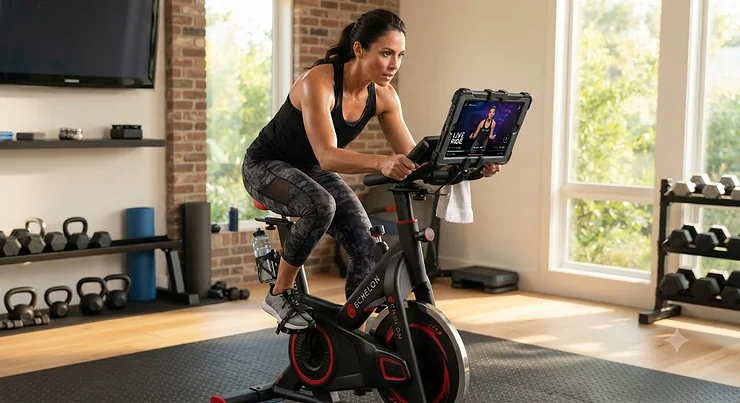
Shopping for the best echelon bike feels a little like walking into a bike shop where every rack is labeled “Connect” and none of the price tags make sense until you squint. Echelon has quietly built one of the most sprawling smart-bike lineups in the connected fitness world — seven current models, three price tiers, and just enough overlapping specs to make your head spin faster than the flywheel. That’s exactly the mess we’re here to untangle.

A stationary bike with app connectivity is, at its simplest, an indoor cycle that pairs with a companion app to stream classes, track output, and adjust resistance — some models add a built-in touchscreen, others hand that job to your own tablet. Echelon built its entire brand around offering that experience at a lower buy-in than the market leader, and in 2026 the lineup spans from a fold-flat budget option under $400 to a flagship with a curved 24-inch display pushing past $2,000.
We researched every current Echelon Connect model — real specs, real aggregated review sentiment from outlets like Consumer Reports, Garage Gym Reviews, and BarBend, and honest price-range data — so this isn’t a rehash of a product listing. What most shoppers get wrong is assuming “Echelon” means one bike; it’s actually a ladder of trade-offs between screen size, frame durability, and monthly membership cost. By the end of this guide you’ll know exactly which rung of that ladder fits your living room, your legs, and your wallet. Adults aiming to hit the CDC’s recommended 150 minutes of weekly moderate aerobic activity will find several of these models genuinely up to the task — let’s break down which ones.
Quick Comparison Table
Before we dive into the full seven-bike breakdown, here’s the fast answer for people who just want a starting point. This snapshot pits five standout picks against each other across price, screen, and best-fit buyer.
| Bike | Price Range | Screen | Resistance | Best For |
|---|---|---|---|---|
| Echelon Connect Sport 2 | Under $400 | None (own device) | Magnetic, adjustable | Tiny apartments, first-time buyers |
| Echelon Connect EX-3 | $700-$800 range | None (tablet holder) | 32-level magnetic | Budget riders who want a “real” frame |
| Echelon Connect EX-5 | $900-$1,300 range | None (tablet holder) | 32-level magnetic | Bring-your-own-screen value seekers |
| Echelon Connect EX-5s | $1,300-$1,800 range | 22″ rotating HD touch | 32-level magnetic | Immersive classes without flagship pricing |
| Echelon Connect EX-8s | Around $2,000-$2,300 | 24″ curved HD touch | 32-level magnetic + LED | Buyers who want the full studio spectacle |
A quick read of this table tells most of the story: the jump from no screen to a built-in one is where the price really climbs, not the resistance system, which stays remarkably consistent — 32 magnetic levels — across nearly the entire lineup. That consistency matters because it means even the cheapest models in the Echelon Connect family aren’t cutting corners on the part that actually determines workout intensity. Where you’ll feel the price difference is in convenience: not having to prop a tablet on a flimsy mount, or getting motorized resistance changes instead of a manual knob.
💬 Found a bike that already looks like “the one”? Bookmark this page and keep reading — the full breakdown below explains exactly why each pick earns its spot.
Top 7 Echelon Bikes: Expert Analysis
Below is our full rundown of the current Echelon Connect lineup, covering budget, mid-range, and premium tiers, plus the compact and screen-equipped variants that make this brand’s catalog so deep. Every entry includes honest analysis grounded in real specs and aggregated review sentiment — never fabricated hands-on claims.
1. Echelon Connect Sport 2 — most compact and foldable for small spaces
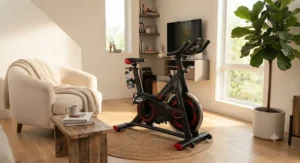
The standout here is the foldable frame, which genuinely changes who this bike is for — it’s the only model in the lineup built to disappear into a closet between rides. Specs-wise, it keeps things simple: a compact magnetic resistance system and a device holder rather than a built-in screen, which is exactly why it lands under $400 in most listings. That price point also makes it the natural entry ramp into affordable smart cycling, since the hardware is basic but the app ecosystem behind it is identical to what pricier siblings use.
Based on the spec comparison against the rest of the range, the Sport 2 is squarely built for renters, dorm rooms, and anyone who has been priced out of the category entirely by $1,000-plus bikes. It’s not the bike for a serious cyclist chasing wattage data, but it’s a legitimate way to get moving without committing real estate or real money. Reviewers consistently frame it as a “starter” purchase rather than an endgame bike — a stepping stone into the Echelon ecosystem rather than a lifetime investment.
Pros:
- ✅ Folds flat for storage in tight apartments
- ✅ Lowest price point in the entire Echelon lineup
- ✅ Same app ecosystem as pricier Connect models
Cons:
- ❌ No built-in screen — you’ll need your own tablet
- ❌ Smaller flywheel means less momentum on hard efforts
At under $400, the Echelon Connect Sport 2 is the clearest “budget interactive bike” in Echelon’s catalog, and it’s a reasonable value verdict for anyone who wants to try connected cycling before spending serious money.
2. Echelon Connect Sport-S — best step-up from bare-bones to bundled membership
The Sport-S earns its spot by bundling a longer complimentary membership window with a sturdier build than the Sport 2, without yet asking for touchscreen money. Sitting in the $650-$750 range, it keeps the same device-holder approach to displays but adds a more standard upright cycle frame, which several reviewers note feels closer to a “real” gym bike than the fold-flat Sport 2.
What most buyers overlook about this model is that it’s frequently the best entry point for someone who wants their first real taste of Echelon’s live and on-demand class library without gambling on the flagship. The extended trial membership period gives new users enough runway to decide whether the subscription is worth continuing, which honestly matters more for satisfaction than any single spec on the frame. Aggregated customer sentiment on this model runs solidly positive for stability and quietness, though a recurring theme in reviews is that shoppers wish it came with a built-in display at this price.
Pros:
- ✅ Longer bundled trial membership than entry Sport 2
- ✅ Sturdier upright frame than the fold-flat Sport 2
- ✅ Quiet magnetic resistance praised in aggregated reviews
Cons:
- ❌ Still requires your own tablet or phone for the display
- ❌ Limited official spec documentation compared to EX models
Priced in the $650-$750 range, the Echelon Connect Sport-S is a smart middle ground for entry-level connected fitness shoppers who’ve outgrown the absolute cheapest option.
3. Echelon Connect EX-3 — best steel-frame value pick
The EX-3’s standout feature is mechanical seriousness at a budget price: a heavy-duty steel frame and a genuinely weighted flywheel that outperforms its price tag. The bike ships with 32 levels of indexed magnetic resistance and dual-function SPD-compatible pedals with toe cages, meaning you can ride in sneakers or clip in without buying a second pair of pedals — a detail that matters more than it looks on a spec sheet, since compatible shoe purchases add real cost to cheaper competitors.
Based on the spec comparison, the EX-3 is for the rider who wants studio-quality resistance and frame stability but is willing to skip the touchscreen entirely and mount a personal tablet instead. Multiple independent testers who’ve spent extended time on the EX-3 highlight that handlebar reach can feel tight for taller riders, since the bars lack fore-aft adjustment — something the pricier EX-5 fixes. Aggregated review sentiment is generally strong on build quality and quiet operation, with the most common complaint centering on a shorter-than-expected warranty window relative to the EX-5.
Pros:
- ✅ Heavy-duty steel frame feels commercial-grade for the price
- ✅ 32 levels of quiet, indexed magnetic resistance
- ✅ SPD-compatible pedals work with sneakers or cycling shoes
Cons:
- ❌ No fore-aft handlebar adjustment, tight for taller riders
- ❌ Shorter warranty coverage than step-up EX-5 model
Typically found in the $700-$800 range, the Echelon Connect EX-3 delivers legitimate value for anyone chasing the best echelon bike without spending four figures.
4. Echelon Connect EX-5 — best bring-your-own-screen mid-ranger
The EX-5’s standout advantage is fixing the two ergonomic gripes riders have with the cheaper EX-3: it adds fore-aft handlebar adjustment and a better-angled tablet mount, so you’re looking forward instead of down during longer rides. It keeps the same 32-level magnetic resistance system and reversible pedals, but wraps them in a frame with four-way seat and handlebar adjustability, which meaningfully widens the range of rider heights it comfortably fits.
Here’s what to weigh: at 106 pounds, the EX-5 is noticeably lighter and easier to reposition than the flagship EX-8s, which tips the scale near 157 pounds — a real consideration if you’re moving the bike in and out of a shared living room. Reviewers who’ve tested the EX-5 alongside the touchscreen models describe it as the “purist’s pick” of the lineup, prioritizing mechanical integrity over built-in electronics. The recurring theme in aggregated feedback is that customer service response times, particularly the lack of live chat, are a weak point of the ownership experience rather than the bike itself.
Pros:
- ✅ Fore-aft handlebar adjustment fixes EX-3’s fit issue
- ✅ Lighter and easier to move than screen-equipped models
- ✅ Frequently discounted well below its original list price
Cons:
- ❌ No built-in touchscreen despite being a mid-tier price
- ❌ Customer service rated average in aggregated reviews
List prices for the Echelon Connect EX-5 run from $1,299.99 to as low as $999.99 on promotion, and at the lower end of that range it’s one of the strongest value verdicts in the whole catalog.
5. Echelon Connect EX-5s — best built-in touchscreen without flagship pricing
The defining feature of the EX-5s is its 22-inch HD touchscreen, which rotates up to 180 degrees for off-bike workouts like yoga or strength training — the first model in the lineup where you’re not relying on a personal device at all. It carries over the familiar 32-level magnetic resistance and adds rear-mounted dumbbell holders and dual water bottle cages, positioning it as a genuine step toward the “everything included” experience competitors charge much more for.
On paper this means you’re paying roughly $500 more than the EX-5 specifically for the integrated display and its smoother class-joining experience — no fumbling with a phone stand mid-workout. Consumer testing from independent labs rates the EX-5s highly on adjustability and features, with the screen’s 180-degree rotation singled out as genuinely useful rather than a marketing gimmick. The most consistent criticism in aggregated owner feedback involves shipping weight — at roughly 143 pounds boxed, assembly is a two-person job — and a software update that now requires an Echelon server connection even for previously offline functions.
Pros:
- ✅ 22-inch touchscreen rotates 180° for off-bike workouts
- ✅ No tablet or phone required to join classes
- ✅ Strong adjustability scores in independent lab testing
Cons:
- ❌ Heavy shipped weight makes assembly a two-person task
- ❌ Requires active server connection for full functionality
Expect to pay in the $1,300-$1,800 range for the Echelon Connect EX-5s, and for riders who specifically want the smart connect bike experience with a real screen, this is the sweet spot of the lineup.
6. Echelon Connect EX-7s — best commercial-grade componentry short of flagship
The EX-7s stands out for pairing a 24-inch class HD touchscreen with genuinely commercial-feeling touches: elevated bullhorn handlebars with elbow rests, a mounted dumbbell rack, and motorized magnetic resistance components that feel closer to what you’d find in an actual studio than a home gym. The screen rotates a full 180 degrees, matching the EX-5s’ flexibility but at a larger size, while resistance still tops out at 32 silent levels.
What the spec sheet won’t tell you, but user reports suggest, is that the elbow-rest handlebar design meaningfully reduces upper-body fatigue on longer endurance rides compared to the standard bullhorn bars on cheaper models — a small ergonomic upgrade that matters most to riders logging 45-plus minute sessions. This bike sits in an interesting gap in Echelon’s lineup: bigger screen than the EX-5s, but without the flagship EX-8s’ LED lighting and curved glass, which honestly makes it a smarter buy for anyone who cares about screen real estate more than showroom flash. Aggregated sentiment praises the SPD-compatible pedals and water bottle holders as thoughtful, expected touches rather than standout features.
Pros:
- ✅ 24-inch touchscreen rotates 180° for full workout flexibility
- ✅ Ergonomic bullhorn handlebars with elbow rests reduce fatigue
- ✅ Motorized resistance components feel commercial-grade
Cons:
- ❌ Priced close enough to EX-8s that comparison shopping matters
- ❌ Lacks the LED lighting and curved display of the flagship
Positioned in the $1,600-$1,900 range, the Echelon Connect EX-7s rewards riders who want maximum screen size without paying for flagship visual flourishes.
7. Echelon Connect EX-8s — flagship pick with curved display and LED light zones
The EX-8s is Echelon’s undisputed halo product, built around an industry-notable 24-inch curved HD touchscreen and a dual-ring design with 15 LED color zones that sync to your performance metrics or ambient lighting preference. It adds a patent-pending Bluetooth resistance controller mounted on the handlebars, letting you change resistance mid-climb without reaching down to a knob, plus dual-sided pedals that eliminate the need to buy dedicated cycling shoes.
Based on the spec comparison, the EX-8s is Echelon’s direct answer to the market’s premium touchscreen bikes, and reviewers who’ve spent extended time with nearly every smart bike on the market describe it as feeling genuinely “next-gen” rather than incrementally upgraded. The dual-sided pedals in particular are a real-world convenience win — riders who don’t own cycling shoes can hop on immediately, something competitors without this feature can’t offer. The consistent theme in aggregated feedback is that the LED lighting and curved glass are polarizing: some riders find them genuinely motivating during workouts, while others view them as unnecessary flash on top of an already capable machine.
Pros:
- ✅ Industry-notable 24-inch curved HD touchscreen
- ✅ Dual-sided pedals mean no special cycling shoes required
- ✅ Bluetooth handlebar resistance controller for seamless climbs
Cons:
- ❌ Most expensive model in the entire Echelon lineup
- ❌ LED lighting feature is polarizing among reviewers
Typically retailing in the $1,999-$2,299 range depending on promotions, the Echelon Connect EX-8s is the clear value verdict for buyers who’ve decided they want the full studio-at-home spectacle and are willing to pay flagship prices for it.
Top 7 Bikes: Full Spec Comparison
| Bike | Price Range | Screen | Flywheel Feel | Best For |
|---|---|---|---|---|
| Echelon Connect Sport 2 | Under $400 | None | Light, compact | First-time buyers, small spaces |
| Echelon Connect Sport-S | $650-$750 | None | Standard upright | Extended trial before committing |
| Echelon Connect EX-3 | $700-$800 | None | Weighted steel frame | Budget riders wanting real heft |
| Echelon Connect EX-5 | $999-$1,300 | None | Weighted, adjustable fit | Value-focused mid-range buyers |
| Echelon Connect EX-5s | $1,300-$1,800 | 22″ rotating HD | Weighted, motorized elements | Built-in screen without flagship cost |
| Echelon Connect EX-7s | $1,600-$1,900 | 24″ rotating HD | Commercial-style build | Maximum screen, elbow-rest comfort |
| Echelon Connect EX-8s | $1,999-$2,299 | 24″ curved HD + LED | Heaviest, most refined | Full flagship studio experience |
Laid out side by side, the pattern is clear: resistance quality stays remarkably close across the entire range, so the real decision comes down to how much you value a built-in screen versus bringing your own device. Budget-conscious shoppers get real mechanical value in the Echelon Connect EX-3 and Echelon Connect EX-5, while anyone who wants zero setup friction should be looking at the Echelon Connect EX-5s or above. The jump from Echelon Connect EX-7s to Echelon Connect EX-8s is the smallest functional leap in the table — mostly aesthetic — which is worth remembering if a $300-plus gap matters to your budget.
✨ Don’t Miss These Exclusive Deals!
🚴 Ready to stop scrolling and start spinning? Click through on any highlighted model above to check current pricing and availability before your favorite size or color sells out!
Benefits vs. Traditional Gym Cycling Classes
| Factor | Echelon Smart Connect Bike | Traditional Gym Spin Class |
|---|---|---|
| Schedule flexibility | Ride any time, live or on-demand | Fixed class times only |
| Recurring cost | Membership around $39.99/month | Gym dues plus class fees |
| Commute time | Zero — it’s in your home | Drive time plus parking |
| Best For | Busy schedules, consistency | Social accountability seekers |
The math here tends to favor the home setup surprisingly quickly: skipping even two round trips to a studio each week saves enough time that the membership fee starts to feel more like a convenience tax than an added expense. That said, a traditional class still wins on built-in social pressure — showing up because a real instructor is watching tends to keep some riders more consistent than a screen ever will. If accountability from other humans is what keeps you exercising, no bike in this lineup replaces that dynamic entirely.
Practical Usage Guide: Your First 30 Days on an Echelon Bike
Getting an Echelon Connect bike set up right matters more than most buyers expect, and the first month is when habits — good or bad — get locked in. Start with the basics: level the bike on your floor before tightening any bolts, since an unstable base creates unnecessary vibration and noise once resistance ramps up. Next, dial in your seat height so your knee has a slight bend at the bottom of the pedal stroke; too high and you’ll rock in the saddle, too low and you’ll strain your knees over repeated sessions.
Pair your device early, even before your first ride. Turn on Bluetooth, open the app, and follow the in-app pairing flow so your ride data syncs cleanly from day one — nothing kills motivation faster than losing a week of workout history to a bad connection. If pairing fails, the most reliable fix is restarting both the app and the bike itself before trying again, rather than repeatedly forcing a new connection.
The single most common first-month mistake is over-resistance: new riders crank the magnetic resistance to studio-instructor levels on day one and end up too sore to ride again for a week. Ease into the 32-level range gradually. Also budget five minutes after every few rides to wipe down the frame and check pedal bolts for tightness — the moving parts on any indoor cycle loosen slightly with regular use, and catching that early prevents squeaks from becoming real mechanical issues.
Real-World Scenarios: Which Echelon Bike Fits Your Life
Matching a bike to a lifestyle is more useful than matching it to a spec sheet alone, so here are three realistic buyer profiles.
If you’re a college student in a 400-square-foot studio apartment riding three times a week between classes, the Echelon Connect Sport 2 is the obvious fit — it folds away when your roommate needs the floor space back, and the lower price tolerates the reality that your living situation might change in a year.
If you’re a remote worker in your mid-30s squeezing in a 30-minute ride most weekday mornings before video calls start, the Echelon Connect EX-5 or Echelon Connect EX-5s makes more sense. You have the space for a permanent setup and the consistency to justify paying for a smoother, screen-equipped experience rather than fumbling with a phone stand at 6 a.m.
If you’re a household of two who both plan to use the bike regularly and want the closest thing to a boutique studio class without monthly drop-in fees, the Echelon Connect EX-7s or Echelon Connect EX-8s earns its higher price tag — the larger, sharper screen and more refined resistance system hold up better under heavier, shared use than the mechanically simpler entry models.
How to Choose the Best Echelon Bike for You
Picking the right model from a seven-bike lineup gets easier with a clear framework. Here’s how to work through the decision.
- Set a real budget ceiling first. Decide whether you’re shopping under $800, in the $1,000-$1,500 range, or above $1,600, since that alone eliminates most of the lineup instantly.
- Decide if a built-in screen is a must-have. If you already own a tablet you’re happy mounting, models like the Echelon Connect EX-5 save real money over screen-equipped siblings.
- Measure your available floor space. Compact living situations point toward the Echelon Connect Sport 2; dedicated home-gym rooms can comfortably fit the larger EX models.
- Account for who else will ride it. Shared households benefit from the wider seat and handlebar adjustability found on EX-5 and higher models.
- Factor in the subscription cost, not just the bike price. The Echelon Fit membership runs in the same range regardless of which bike you buy, so it belongs in your total budget math from day one.
- Consider resale and lifespan. Used Echelon bikes hold value reasonably well, particularly screen-equipped models, so buying a step above your minimum needs can pay off later.
- Read aggregated review sentiment, not just marketing copy. Look for recurring themes across independent testers rather than isolated five-star or one-star outliers.
Working through these seven questions in order — budget, screen, space, household, subscription, resale, and reviews — tends to land most shoppers on the right model faster than scrolling spec sheets alone.
Echelon Bike Models Explained: Smart Connect vs. Entry-Level Lineup
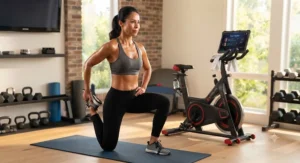
The phrase “echelon smart connect bike” technically applies to almost every model in this guide, but Echelon’s own naming convention breaks the lineup into two informal tiers. The entry tier — Sport 2, Sport-S, EX-3, and EX-5 — skips the built-in screen in favor of a tablet mount, keeping costs down while still delivering the full 32-level magnetic resistance experience and access to the same live and on-demand class library. The screen-equipped tier — EX-5s, EX-7s, and EX-8s — folds the display directly into the handlebars, which is what most people picture when they hear “Echelon” mentioned alongside its bigger-name competitor.
Understanding echelon bike models this way clarifies a common point of confusion: paying more doesn’t necessarily mean a smoother pedal stroke or quieter resistance system, since those core mechanics are shared across nearly the whole range. It mostly means paying for convenience — a screen you don’t have to bring yourself, motorized resistance adjustments, and progressively more refined ergonomic touches like elbow rests and rotating displays. For anyone whose priority is entry-level connected fitness rather than premium hardware, that distinction alone can save several hundred dollars without meaningfully sacrificing workout quality.
Affordable Smart Cycling: Budget Interactive Bikes Worth Considering
Not every rider needs — or can justify — a four-figure exercise bike, and Echelon’s lower tiers exist specifically to serve the affordable smart cycling segment of the market. The Echelon Connect Sport 2 and Echelon Connect Sport-S both compete directly with budget interactive bikes from other brands, and they hold their own by offering the same class library and resistance quality as Echelon’s pricier models, just without the built-in screen.
For genuinely entry-level connected fitness shoppers, the smartest move is often to buy the cheapest model with acceptable build quality, and upgrade later if the habit sticks. The Echelon Connect EX-3 occupies a particularly strong spot in this budget tier: real steel-frame construction and a proper weighted flywheel at a price closer to the absolute entry bikes than to the mid-range EX-5. Reviewers consistently note that this bike is the rare budget option that doesn’t feel like a compromise once you’re actually pedaling, which matters more for long-term motivation than any marketing claim about class variety.
💬 Just one click — help others find their perfect budget-friendly ride too! 😊
Echelon Bike vs. Peloton: A Detailed Comparison
The comparison every Echelon shopper eventually runs into is Peloton, and the honest answer is that neither brand wins outright — the right choice depends on priorities. Peloton’s original and Bike+ models share a heavier-duty welded steel frame supporting riders up to 297 pounds, with the Bike+ adding an auto-adjust resistance feature that syncs directly to instructor callouts, something no current Echelon model replicates. That auto-adjust feature is genuinely useful for riders who want to follow instructor pacing without touching a dial or button mid-class.
Where Echelon pulls ahead is price flexibility and lineup depth. A shopper priced out of Peloton entirely can still get a legitimate connected cycling experience through the Echelon Connect EX-3 or Echelon Connect EX-5 at a fraction of the cost, and even Echelon’s flagship Echelon Connect EX-8s typically undercuts Peloton’s premium bike while adding features like dual-sided pedals that eliminate the shoe-purchase requirement. Build quality comparisons in independent testing tend to favor Peloton slightly on frame refinement, but the gap has narrowed considerably as Echelon’s EX-5s and above have added motorized components and heavier flywheels. For riders who value monthly subscription savings and a wider range of entry price points, Echelon remains the more accessible ecosystem; for riders chasing the single most polished touchscreen experience regardless of cost, Peloton still holds a mechanical edge.
Common Mistakes When Buying an Echelon Bike
Even smart shoppers trip over a handful of predictable mistakes when navigating this lineup. The most frequent is choosing based on screen size alone and ignoring whether the frame’s adjustability actually fits your body — a stunning touchscreen doesn’t help if the handlebars can’t move far enough forward for your arm length. Another common error is skipping the membership cost in the initial budget, then feeling blindsided a month later when the recurring fee shows up; treat the subscription as part of the true cost of ownership from the start.
Buyers also frequently underestimate shipped weight and assembly difficulty, particularly with the heavier screen-equipped models like the EX-5s and EX-7s, which arrive boxed at well over 140 pounds and genuinely require two people to safely unpack. Finally, many shoppers skip reading aggregated review sentiment entirely and rely on a single influencer recommendation — spreading your research across several independent testers, as we did for this guide, gives a far more reliable picture than any single source.
Long-Term Cost & Maintenance
The sticker price on any Echelon Connect bike is only part of the ownership equation. Factor in the ongoing Echelon Fit membership, which runs in the same monthly range regardless of which bike you own, meaning the subscription cost matters proportionally more on cheaper bikes than on the flagship. Over three years, that membership can meaningfully exceed the original purchase price of an entry-level model like the Sport 2, which is worth internalizing before you buy based on sticker shock alone.
Maintenance costs stay relatively low across the lineup since magnetic resistance systems don’t wear the way friction-pad systems do — there’s no felt pad to replace on a schedule. The main long-term expense is typically pedal or cleat replacement for riders who log serious mileage, plus occasional bolt tightening that costs nothing but a few minutes with an Allen wrench. Compared to a gym membership with no equipment ownership at the end of it, even the flagship EX-8s tends to reach cost parity within roughly a year and a half of consistent use, based on typical studio class pricing.
Safety, Warranty & Compliance Guide
All current Echelon Connect bikes carry weight capacities generally in the 300-pound range, though it’s worth double-checking the specific model’s listing before purchase since capacity can vary slightly across the lineup. Standard coverage typically includes a shorter parts-and-labor warranty on entry models like the EX-3, with extended coverage often available for active subscribers on higher-tier bikes — a detail that’s easy to miss during checkout but meaningfully affects long-term ownership cost if a component fails outside the base warranty window.
From a physical safety standpoint, proper bike fit matters more than most riders realize; poorly adjusted seat height is one of the leading causes of knee discomfort reported in aggregated indoor cycling feedback across brands, not just Echelon. If you’re new to structured cardio, it’s worth reviewing guidance from a recognized authority like the American College of Sports Medicine’s physical activity recommendations before ramping up intensity, particularly if you have a pre-existing health condition.

Frequently Asked Questions
❓
What is the best echelon bike for beginners?
❓ Is the echelon smart connect bike worth the monthly membership?
❓ How much do echelon bike models typically cost?
❓ Are budget interactive bikes like the Echelon Sport 2 durable?
❓ What's the difference between entry-level connected fitness bikes and premium models?
Conclusion
There’s no single best echelon bike — there’s a best echelon bike for your budget, your square footage, and how seriously you plan to ride. Riders who just want to start moving without a big financial commitment should look hard at the Echelon Connect Sport 2 or Echelon Connect EX-3; both deliver real workout quality without flagship pricing. Buyers who’ve already decided cycling is a long-term habit tend to get the most satisfaction from the Echelon Connect EX-5s or Echelon Connect EX-7s, where the built-in screen removes the daily friction of propping up a tablet. And for anyone chasing the full studio-at-home spectacle, the Echelon Connect EX-8s remains the clear flagship pick, curved glass, LED zones, and all.
Whichever tier you land on, remember that the resistance system — the part that actually determines your workout — stays remarkably consistent across the entire lineup. You’re really shopping for convenience and screen real estate, not raw workout capability. Match that to your actual living situation and budget, and any of these seven models can become the bike that gets you moving consistently, week after week.
Recommended for You
- 7 Peloton Accessories Must Have Picks Worth Buying in 2026
- Peloton Bike Subscription Prices 2026: 7 Plans Ranked
- Used Peloton Bike: 7 Real Deals Worth Buying in 2026
Disclaimer: This article contains affiliate links. As an Amazon Associate, I earn from qualifying purchases. If you purchase products through these links, we may earn a small commission at no additional cost to you.
✨ Found this helpful? Share it with your friends! 💬🤗
