
In This Article
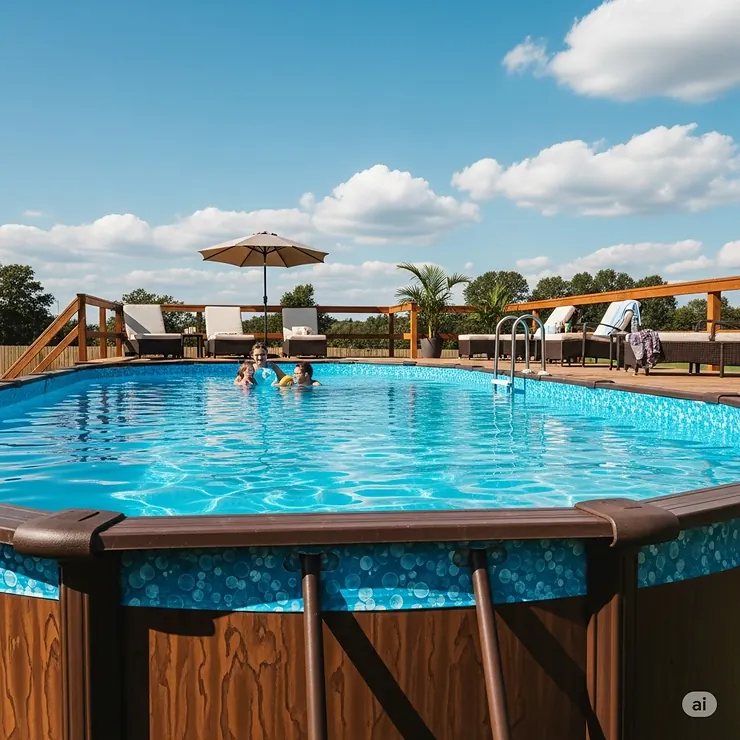
Salt water above ground means an above ground pool that makes its own chlorine. You dissolve pool-grade salt into the water, and a chlorine generator uses electrolysis to convert that salt into sanitizer on a continuous loop. You stop buying tablets and jugs and start buying bags of salt. That’s the whole trick.
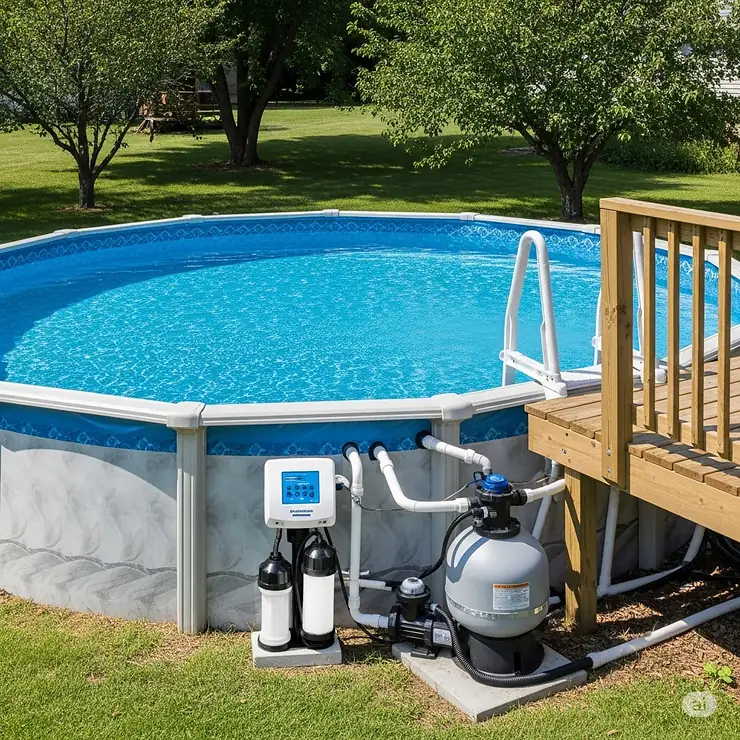
It’s October 2026, the pool covers are going on, and the season’s chemical bill is still fresh in your memory. That is exactly the right moment to shop. Systems for salt water above ground pools are easier to evaluate when you aren’t racing a heat wave, and you can plan the install before next spring.
Here’s the honest pitch. Salt chlorination won’t make your pool maintenance-free, because nothing does. What it does is swap a daily chore (dosing chlorine) for a weekly one (checking salt and pH). Reviewers across pool-supply roundups say the water feels softer and the chemical smell fades. Those are aggregated impressions, not lab results, but they’re consistent.
The catch is that the market is confusing. Some units hang over the wall, others plumb into the return line, and the capacity ratings range from a kiddie-sized 2,200 gallons to roughly 30,000. Pick wrong and you’ll own an undersized box running flat out, or an oversized one you didn’t need.
I researched the real products, compared their specs, and read through aggregated review sentiment. Below are seven systems worth your attention, plus the context to choose between them.
Quick Comparison: 7 Salt Water Above Ground Systems at a Glance
If you’re skimming on your phone from the pool deck, start here. Price ranges are ballpark figures from my research. Check current price on the listing before you decide.
| Product | Price Range | Rated Pool Size (per listings) | Best For |
|---|---|---|---|
| Intex Krystal Clear Saltwater System (2,200 Gallons) | $150-$300 range | Up to 2,200 gal | Intex Krystal Clear Saltwater System (2,200 Gallons): small, budget pools |
| Westaho HSCG-09 | $200-$350 range | Up to 15,000 gal | Westaho HSCG-09: first-time salt buyers |
| Intex Krystal Clear Saltwater System (15,000 Gallons) | $250-$450 range | Up to 15,000 gal | Intex Krystal Clear Saltwater System (15,000 Gallons): medium round pools |
| EverCrystal ECSCG15D | $250-$450 range | Roughly 15,000 gal class | EverCrystal ECSCG15D: 18-24 foot pools |
| Solaxx Saltron Retro CLG10A | $400-$600 range | Up to 20,000 gal | Solaxx Saltron Retro CLG10A: no-plumbing installs |
| Hayward AquaTrol | $500-$800 range | Up to 18,000 gal | Hayward AquaTrol: set-it-and-monitor-it owners |
| Hayward Salt & Swim | $600-$900 range | Roughly 23,000-30,000 gal | Hayward Salt & Swim: big pools, simple controls |
Look at the pattern. The cheapest units cluster around small or medium pools, while the pricier models earn their premium with higher capacity, better displays, and brand support. If your pool is a 15 to 18 footer, the Intex Krystal Clear Saltwater System (15,000 Gallons) and EverCrystal ECSCG15D deliver the most system per dollar. Once you pass 24 feet, the Solaxx Saltron Retro CLG10A, Hayward AquaTrol, and Hayward Salt & Swim are the realistic shortlist, and the right pick depends on whether you value plumbing-free installation or a digital readout.
💬 Just one click — help others make better buying decisions too!😊
Top 7 Salt Water Above Ground Systems: Expert Analysis
Quick method note: I couldn’t verify live Amazon rating counts for every unit at the time of research, so the review sections below summarize what pool-supply roundups and reviewer reports consistently say. They are not invented numbers. Check the live review page before buying.
1. Intex Krystal Clear Saltwater System (2,200 Gallons) — cheapest on-ramp to salt
This is the “try before you commit” option, and it knows its job. It’s rated for above ground pools up to 2,200 gallons, includes an automatic timer, and has a self-cleaning cell design that is built to fight scale buildup.
On paper, 2,200 gallons covers a small family pool. In practice, scale on the cell plates is what shortens a chlorinator’s life, so a self-cleaning feature matters more than it sounds. The timer lets you set daily run hours instead of babysitting it. It’s also listed as compatible with most above ground filter pumps, which keeps installation simple.
Based on the spec comparison, this is a fit for small, budget-focused setups. It’s the wrong tool for a 21-footer, and no amount of optimism fixes that. An undersized generator runs flat out and still can’t keep up with sunlight and swimmers.
Roundup reviewers label it the best budget pick for small pools. That’s a limited endorsement, but it matches the specs.
Pros:
- ✅ Lowest entry cost in this roundup
- ✅ Automatic timer for hands-off scheduling
- ✅ Self-cleaning design helps limit scale
Cons:
- ❌ Only suits pools up to 2,200 gallons
- ❌ Zero headroom for heavy summer use
Price range: roughly $150-$300 range. Value verdict: great for small pools, pointless for big ones.
2. Westaho HSCG-09 — weatherproof entry system for first-timers
Listed with U.S.-made titanium cells, an IP66 rating, and a 15,000-gallon capacity, the Westaho HSCG-09 targets buyers who want to try salt water above ground without a premium-brand bill.
Here’s what those specs mean. Titanium plates are the working part of any salt cell, so the material matters. IP66 means the housing is built to shrug off dust and powerful water jets, a practical bonus when your controller lives beside a splashing pool and the occasional garden hose.
What the spec sheet won’t tell you is support quality. Lesser-known brands can mean slower answers when something goes wrong, so read the warranty terms before you buy. For a cautious first-timer on a mid-sized pool, it’s a reasonable gamble, though not the safest one.
Roundup reviewers pitch it as an entry-level pick for first-time salt buyers on a tight budget. I couldn’t verify detailed owner-review data, so treat the rating as something to confirm on the live listing.
Pros:
- ✅ Titanium cells at a budget-friendly cost
- ✅ IP66 housing handles splash and weather
- ✅ 15,000-gallon rating covers most mid-sized pools
Cons:
- ❌ Lesser-known brand, so support is a question mark
- ❌ Fewer user reports than the big-name units
Price range: roughly $200-$350 range. Value verdict: strong value if the warranty checks out.
3. Intex Krystal Clear Saltwater System (15,000 Gallons) — the sweet spot for medium pools
Roundups single this one out for pools between roughly 5,000 and 15,000 gallons, calling it one of the more reliable above ground salt systems at its price point.
The math is the useful part. A 24-foot round pool at 52 inches deep holds somewhere around 12,000 to 13,000 gallons, which means the 15,000-gallon rating leaves real headroom. Headroom is what keeps a generator from running at maximum output all day, and it’s the quiet difference between a unit that lasts and one that burns out.
Like its smaller sibling, it pairs with an automatic timer and self-cleaning design. For a family on a standard round pool who wants a recognizable brand without a premium price, this is the obvious starting point. Match the model number to your actual gallons before you click buy.
Roundup reviewers consistently describe it as reliable for the price. That’s aggregated opinion, so confirm the live ratings.
Pros:
- ✅ Right-sized for most 15-24 foot round pools
- ✅ Familiar brand with broad parts availability
- ✅ Timer and self-cleaning cell included
Cons:
- ❌ Less feature-rich than the Hayward options
- ❌ Not enough capacity for 27-foot pools
Price range: roughly $250-$450 range. Value verdict: excellent middle-of-the-road value.
4. EverCrystal ECSCG15D — crowd-tested on 18 to 24 foot pools
This one earns its slot through user reports rather than brand clout. Reviewers with 18- to 24-foot pools report clear water and minimal added chemicals after the initial salt dose.
The model number points to a 15,000-gallon-class unit, but confirm the capacity on the listing. That range comfortably fits the pools most people actually own. Notice what “minimal added chemicals” implies: you still test and balance. You just stop dosing sanitizer every other day.
The analytical takeaway is that this system suits owners who read reviews more than they read brand names. It’s a sensible middle-tier choice between the cheap Intex and the pricey Hayward. The tradeoff is the usual one for smaller brands: documentation and support vary, so save your receipt.
Reviewer sentiment, as summarized in roundups, is positive for crystal-clear results on 18-24 foot pools.
Pros:
- ✅ Positive reports on mid-sized round pools
- ✅ Mid-tier cost with solid capacity
- ✅ Less chemical dosing after the initial salt
Cons:
- ❌ Brand support is less established
- ❌ Capacity details need double-checking
Price range: roughly $250-$450 range. Value verdict: good value for informed, review-driven buyers.
5. Solaxx Saltron Retro CLG10A — no-plumbing drop-in simplicity
Here’s the one that skips the plumbing entirely. The Solaxx Saltron Retro CLG10A hangs over the pool wall and puts its cell directly in the water, and it’s rated for pools up to 20,000 gallons, which covers up to a 27-foot round or an 18×40 oval.
Why does this matter? Plumbing is where DIY installs go wrong. With no cutting, no fittings, and no return-line adapters, you can install it in minutes, and you can move it if you change pools. It also has a built-in timer, a self-cleaning cell, and is made in the USA.
The tradeoff is that it doesn’t feed sanitized water through the return line, so your circulation has to do the mixing. Keep the pump running long enough that chlorine reaches every corner. It’s a minor consideration, not a dealbreaker.
One roundup calls it the gold standard for above ground salt systems. That’s one opinion among several, but it fits the spec sheet.
Pros:
- ✅ Drop-in install with no plumbing work
- ✅ Handles pools up to roughly 20,000 gallons
- ✅ Timer and self-cleaning cell built in
Cons:
- ❌ Cell sits in the water, visible in the pool
- ❌ Relies on pump circulation for even mixing
Price range: roughly $400-$600 range. Value verdict: premium value for plumbing-averse owners.
6. Hayward AquaTrol — the popular choice with a digital display
Pool retailers describe the Hayward AquaTrol as the most popular above ground unit in their lineup. It’s recommended for pools up to about 18,000 gallons, with a control system featuring a built-in timer and a digital display.
The display is the quiet selling point. When you can see output and status at a glance, troubleshooting stops being guesswork. Sanitized water is fed through the return line, so chlorine gets pushed back into the pool the same way your filtration does. You’ll see model variants with hose-and-pipe fittings (the W3AQ-TROL-HP family) or return jet fittings (W3AQ-TROL-RJ), so match the fitting type to your plumbing.
My honest read is that it suits owners who want a recognized brand, clear controls, and a retail-friendly parts ecosystem. It’s pricier than the Intex and Westaho units, and that premium buys polish rather than miracles.
Retailer commentary calls it the most popular unit, which is a sales signal, not an independent test.
Pros:
- ✅ Built-in timer plus digital display
- ✅ Chlorine delivered through the return line
- ✅ Multiple fitting variants for different setups
Cons:
- ❌ Costs noticeably more than budget alternatives
- ❌ Fitting variants invite ordering mistakes
Price range: roughly $500-$800 range. Value verdict: worth it for owners who like clear controls.
7. Hayward Salt & Swim — highest capacity, simplest controls
If your pool is big, this is the one pool retailers mention for the largest above ground installs. Retailer listings differ on capacity, with some citing about 23,000 gallons (up to a 30-foot round) and others up to 30,000, so confirm the rating for the exact model.
The design is deliberately simple: no digital display, return jet fittings, and a DIY-friendly install. Hayward claims its salt system can cut chlorine costs by 50% or more compared with conventional chlorine, which is a manufacturer claim, so your savings will vary. The honest takeaway is that simplicity has a price. You won’t get a readout, so you’ll rely on test strips to confirm it’s doing its job.
For a large pool owner who wants a trusted brand and doesn’t need bells and whistles, the capacity headroom is the real draw.
Reviewer sentiment in retailer guides is positive about the DIY-friendly install. Verify live ratings before purchase.
Pros:
- ✅ Largest capacity in this roundup
- ✅ DIY-friendly return-jet installation
- ✅ Trusted brand with wide parts availability
Cons:
- ❌ No digital display for at-a-glance status
- ❌ Highest price range on this list
Price range: roughly $600-$900 range. Value verdict: justified for large pools, overkill for small ones.
Top 7 Compared Side by Side
Before you commit, here’s how the specs line up against each other. This table focuses on install style and controls rather than price, since the quick table above already covers cost.
| Product | Rated Size | Install Style | Controls | Best For |
|---|---|---|---|---|
| Intex Krystal Clear Saltwater System (2,200 Gallons) | 2,200 gal | Connects to existing pump setup | Auto timer | Intex Krystal Clear Saltwater System (2,200 Gallons): small budget pools |
| Westaho HSCG-09 | 15,000 gal | Inline cell (confirm fittings) | Weather-resistant IP66 housing | Westaho HSCG-09: cautious first-timers |
| Intex Krystal Clear Saltwater System (15,000 Gallons) | 15,000 gal | Connects to existing pump setup | Auto timer | Intex Krystal Clear Saltwater System (15,000 Gallons): standard round pools |
| EverCrystal ECSCG15D | ~15,000 gal class | Inline cell (confirm fittings) | Per listing | EverCrystal ECSCG15D: review-driven buyers |
| Solaxx Saltron Retro CLG10A | 20,000 gal | Hangs over wall, no plumbing | Built-in timer | Solaxx Saltron Retro CLG10A: easy installs |
| Hayward AquaTrol | 18,000 gal | Return-line fed | Timer + digital display | Hayward AquaTrol: owners who want a readout |
| Hayward Salt & Swim | ~23,000-30,000 gal | Return jet fittings | Simple controls | Hayward Salt & Swim: large pools |
The table shows a clear split. Two systems, the Solaxx Saltron Retro CLG10A and the Hayward AquaTrol, are the best pair for owners who want strong capacity with either simplicity or visibility, and the choice between them is really “no plumbing” versus “digital display.” Budget buyers get the most for their dollar from the Intex Krystal Clear Saltwater System (15,000 Gallons), while the Hayward Salt & Swim only makes sense once your pool outgrows everything else here.
✨ Don’t Miss These Exclusive Deals!
🔍 Take your salt water above ground setup to the next level with these carefully selected systems. Click on any highlighted product name to check current pricing and availability. The right match for your pool size means softer water and fewer chemical runs to the store!
Your First 30 Days: Setup, Salting, and Maintenance
Most salt water above ground problems happen in the first month. Here’s a practical rollout that Amazon listings don’t give you.
Week 1: Prep and salt. Test and balance the water first. Add pool-grade salt, broadcast it around the perimeter, and let your pump circulate it. Salt levels vary by system, but Wikipedia’s overview notes the general range is roughly 1,000 to 4,000 ppm, far below seawater. Always follow your specific manual. Don’t turn the generator on until salt dissolves fully.
Week 2: Set output. Start low. Run the timer for a few hours, test free chlorine, and raise gradually. The CDC’s home pool guidance recommends pH 7.0 to 7.8 and at least 1 ppm of chlorine in pools, or 2 ppm if you use cyanuric acid, and suggests testing at least twice per day.
Weeks 3-4: Watch pH. Salt chlorination tends to push pH upward, so expect to add acid more often than you’d think. This catches new owners off guard.
Maintenance schedule:
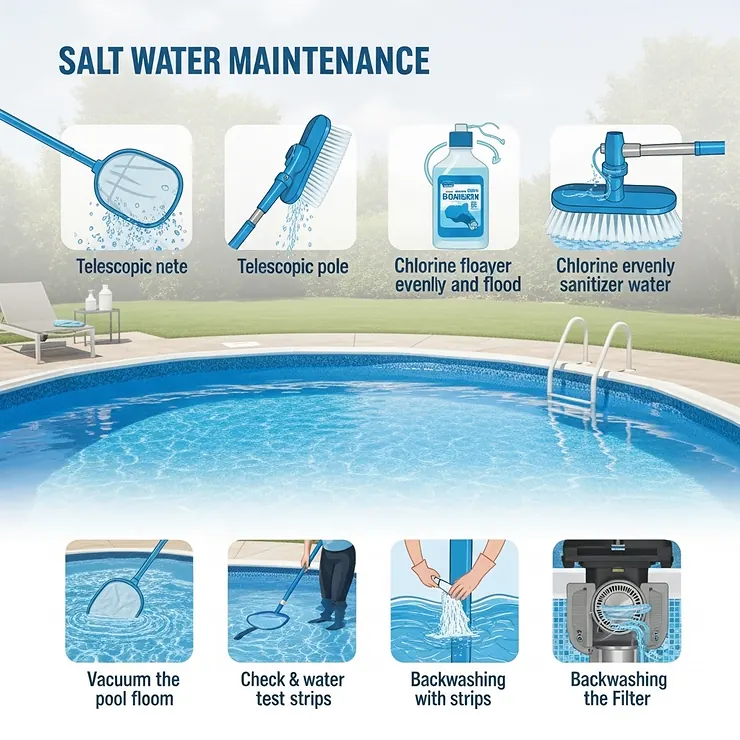
- Weekly: test pH, chlorine, and salt level.
- Monthly: inspect the cell for scale buildup.
- Seasonally: clean or replace the cell as needed.
Common first-month mistakes: running the generator on high immediately, skipping stabilizer on an outdoor pool, and ignoring pump run time. A generator can only sanitize water that moves through it, so a pump that runs four hours a day is a real bottleneck.
Real-World Scenarios: Three Backyards, Three Best Picks
Specs matter less than your actual situation. Here are three profiles matched to the best product, with the reasoning.
Scenario 1: The renter with a small pool. You’ve got a 12-foot easy-set pool, a limited budget, and no appetite for plumbing changes. The Intex Krystal Clear Saltwater System (2,200 Gallons) fits both the volume and the budget. You’ll use it for four or five months a year, so low cost matters more than longevity.
Scenario 2: The family with a 24-foot round pool. Four kids, daily swimming from June through September, and a pool holding about 12,000 to 13,000 gallons. The Intex Krystal Clear Saltwater System (15,000 Gallons) gives you headroom without premium pricing, and the EverCrystal ECSCG15D is a credible alternative if you prefer review-driven value. Heavy usage means more chlorine demand, so don’t pick a system sized exactly to your volume.
Scenario 3: The owner of an 18×40 oval who hates tinkering. Big volume, high expectations. The Solaxx Saltron Retro CLG10A gets the nod if you want no plumbing, while the Hayward AquaTrol wins if you want a digital display and return-line feeding. Either handles the capacity comfortably.
The pattern across all three: size first, install style second, brand third. Reverse that order and you’ll overspend on features you won’t use.
Problem and Solution: Fixing the Most Common Salt Water Above Ground Headaches
Even a well-chosen system hits snags. Here are the most common, with practical fixes.
Problem: Cloudy water despite a running generator. Likely cause: insufficient pump run time or low free chlorine. Fix: extend pump hours, test chlorine, and shock if needed. Systems like the Hayward AquaTrol feed through the return line, so circulation directly affects distribution.
Problem: pH keeps climbing. Cause: the electrolysis process itself, which tends to push pH higher. Fix: add acid regularly and test weekly. It’s normal, not a defect.
Problem: Scale on the cell. Cause: hard water and high calcium. Fix: inspect monthly, clean per the manual, and rely on self-cleaning designs like those in the Solaxx Saltron Retro CLG10A and Intex units to slow the buildup.
Problem: Low chlorine output in cold water. Cause: many generators produce less chlorine in cooler water. Fix: check your manufacturer’s low-temperature guidance, and plan to shut the unit off for the season.
Problem: Salt level dropping. Cause: splash-out, rain dilution, and backwashing. Fix: retest after heavy rain and top up gradually rather than dumping in extra salt.
How to Choose a Salt Water Above Ground System: 6 Steps
Skip the marketing. Work through these in order.
- Calculate your actual gallons. Don’t guess. Multiply dimensions or check your pool’s manual. A 24-foot round at 52 inches holds roughly 12,000 to 13,000 gallons.
- Add headroom. Pick a system rated 20-30% above your volume so it isn’t maxed out on hot days.
- Decide on install style. Plumbing-free drop-in or return-line plumbed? Drop-in is easier, plumbed gives more even distribution.
- Check pool materials. Confirm with your pool maker that salt is compatible, especially with metal walls, rails, and ladders.
- Weigh controls against budget. A digital display is nice, but test strips can do the same job if cash is tight.
- Read the warranty. Cells wear out, so cell warranty terms matter more than headline specs.
Follow those six and you’ll avoid the three biggest regrets: undersizing, paying for unused features, and buying a system your pool’s warranty won’t tolerate.
Salt Water vs Traditional Chlorine for Above Ground Pools
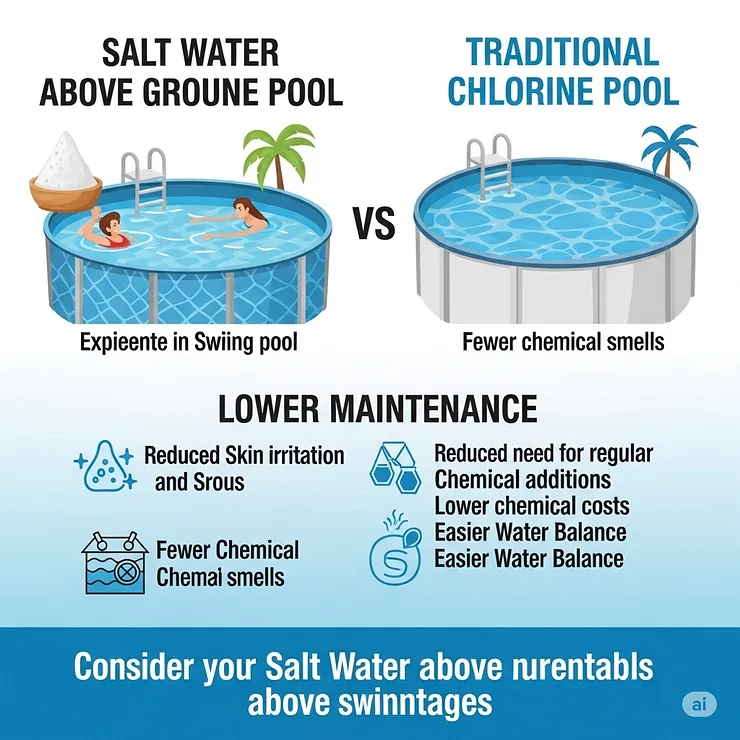
The honest comparison is less dramatic than marketing suggests. Salt water above ground systems don’t eliminate chlorine. They manufacture it on-site.
| Factor | Salt Water System | Traditional Chlorine |
|---|---|---|
| Upfront cost | Higher (generator purchase) | Lower |
| Ongoing cost | Salt plus eventual cell replacement | Tablets or liquid, recurring |
| Daily effort | Low once dialed in | Frequent dosing |
| Water feel | Reviewers report softer water | Often harsher smell |
| Maintenance risks | Scale, cell wear, pH drift | Overdosing, storage |
| Best For | Owners planning multiple seasons | Short-term or very small pools |
The table captures the core tradeoff: pay more upfront, work less afterward. If you expect to keep the pool for three or more seasons, the savings and convenience add up, and the Intex Krystal Clear Saltwater System (15,000 Gallons) is the cheapest way to test that theory. If you’re not sure the pool will stay past next summer, traditional chlorine has a stronger case. Note that Hayward claims its systems can cut chlorine costs by 50% or more, and your own results will depend on pool size and local prices.
Features That Actually Matter (And Those That Don’t)
Feature lists are designed to impress. Here’s how to separate signal from noise.
Matters: capacity headroom. More than anything else, this determines whether a system survives a hot summer. An undersized generator ages faster.
Matters: self-cleaning cell. Scale is the main enemy of cell life. Self-cleaning designs, like those in the Solaxx Saltron Retro CLG10A and Intex Krystal Clear Saltwater System (2,200 Gallons), are a practical longevity feature, not a gimmick.
Matters: a timer. It lets you set daily runtime and forget it, which is the whole point of automation.
Matters somewhat: a digital display. The Hayward AquaTrol has one, and it’s useful for troubleshooting. But test strips remain your real source of truth, so don’t pay a huge premium purely for the screen.
Doesn’t matter much: Wi-Fi apps. Some higher-end systems let you check salt, temperature, and output from your phone. Convenient, but if your phone app says the water is fine and your test strip disagrees, trust the strip.
Doesn’t matter: brand-name fittings you can swap. Variants like the HP versus RJ fitting options on the AquaTrol matter at install, but not after.
The takeaway: spend money on capacity and cell quality, and economize on extras.
Long-Term Cost and Maintenance: What Salt Really Costs Over Several Seasons
Upfront price is only the opening act. Total cost of ownership is where salt water above ground systems either shine or disappoint.
What you save: recurring chlorine purchases. If you currently spend heavily on tablets or liquid, a system in the few-hundred-dollar range can plausibly pay for itself within a couple of seasons. That’s a rough estimate, since your pool size and local prices will change the answer.
What you spend: salt (cheap), cell replacement (periodic), electricity (modest), and the occasional pH-down purchase. Cell lifespan varies, and above ground cells that run on small pools may last several seasons, though you should check each manufacturer’s warranty.
What to watch: According to the Indiana State Department of Health’s guidance on salt chlorine generation, salt itself isn’t a disinfectant. It’s the chlorine your generator produces that does the work, and you still need to maintain proper free chlorine levels. The same document notes that salt is lost to backwash, rain dilution, and splash-out, and recommends washing down decks to prevent salt buildup from evaporation.
Winter note: Partially draining a pool for winter removes salt too, which is a real cost many buyers forget. As of this October, if you’re closing your pool, check your manual for cell storage instructions before you pull the plug.
Common Mistakes When Buying a Salt Water Above Ground System
Most regrets trace back to a short list of avoidable errors. Here’s the pitfall list, with the reasoning behind each.
Mistake 1: Buying by price alone. The cheapest system is only a bargain if it’s the right size. An undersized Intex Krystal Clear Saltwater System (2,200 Gallons) on a 15,000-gallon pool is a recipe for frustration.
Mistake 2: Ignoring pool compatibility. Not every above ground pool is happy with salt. Check your pool manufacturer’s guidance, especially for steel components. If you ignore this, a warranty dispute is the likeliest outcome.
Mistake 3: Forgetting stabilizer. Outdoor sunlight burns off chlorine fast, so most outdoor pools still need cyanuric acid. Ask your system’s manufacturer for target ranges.
Mistake 4: Skipping the test kit. A generator isn’t a guarantee. Without testing, you won’t know whether it’s keeping up.
Mistake 5: Overdosing salt at startup. More salt isn’t better. Too much can trigger high-salt alarms, and fixing it means diluting the pool.
Mistake 6: Not matching fitting types. The Hayward AquaTrol comes in different fitting variants, and ordering the wrong one stalls your install.
Avoid those six, and you’ll be ahead of most first-time buyers.
Safety, Regulations, and Pool Compatibility for Salt Water Above Ground Setups
Salt changes your chemistry, not your safety obligations. Above ground pools still need proper barriers, and this is where families get complacent.
The U.S. Consumer Product Safety Commission’s Safety Barrier Guidelines for Residential Pools state that above ground pools should have barriers, and that the top of a pool barrier should be at least 48 inches above grade. Some states and municipalities require 60 inches. These are guidelines, not a federal standard, but many local codes adopt them. Check your local requirements before you finish the install.
Ladders deserve special attention. CPSC guidance calls for steps or ladders to be secured, locked, surrounded by a barrier, or removed so children can’t climb into an above ground pool. Industry groups have also begun reviewing child-resistant ladder safety following recent CPSC action, so expect this area to keep evolving.
On the chemistry side, remember that the CDC’s recommended pH range of 7.0 to 7.8 applies to salt pools too. A generator that’s running doesn’t mean the water is safe; testing is how you confirm it.
Finally, store pool salt and any chemicals out of children’s reach, and never mix chemicals. Salt water above ground systems reduce the number of products you handle, but they don’t eliminate the need for careful storage.
FAQ: Salt Water Above Ground Pools
❓ Can I convert my existing above ground pool to salt water?
❓ How much salt do I need to start?
❓ Will salt damage my pool liner, ladder, or rails?
❓ How long does a salt cell last?
❓ Do I still need chemicals with a salt system?
Conclusion: Which Salt Water Above Ground System Should You Buy?
Here’s the short version. Size first, then install style, then brand. Every other decision flows from those three.
If your pool is small and your budget is tight, the Intex Krystal Clear Saltwater System (2,200 Gallons) is a low-risk starter. For standard 15 to 24 foot round pools, the Intex Krystal Clear Saltwater System (15,000 Gallons) and EverCrystal ECSCG15D give you the most capability per dollar, while the Westaho HSCG-09 suits cautious first-timers who’ve checked the warranty. When you want plumbing-free simplicity on a large pool, the Solaxx Saltron Retro CLG10A is the standout. If a digital display and return-line feeding appeal to you, the Hayward AquaTrol is the popular pick, and the Hayward Salt & Swim takes the crown for the biggest pools with the simplest controls.
Salt water above ground isn’t a magic wand. You’ll still test, balance, and maintain. But for owners planning to keep their pool for several seasons, trading daily dosing for weekly checks is a genuine quality-of-life upgrade. With the season winding down this October, now is a smart time to compare, plan, and be ready for spring.
✨ Ready to simplify your pool routine? 🔍 Click your favorite pick above to check current pricing and availability, and get your salt water above ground setup ready before next season!
Recommended for You
- 7 Best Decks for Above Ground Pools That Transform Your Backyard in 2025
- 7 Best Above Ground Saltwater Pool Options for Ultimate Summer Relaxation in 2025
- 7 Best Pool Steps for Above Ground Pool: Ultimate Safety & Comfort Guide 2025
Disclaimer: This article contains affiliate links. As an Amazon Associate, I earn from qualifying purchases. If you purchase products through these links, we may earn a small commission at no additional cost to you.
✨ Found this helpful? Share it with your friends! 💬🤗
