
In This Article
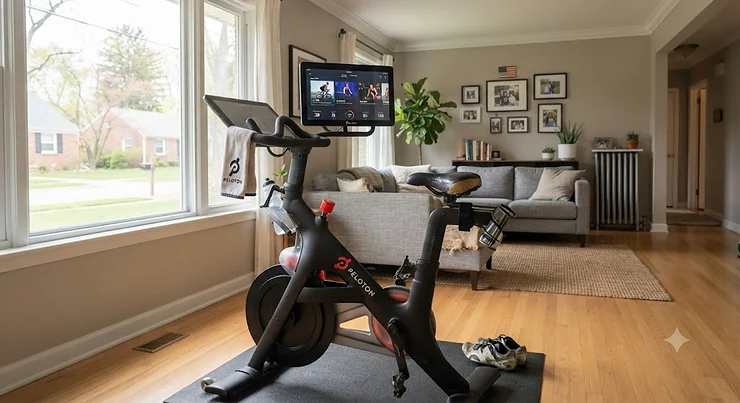
Somewhere in your neighborhood right now, a Peloton Bike is sitting under a pile of laundry, screen dark, flywheel gathering dust. That’s not a dig — it’s the entire reason this article exists. The secondary market for fitness equipment is enormous, and a used peloton bike is one of the single best ways to get studio-quality cycling into your living room without paying studio-quality prices. But “used” is a big umbrella. It can mean a certified refurbished unit backed by the manufacturer, a five-year-old bike from a stranger on Facebook Marketplace, or a pre-owned smart bike from a competitor that does 90% of what Peloton does for half the money.
So what is a used peloton bike, exactly? It’s a previously owned Peloton exercise bike — Original or Bike+ — resold either through Peloton’s own certified refurbished program or through a private seller, typically at 40-70% off the original retail price, usually without the manufacturer’s standard warranty intact.
That last part matters more than most buying guides let on, and we’re going to spend real time on it. Below, you’ll find seven genuine options spanning budget, mid-range, and premium tiers, honest comparisons of what breaks and what doesn’t, and a framework for figuring out which route actually fits your living room, your knees, and your bank account.
Quick Comparison Table
| Product | Condition/Source | Price Range | Best For |
|---|---|---|---|
| Peloton Bike | Private-seller used | $400-$700 | Absolute budget entry point |
| Peloton Certified Refurbished Bike | Refurbished, sold by Peloton | $695-$900 | Safest used-Peloton route |
| Peloton Bike+ | Private-seller used | $900-$1,500 | Auto-resistance + off-bike content |
| Peloton Certified Refurbished Bike+ | Refurbished, sold by Peloton | $1,145-$1,395 | Premium features, manufacturer backing |
| NordicTrack Commercial S22i | Private-seller used | $500-$900 | Incline/decline terrain simulation |
| Echelon EX-5s | Private-seller used | $550-$700 | Cheapest rotating touchscreen bike |
| Bowflex VeloCore | Private-seller used | $700-$1,200 | Core-engaging “leaning” ride |
Look at that spread for a second: a fully functional smart bike sitting at every single price point from $400 to $1,500. What the table doesn’t show is why the range is so wide — it comes down to who’s backing the machine. The Peloton Certified Refurbished Bike and Peloton Certified Refurbished Bike+ cost more than a stranger’s Craigslist listing because Peloton inspects, reconditions, and warranties them; the private-sale options are cheaper precisely because you’re accepting all the risk that Peloton’s refurb program absorbs for you. Competitors like the NordicTrack Commercial S22i and Echelon EX-5s undercut even used Pelotons because their brand-new retail prices are lower to begin with.
💬 Already know which tier fits your budget? Scroll down to your pick and start comparing real listings today.
Top 7 Used Peloton Bike Options: Expert Analysis
1. Peloton Bike — cheapest way into the Peloton ecosystem
The original Peloton Bike is the bike that started the whole home-cycling boom, and on the used market it’s now shockingly affordable. Expect a 22-inch HD touchscreen, magnetic resistance with zero motorized noise, and a footprint of roughly 4 feet by 2 feet — small enough for a studio apartment corner.
In practice, that magnetic resistance system is the quiet hero here: because there’s no motor adjusting resistance for you, there’s also nothing to fail electronically, which is part of why used units this old still run reliably. You will need Delta-compatible cycling cleats or Peloton-brand shoes (about $125 if bought new), and you’ll want to budget for the $44/month All-Access membership, since the bike is fairly limited without it.
Based on the spec comparison against the newer Peloton Bike+, the Original Bike is the right call for anyone who just wants to pedal to great instructors and doesn’t care about tilting screens or hands-free resistance. What most buyers overlook is that the core workout experience — the leaderboard, the live classes, the metrics — is functionally identical between both bikes. You’re paying extra for convenience features, not for a better workout.
Reviewers consistently note that the bike’s frame and drivetrain hold up well over years of heavy use, with the touchscreen and the pedals being the most common failure points reported in owner forums and reselling groups.
Pros:
- ✅ Lowest possible entry price into real Peloton hardware
- ✅ Magnetic resistance means fewer moving parts to break
- ✅ Compact footprint fits small apartments easily
Cons:
- ❌ No manufacturer warranty on private-sale units
- ❌ Requires separate purchase of compatible cycling shoes
Expect to pay in the $400-$700 range for a well-maintained unit, and at that price, even a bike you’ll replace in three years is a strong value against boutique studio class pricing.
2. Peloton Certified Refurbished Bike — safest way to buy Peloton used
If the idea of buying fitness equipment from a stranger makes you nervous, the Peloton Certified Refurbished Bike solves that specific anxiety. This is a previously owned Original Series Bike that Peloton itself inspected, reconditioned, and put back into its own sales channel — same 22-inch touchscreen, same magnetic resistance, same core hardware as buying new.
The real-world difference is the paperwork: unlike a Craigslist unit, a certified refurbished bike ships with the same 12-month limited warranty you’d get on a brand-new purchase, and you’re eligible to add a Peloton Protection Plan on top of it. That single fact changes the entire risk calculation.
Here’s what most buyers overlook about this option — it essentially closes the gap between “used” and “new” without closing the price gap. Based on current Peloton promotional pricing, refurbished units have been offered for around $695-$900, which is hundreds less than new while still carrying manufacturer accountability. For anyone who’s been burned by a secondhand appliance before, that reassurance is worth the premium over a private sale.
Aggregated sentiment from owners in Peloton’s own community forums and fitness-equipment resale groups tends to describe refurbished units as cosmetically imperfect but mechanically sound — think minor scuffs, not functional issues.
Pros:
- ✅ Comes with Peloton’s standard limited warranty
- ✅ Eligible for an add-on Protection Plan
- ✅ Professionally inspected before resale
Cons:
- ❌ Costs more than an equivalent private-sale bike
- ❌ Inventory availability fluctuates and sells out fast
At $695-$900, this is the pick for risk-averse buyers who still want real savings off the roughly $1,445 new price.
3. Peloton Bike+ — auto-resistance and off-bike content upgrade
Step up to the Peloton Bike+ and you’re getting a genuinely different machine, not just a marketing refresh. The headline feature is the 24-inch rotating HD touchscreen, which swivels a full 360 degrees so you can face the room during strength, yoga, or stretching classes instead of straddling a bike mid-workout.
Auto-follow resistance is the other big shift: the bike adjusts resistance automatically to match instructor callouts, meaning you can go fully hands-free during a climb instead of fumbling with a knob. Add Apple GymKit integration — tap your Apple Watch to the console and your heart rate syncs instantly — plus a noticeably better Sonos-tuned sound system, and the case for paying more becomes clearer the more off-bike content you plan to use.
What the spec sheet won’t tell you, but reviewers note repeatedly, is that the screen itself is the component to interrogate hardest before buying used — it’s the most expensive part to replace and the one most likely to show its age. On paper, this means the Peloton Bike+ is worth the premium specifically if you do strength work alongside cycling; if you only ever cycle, you’re paying for a rotating screen you’ll rarely rotate.
Pros:
- ✅ Rotating screen makes off-bike classes genuinely usable
- ✅ Hands-free auto-resistance during climbs
- ✅ Apple GymKit heart-rate sync built in
Cons:
- ❌ Screen failure is the highest-risk used-market issue
- ❌ Commands a real premium over the Original Bike used
Used Peloton Bike+ units run $900-$1,500 depending on age and screen condition — a meaningful discount off the roughly $2,495 new price, but still the priciest bike on this list.
4. Peloton Certified Refurbished Bike+ — premium hardware, manufacturer backing
Think of the Peloton Certified Refurbished Bike+ as the Bike+ experience with the safety net of the Original Refurbished program attached. You get the rotating 24-inch touchscreen, auto-follow resistance, and Apple GymKit sync, but the unit has been through Peloton’s own reconditioning process rather than sold sight-unseen by a private party.
Based on current Peloton refurbished pricing, expect to pay somewhere in the $1,145-$1,395 range, which sits meaningfully below the roughly $2,495 new price while keeping the manufacturer’s limited warranty intact — the same warranty new buyers receive. That’s the whole value proposition in one sentence: near-new hardware, real savings, real accountability.
Here’s what most buyers overlook: because this channel comes directly from Peloton, you skip the single riskiest part of buying a Bike+ used — verifying screen condition and calibration from a stranger’s photos. Peloton has already done that inspection for you. Reviewers and forum members who’ve purchased refurbished Bike+ units tend to report that any cosmetic wear is limited to the frame or seat, with the touchscreen and drivetrain performing like new.
Pros:
- ✅ Full rotating-screen Bike+ feature set intact
- ✅ Manufacturer inspection removes screen-condition guesswork
- ✅ Standard limited warranty included at purchase
Cons:
- ❌ Highest price point of any option on this list
- ❌ Refurbished Bike+ stock sells out faster than the Original
If your budget stretches to $1,145-$1,395 and you want the Bike+ feature set without private-market risk, this is the strongest single pick on the list.
5. NordicTrack Commercial S22i — the only bike here that inclines
The NordicTrack Commercial S22i earns its spot by doing something none of the Pelotons on this list can: physically tilting. Power incline and decline let the bike simulate real hill terrain alongside iFit’s Google Maps-based outdoor routes, and its 22-inch HD touchscreen matches Peloton’s screen size almost exactly.
Silent Magnetic Resistance (SMR) delivers smooth, motor-driven resistance changes rather than the manual dial found on cheaper spin bikes, and the frame carries a 350-pound user capacity with a 10-year frame warranty when purchased new. Based on the spec comparison, the incline feature is the single biggest functional differentiator versus any Peloton bike, and it’s the reason cyclists chasing outdoor-ride realism gravitate here.
Reviewers consistently flag two recurring issues worth knowing before you buy used: the stock seat is on the firmer side (a near-universal spin-bike complaint, easily solved with an aftermarket cover), and because this model is discontinued, verifying whatever warranty remains is essential before handing over cash. iFit connectivity can also lag on slower home Wi-Fi setups, according to owner reports.
Pros:
- ✅ Power incline/decline no Peloton bike offers
- ✅ 22-inch screen matches Peloton’s size at a lower price
- ✅ 350 lb weight capacity on a commercial-grade frame
Cons:
- ❌ Discontinued model with uncertain remaining warranty
- ❌ Requires paid iFit membership for full functionality
Used listings run $500-$900 depending on age and included accessories, undercutting even a used Peloton Bike while adding a feature Peloton doesn’t offer at all.
6. Echelon EX-5s — cheapest rotating touchscreen smart bike
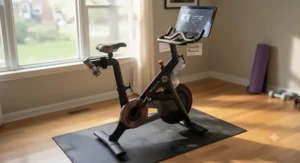
If a rotating screen is the feature you actually want from the Peloton Bike+ but $900+ feels steep, the Echelon EX-5s gets you there for dramatically less. It ships with a 22-inch HD touchscreen that flips outward for floor workouts, magnetic resistance, and — critically — the ability to ride without any subscription at all using manual mode.
That subscription flexibility is the real differentiator worth dwelling on: unlike Peloton, Echelon’s bike functions fully in manual mode with zero ongoing cost, and its membership (when you want the classes) has historically undercut Peloton’s monthly price. Based on the spec comparison, you’re trading Peloton’s larger content library and community leaderboard depth for meaningfully lower total cost of ownership.
Here’s what most buyers overlook about buying Echelon used: unlike Peloton’s non-transferable warranty policy, an active Echelon membership tied to the bike typically transfers to a new owner without friction, while a lapsed account means starting fresh — so always ask a seller about membership status before buying. Reviewers describe the EX-5s as a sturdy, durable frame that holds up to hard interval rides, with the touchscreen sourcing and pedal quality being the components to inspect most closely on an older unit.
Pros:
- ✅ Works fully in manual mode with no subscription required
- ✅ Rotating touchscreen at a fraction of Bike+ pricing
- ✅ Membership often transfers cleanly between owners
Cons:
- ❌ Smaller content library than Peloton’s platform
- ❌ Screen and pedal quality vary more across used units
Expect $550-$700 used, down from $1,200-$1,800 retail — making this arguably the best dollar-for-dollar pre-owned smart bike on the entire list.
7. Bowflex VeloCore — the only bike that leans with you
The Bowflex VeloCore does something genuinely unusual: its console and handlebars physically lean side to side as you ride, mimicking the feel of an outdoor bike and engaging your core in a way a fixed-frame spin bike simply can’t replicate. It’s a novelty at first and a legitimate training feature by ride three.
Beyond the leaning mechanic, you get 100 resistance levels — matching Peloton’s granularity — adjustable handlebars for fit customization, and quiet magnetic resistance on the flywheel. The optional JRNY membership layers on adaptive workouts plus streaming access to services like Netflix and Prime Video directly on the console, which is a genuinely different value proposition than Peloton’s fitness-only content model.
Based on the spec comparison, the leaning feature is the standout reason to choose the Bowflex VeloCore over every other bike on this list, particularly for riders managing lower-back stiffness who find a completely rigid frame fatiguing over long rides. Because this is a less common used listing than the Peloton models above, verified aggregate review data on secondhand units specifically is thinner than for the other six entries here — what’s consistently reported by new-unit owners is a sturdy, well-built frame with a learning curve on the lean mechanic itself.
Pros:
- ✅ Unique leaning ride mode no competitor replicates
- ✅ 100 resistance levels matching Peloton’s granularity
- ✅ JRNY membership includes non-fitness streaming apps
Cons:
- ❌ Fewer used listings mean less price transparency
- ❌ Lean mechanic takes a few rides to feel natural
Current secondary-market listings put the Bowflex VeloCore in the $700-$1,200 range depending on screen size variant, positioning it as a genuine mid-to-premium alternative for anyone who wants something Peloton simply doesn’t build.
Buying a Used Peloton Bike: Practical Usage & Setup Guide
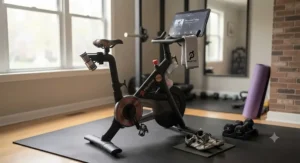
Getting your bike home is step one; getting it dialed in is where most new owners either fall in love with the routine or quietly let it become a coat rack. Start with calibration: even though Peloton says a relocated bike shouldn’t need recalibrating, a private-sale unit that’s been disassembled for transport absolutely should be checked, since resistance readings drift when the calibration screw shifts during a move.
Next, budget realistically for accessories in your first month: Delta-compatible cleats or Peloton shoes if you bought an original Bike or Bike+, and — this is the part first-time buyers skip — a bike mat, since concrete or hardwood floors transmit more vibration than you’d expect at higher cadences. Set a maintenance rhythm early: wipe the frame after every sweaty ride, check pedal tightness monthly, and lubricate the resistance mechanism per the manufacturer’s schedule, whichever brand you bought.
The single most common first-30-days mistake is over-scheduling. New owners often commit to daily rides, burn out by week three, and let the bike go quiet. A more durable pattern — three to four rides a week, building gradually — tends to stick far longer, and it happens to line up almost exactly with the aerobic activity thresholds the CDC recommends for adults, which is a useful external benchmark when you’re deciding how ambitious your first month’s schedule should be.
Which Used Smart Bike Fits Your Life? Real-World Scenarios
Picture three different buyers standing in front of the same seven listings, and you’ll see why “best used peloton bike” doesn’t have one universal answer.
The budget-conscious apartment dweller. She’s got 900 square feet, a tight monthly budget, and wants cardio she’ll actually do. The Peloton Bike at $400-$700 or the Echelon EX-5s at $550-$700 both fit her footprint and her wallet — the deciding factor becomes whether she wants Peloton’s deeper content library (worth the extra membership cost) or Echelon’s no-subscription flexibility for months she’s tight on cash.
The strength-and-cardio hybrid trainee. He splits his week between lifting and cycling and wants one machine that handles both without swapping equipment. The Peloton Bike+ or its refurbished counterpart makes the most sense here — that rotating screen turning a cycling console into a strength-class display is exactly the use case it was engineered for.
The outdoor cyclist stuck training indoors half the year. She misses hills. The NordicTrack Commercial S22i‘s power incline is the only feature on this entire list that replicates actual terrain, making it the clear pick over any Peloton model despite the smaller instructor roster.
How to Choose a Used Peloton Bike
- Verify the model and generation first. “Peloton Bike” listings sometimes don’t specify whether it’s an early production run or a later one with minor hardware revisions — ask for the serial number before you commit.
- Request the Peloton Bike History Summary. This official record shows workout count, service history, and Protection Plan transferability directly from Peloton, and it’s the single best fraud-prevention tool available to a used-market buyer.
- Inspect the touchscreen in person or on video call. Dead pixels, cracks, or lag are the costliest fixes on any smart bike, Peloton or otherwise.
- Confirm membership status before assuming content access. A used bike doesn’t come with an active subscription baked in — you’ll need to start or transfer one separately.
- Ask directly about warranty and Protection Plan eligibility. Only Protection Plans purchased after April 5, 2022 are transferable, and only if the original owner bought one.
- Compare the asking price against current refurbished pricing. If a private seller wants more than Peloton’s own certified refurbished price, walk away — you’re paying stranger-risk pricing for manufacturer-backed peace of mind you’re not getting.
- Test-ride if at all possible. Listen for grinding in the flywheel and check that resistance actually changes when you turn the knob or trigger auto-resistance.
Common Mistakes When Buying a Used Peloton Bike
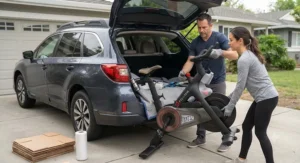
The single biggest mistake buyers make is skipping proof of ownership entirely. Peloton’s own guidance is blunt about this, and for good reason: bikes obtained through the Peloton Rental Program cannot legally be resold, and buyers who don’t verify ownership have been left holding an un-activatable bike after paying full price for it.
A close second is assuming the warranty carries over. It doesn’t — not the standard 12-month limited warranty, ever, on a private sale. Buyers who skip this check are frequently blindsided by a repair bill in month two that they assumed would be free.
Third, buyers routinely underestimate shipping and moving costs for a roughly 130-pound bike, then get surprised by what local delivery or freight actually costs on top of the purchase price. And fourth — subtle but common — buyers compare only sticker price across models without factoring membership cost differences, which can flip the “cheaper” option into the pricier one within a single year of ownership.
Certified Refurbished Peloton vs Private-Seller Used Peloton
| Factor | Certified Refurbished | Private-Seller Used |
|---|---|---|
| Warranty | Standard limited warranty included | None — non-transferable |
| Price | Higher (near half of new) | Lower (as low as 30% of new) |
| Inspection | Professional, done by Peloton | None guaranteed |
| Best For | Risk-averse first-time buyers | Budget-first, hands-on buyers |
The written case for each side is straightforward once you strip away the marketing: certified refurbished is insurance you’re buying alongside the bike, while private-sale is a bet you’re making on a stranger’s honesty and a machine’s remaining mechanical life. Neither is objectively “better” — a Peloton Certified Refurbished Bike at $695-$900 makes sense for someone who has been burned by secondhand purchases before, while an experienced buyer comfortable inspecting mechanical equipment can save real money going private-sale and self-insuring the risk. The math tips further toward refurbished the more expensive the model gets, since a failed screen on a used Peloton Bike+ is a far costlier gamble than a failed screen on the Original Bike.
✨ Don’t Miss These Exclusive Deals!
🔍 Take your home cycling setup to the next level with these carefully selected options. Compare current listings and check availability before prices shift again — the best-condition refurbished units tend to sell out first.
What to Expect: Real-World Performance on a Used Peloton Bike
Specs on a page don’t tell you what a Tuesday-morning ride actually feels like, so let’s translate. That 100-level magnetic resistance system on the Original and Bike+ models means the jump between level 40 and level 50 is genuinely noticeable mid-climb — it’s not marketing fluff, it’s a real gradient you’ll feel in your quads. The touchscreen’s near-instant class loading (when Wi-Fi cooperates) is the difference between actually starting a 6 a.m. ride and talking yourself out of it while a spinner buffers.
On a used unit specifically, expect slightly more mechanical noise than a brand-new bike — flywheels loosen marginally with age, and that’s normal, not a defect, unless it’s accompanied by grinding. The NordicTrack Commercial S22i‘s incline motor adds a low hum during terrain changes that Peloton owners aren’t used to hearing, which some find immersive and others find distracting during quiet early-morning sessions. Across the board, reviewers note that the biggest quality-of-life difference between models isn’t raw performance — it’s how quickly the console responds to your inputs, and that responsiveness tends to degrade faster on units with heavier used-market mileage.
Features That Actually Matter (And Those That Don’t) in a Used Peloton Bike
Marketing copy makes every spec sound essential. It isn’t. Resistance range and screen responsiveness actually matter — they’re what you interact with every single ride, and degradation there directly hurts your workout. Auto-follow resistance genuinely matters if you do a lot of interval training, since manually chasing instructor callouts mid-sprint is a real distraction.
What matters far less than the marketing suggests: exact touchscreen size once you’re above 21-22 inches, since the functional difference between a 22-inch and 24-inch display during a ride is minor. Built-in speaker quality also gets oversold — most serious home-gym setups end up running external speakers or headphones anyway, making the console’s stock audio a non-factor for a lot of buyers. And rotating-screen mechanisms, while genuinely useful for hybrid strength-and-cycling routines, are close to irrelevant if you only ever plan to cycle — that’s paying a premium for a feature you’ll never use.
Long-Term Cost & Maintenance of a Used Peloton Bike
The sticker price is the smallest number in this equation. Run the five-year math and the picture changes fast: a used Peloton Bike at $550 plus roughly $2,640 in membership fees over five years (at $44/month) lands around $3,190 total. Compare that to a used Echelon EX-5s at $625 with occasional month-to-month membership use, and total five-year cost could land closer to $1,500-$2,000 depending on how consistently you subscribe.
Maintenance costs stay modest across every option here — expect occasional pedal or cleat replacement ($30-$125), periodic belt or resistance-mechanism lubrication, and, eventually, a touchscreen repair if you own the bike long enough. Budgeting an extra $100-$200 a year for wear-and-tear parts is a realistic rule of thumb regardless of which of these seven bikes you land on. Compared to a boutique studio membership running $30-$40 per single class, even the priciest option on this list — a used Peloton Bike+ at $1,200 plus five years of membership — still comes out well ahead financially if you ride consistently.
Safety, Warranty & Compliance Guide for Pre-Owned Smart Bikes
Buying used shifts real responsibility onto you as the buyer, and understanding that shift up front prevents expensive surprises. Federal consumer protection guidance is clear that implied warranty rights and express warranty terms work differently for secondhand goods than new ones — sellers aren’t obligated to offer any warranty on a private sale, and once you’ve verified none exists, you’re accepting the equipment largely “as is.”
Peloton’s own official guidance on this is unambiguous, and worth reading directly before you commit to any private purchase: the company’s used-bike buying guide confirms the standard limited warranty never transfers to a second owner, that Protection Plans only transfer if purchased after April 5, 2022, and that Peloton will not activate membership access on any bike obtained through its Rental Program that’s been improperly resold.
Beyond warranty compliance, basic physical safety matters too: check the bike’s weight capacity against every household user before purchase, inspect the frame for stress cracks (especially on units that have been moved multiple times), and confirm the emergency stop/pedal-release mechanism functions correctly before your first ride.
Frequently Asked Questions
❓ Is buying a used peloton bike worth it in 2026?
❓ How much should I pay for a used Peloton Bike Plus?
❓ Does the Peloton membership transfer with a used bike?
❓ Can I get a warranty on a used Peloton bike?
❓ What's the best pre-owned smart bike alternative to Peloton?
Conclusion
Seven bikes, three price tiers, and one honest takeaway: there is no single “best” used peloton bike, only the best option for your specific budget and risk tolerance. If peace of mind matters more than saving every possible dollar, the certified refurbished route — whether the Original Bike or the Bike+ — gives you near-new hardware with Peloton standing behind it. If you’re comfortable inspecting equipment yourself and want maximum savings, a private-sale Original Bike at $400-$700 is hard to beat on pure value.
And if you’re open to stepping outside the Peloton ecosystem entirely, the Echelon EX-5s and NordicTrack Commercial S22i prove that “smart bike” doesn’t have to mean “Peloton” — sometimes it means a rotating screen for less money, or a motor that tilts your entire ride uphill. Whichever direction you go, the research step you just finished reading is the one most buyers skip, and it’s the one that actually determines whether your purchase becomes a daily habit or an expensive coat rack.
Recommended for You
- 7 Peloton Bike Alternatives in 2026 That Won’t Wreck Your Budget
- Peloton Bike vs Bike Plus: 7 Real Differences That Matter (2026)
- Peloton Bike Review 2026: 7 Real Models Compared
Disclaimer: This article contains affiliate links. As an Amazon Associate, I earn from qualifying purchases. If you purchase products through these links, we may earn a small commission at no additional cost to you.
✨ Found this helpful? Share it with your friends! 💬🤗
